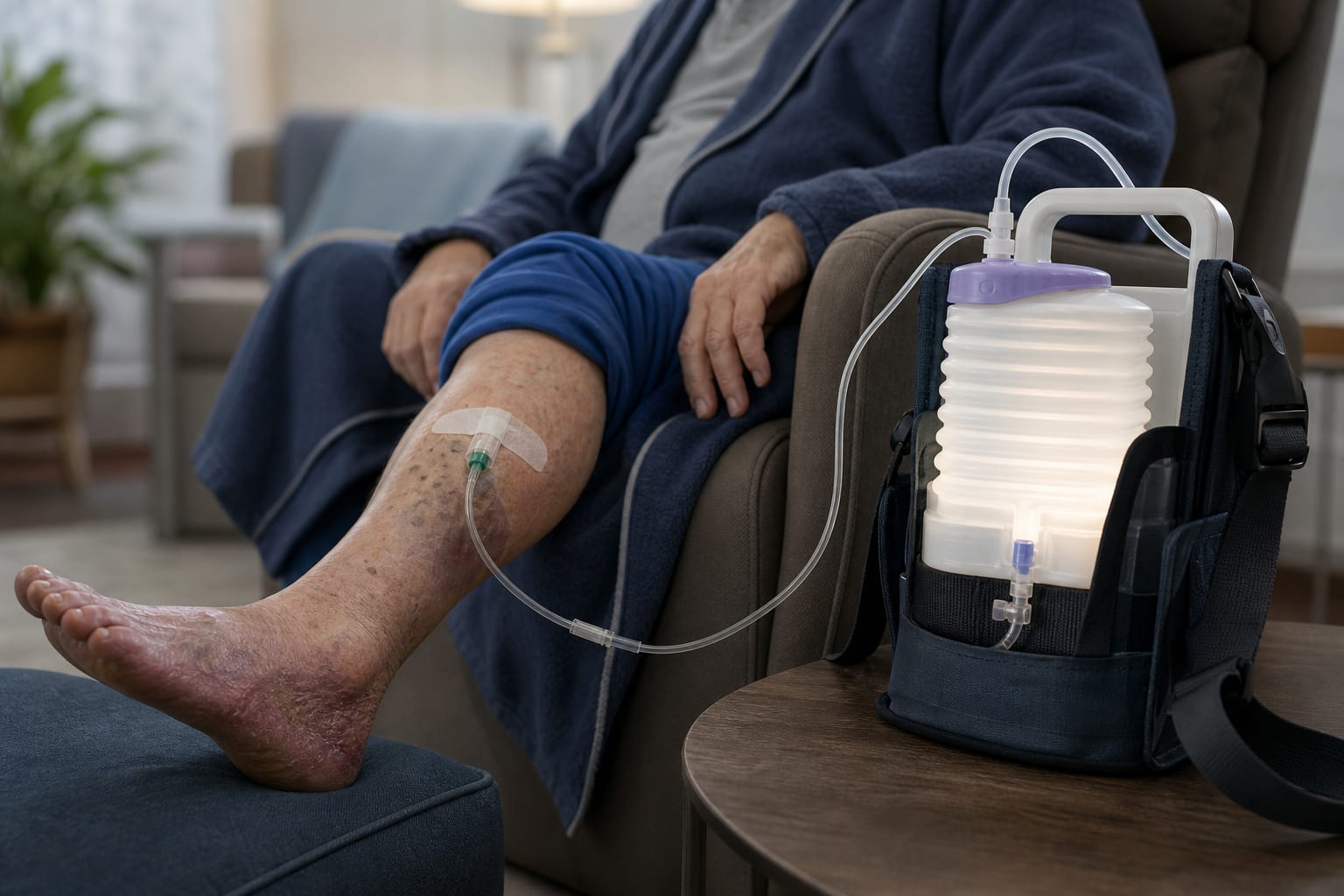
Home-based intravenous iloprost by portable elastomeric pump in chronic limb-threatening ischemia: A pilot study - Report - MDSpire

Home-based intravenous iloprost by portable elastomeric pump in chronic limb-threatening ischemia: A pilot study

  • By

  • Michelangelo Sartori

  • Elisabetta Favaretto

  • Elisa Zanata

  • Sofia Cavara

  • Alessia Libra

  • Alessia Sonetto

  • Enrico Gallitto

  • Mauro Gargiulo

  • Benilde Cosmi

  • June 23, 2026

  • 0 min

Share

Clinical Report: Intravenous Iloprost Administration at Home Using a Portable Elastomeric Pump for Chronic Limb-Threatening Ischemia: A Preliminary Investigation

Overview

This preliminary investigation evaluates the safety of low-dose intravenous iloprost administered via a portable elastomeric pump for patients with chronic limb-threatening ischemia (CLTI) who are not candidates for revascularization. The study focuses on 'no-option' patients and aims to assess iloprost-related adverse events.

Background

Chronic limb-threatening ischemia (CLTI) is a severe manifestation of peripheral artery disease (PAD) characterized by inadequate blood flow to the limbs, leading to high rates of morbidity and mortality. Patients with CLTI often face significant challenges, especially those deemed 'no-option' for revascularization due to comorbidities or anatomical constraints. Current treatment options are limited, making the exploration of alternative therapies like intravenous iloprost critical for improving patient outcomes.

Data Highlights

No numerical data was provided in the source material.

Key Findings

  • Iloprost is a potent PGI2 analogue proposed for treating CLTI.
  • Patients with CLTI were classified as 'no-option' if they did not receive or were not candidates for revascularization.
  • The primary endpoint was the incidence of iloprost-related adverse events.
  • Secondary outcomes included all-cause mortality and major amputation rates.
  • Different protocols for iloprost infusion may influence treatment outcomes.

Clinical Implications

Understanding the safety profile of home-administered iloprost could inform future therapeutic strategies for this challenging patient population.

Conclusion

Further research is necessary to establish the efficacy and safety of this treatment modality.

Related Resources & Content

  1. Evaluation of Intermittent Pneumatic Compression's Impact on Postoperative Edema in Patients Undergoing Autologous Femoropopliteal Bypass Surgery: A Prospective Randomized Controlled Study
  2. Effectiveness, Safety, and Cost-Effectiveness of Continuous OPAT Infusion Using Elastomeric Pumps in a Real-World Italian Patient Population
  3. Evaluation of a Novel Transanal Irrigation Device for Managing Bowel Disorders in Patients Experienced with Irrigation Techniques: A Prospective Multicenter Pilot Study
  4. 2024 AHA/ACC Peripheral Artery Disease Guideline
  5. Surgery or Endovascular Therapy for Chronic Limb-Threatening Ischemia | New England Journal of Medicine
  6. Global vascular guidelines on the management of chronic limb-threatening ischemia - PMC
  7. Utilization of Disposable IV Infusion Sets as Temporary Vascular Shunts in Major Limb Replantation: A Retrospective Analysis
  8. 2024 AHA/ACC Peripheral Artery Disease Guideline
  9. Surgery or Endovascular Therapy for Chronic Limb-Threatening Ischemia | New England Journal of Medicine
  10. Global vascular guidelines on the management of chronic limb-threatening ischemia - PMC

Original Source(s)

Related Content