Clinical Report: The Microbial Composition of Facial Skin
Overview
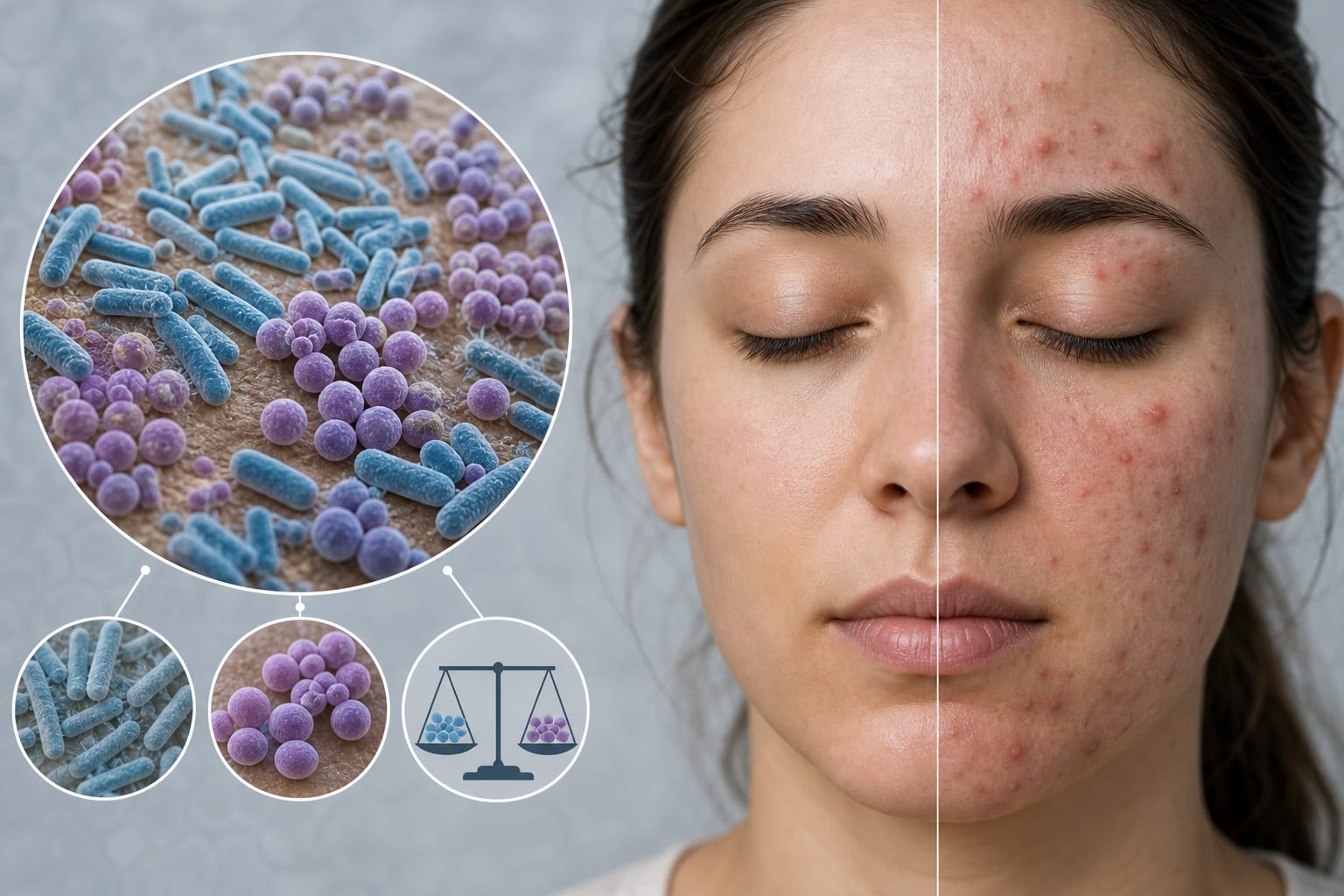
The facial skin microbiome is primarily influenced by Cutibacterium acnes and Staphylococcus epidermidis, with variations based on skin site, age, and condition. Acne-prone skin shows reduced diversity of C. acnes and shifts in S. epidermidis lineages.
Background
Understanding the facial skin microbiome is crucial due to its role in skin health and disease. The balance of microbial communities can influence conditions such as acne.
Data Highlights
No numerical data available in the source material.
Key Findings
The facial skin microbiome is dominated by Cutibacterium acnes and Staphylococcus epidermidis.
Microbial composition varies with skin site, age, and condition.
Acne-prone skin is associated with reduced diversity of C. acnes.
Clinical Implications
Clinicians should consider the impact of acne treatments on microbial diversity when prescribing therapies.
Conclusion
The study of the facial skin microbiome is essential for developing targeted therapies for skin conditions like acne.