Beyond cardiac fibroblasts: research advances on understanding and targeting intercellular communication networks in cardiac fibrosis - Report - MDSpire
Advertisement
Beyond cardiac fibroblasts: research advances on understanding and targeting intercellular communication networks in cardiac fibrosis
Clinical Report: Exploring Intercellular Communication Networks in Cardiac Fibrosis
Background
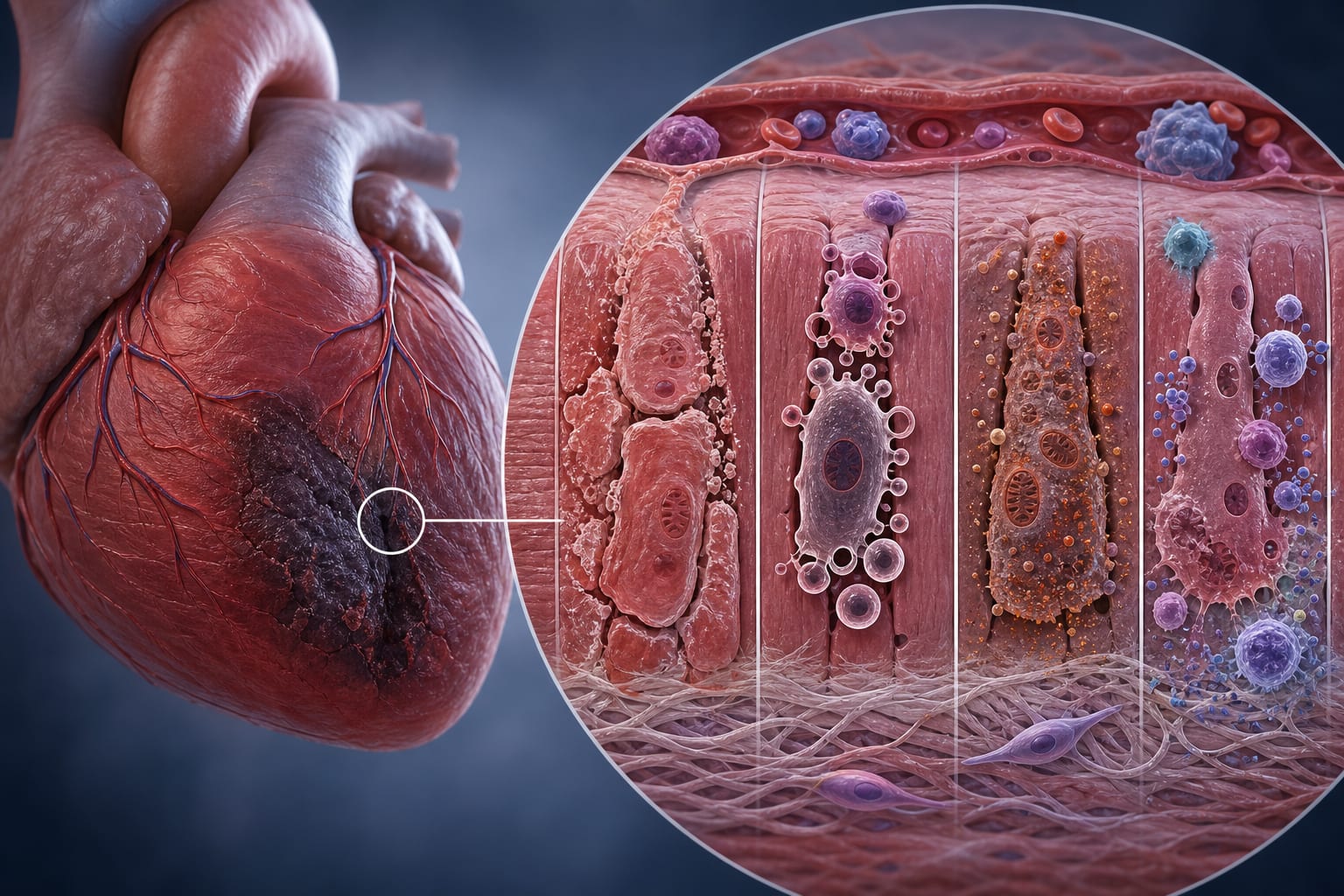
Cardiac fibrosis is a critical factor in the development of heart failure, characterized by excessive extracellular matrix deposition. Traditional research has focused on cardiac fibroblasts, but recent studies indicate that multiple cell types, including cardiomyocytes and immune cells, contribute to fibrosis through intricate signaling networks.
Data Highlights
No numerical data or trial data provided in the article.
Key Findings
Cardiac fibrosis results from a network of intercellular communication rather than solely from fibroblast activity.
Signaling mediators from the pericardial space play a crucial role in regulating intercellular cross-talk.
Various cell types, including cardiomyocytes, endothelial cells, and immune cells, interact through paracrine signaling and direct cell contact.
Abnormal intercellular communication leads to excessive extracellular matrix deposition and cardiac dysfunction.
Recent therapeutic strategies focus on multi-target interventions rather than single-target approaches.
Clinical Implications
Recognizing the complexity of intercellular communication in cardiac fibrosis can guide the identification of novel therapeutic targets. Clinicians should consider the roles of various cell types in fibrosis when developing treatment strategies.
Conclusion
The exploration of intercellular communication networks in cardiac fibrosis provides valuable insights for future therapeutic developments aimed at addressing this critical aspect of cardiovascular disease.