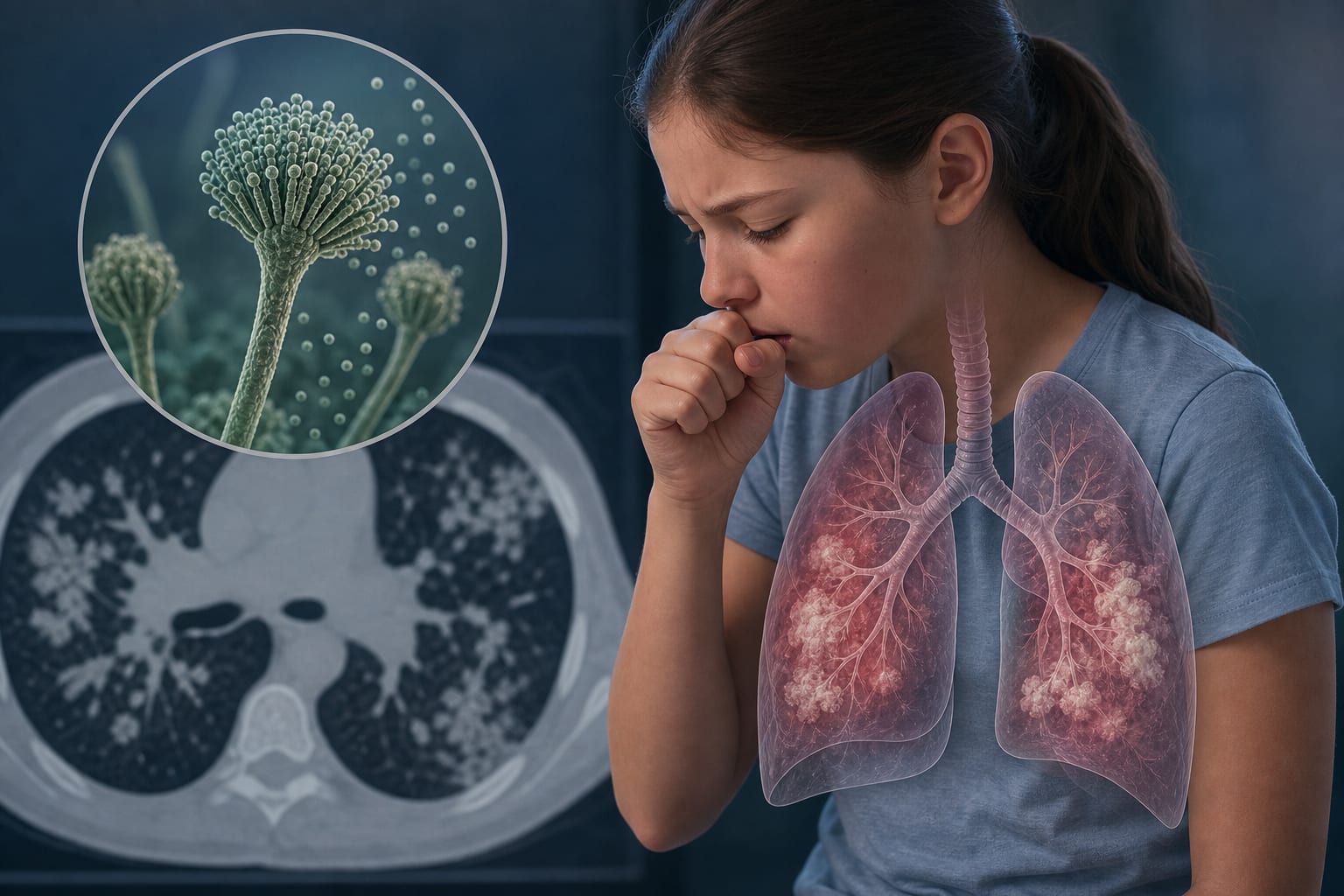
Clinical Report: Uncommon Presentation of Pediatric Allergic Bronchopulmonary Aspergillosis
Overview
This report details a case of an 11-year-old girl diagnosed with allergic bronchopulmonary aspergillosis (ABPA) after multiple misdiagnoses of pneumonia. The patient showed significant clinical improvement following treatment with systemic corticosteroids and itraconazole, underscoring the importance of considering ABPA in pediatric patients with difficult-to-treat asthma.
Background
Allergic bronchopulmonary aspergillosis (ABPA) is a hypersensitivity lung disease often overlooked in pediatric populations, particularly among those with asthma. Misdiagnosis can lead to unnecessary antibiotic use and delayed treatment, resulting in progressive lung damage. Recognizing ABPA is crucial for appropriate management and improving patient outcomes.
Data Highlights
Parameter
Value
Total IgE
678 IU/mL
Aspergillus-specific IgE
5.81 kUA/L
Post-treatment Total IgE
479 IU/mL
Key Findings
ABPA can mimic recurrent pneumonia in pediatric patients, complicating diagnosis.
The patient had a significant reduction in total IgE after treatment, indicating a response to therapy.
High-resolution CT scans revealed bilateral infiltrates and nodules, characteristic of ABPA.
Comprehensive evaluation including immunologic and microbiologic assessments is essential for accurate diagnosis.
Systemic corticosteroids combined with itraconazole led to rapid clinical improvement.
Clinical Implications
Healthcare professionals should consider ABPA in children with difficult-to-treat asthma and recurrent respiratory infections. Early identification and treatment can prevent unnecessary antibiotic use and improve long-term respiratory health outcomes.
Conclusion
This case emphasizes the need for heightened awareness of ABPA in pediatric patients, particularly those with asthma, to facilitate timely and effective management.