Clinical Report: Circadian Influence on NK Cell Immunity: Insights into Timing and Functionality
Overview
This report examines the circadian modulation of natural killer (NK) cell activity, highlighting variations in NK cell counts and functionality influenced by circadian rhythms. The findings underscore the complexity of these rhythms and their implications for immune responses across various conditions.
Background
Circadian rhythms are essential for maintaining physiological homeostasis and modulating immune responses. Natural killer (NK) cells play a critical role in innate immunity, and their activity is subject to circadian influences, which can affect host susceptibility to infections and tumors. Understanding these rhythms is vital for optimizing therapeutic strategies and managing conditions associated with circadian disruption.
Data Highlights
No specific numerical data or trial results were provided in the source material.
Key Findings
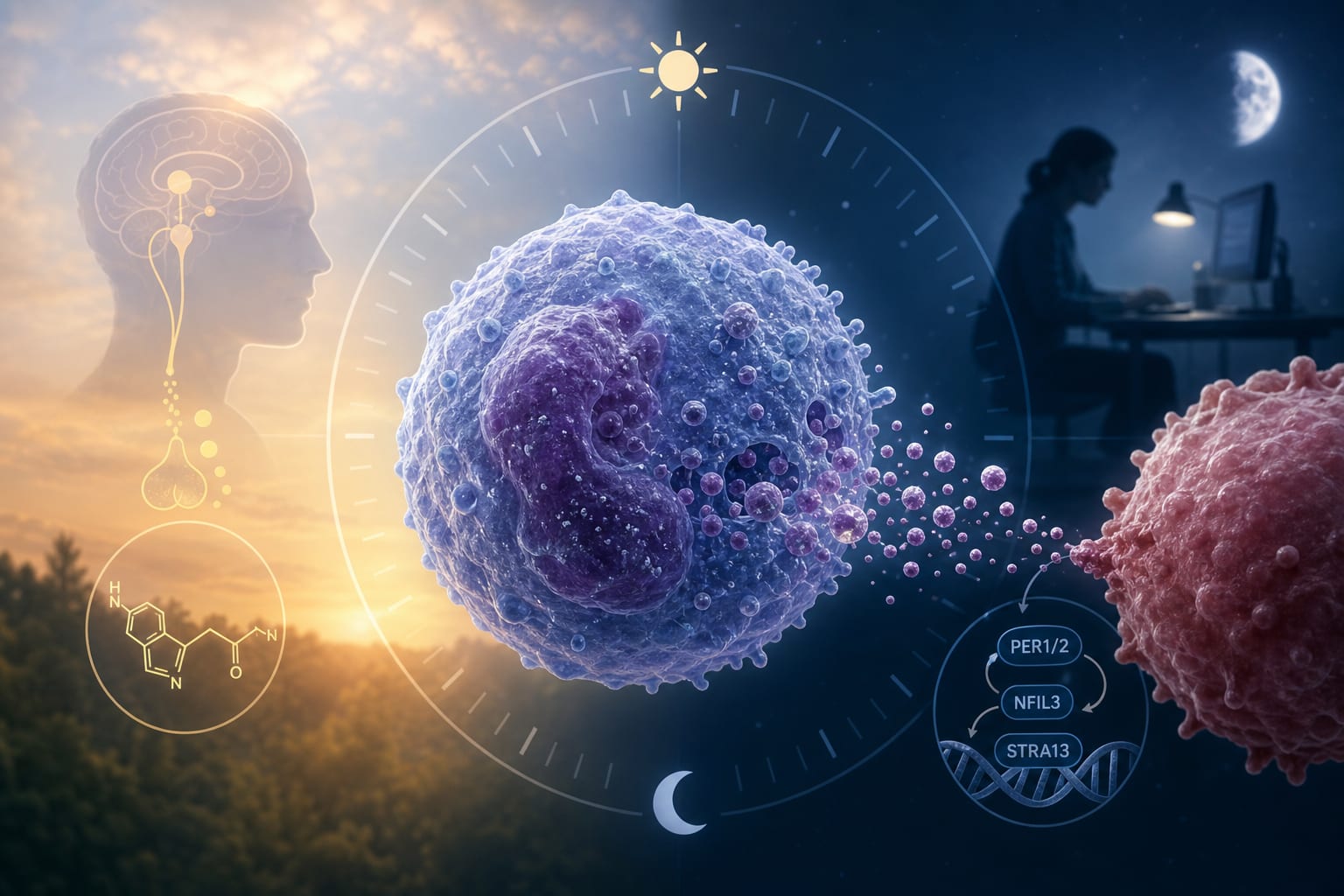
NK cell counts and effector functions exhibit day-night variations influenced by circadian timing.
Core clock modules (PER1/2, NFIL3/E4BP4, STRA13) are linked to NK cell biology.
Acute sleep loss can transiently increase NK cell activity, while prolonged sleep deprivation decreases it.
Circadian misalignment, such as that experienced by shift workers, reduces NK activity and alters transcriptional programs.
Alterations in NK cell activity can vary across different diseases, presenting as peak shifts or amplitude flattening.
Clinical Implications
Clinicians should consider the timing of immune assessments and interventions, particularly in patients with disrupted circadian rhythms. Understanding the circadian influences on NK cell activity may inform treatment strategies for conditions like cancer and infections.
Conclusion
Circadian rhythms significantly influence NK cell functionality, and recognizing these patterns can enhance our understanding of immune responses in various clinical contexts.