Silent refractoriness in epilepsy care: cross-sectoral analysis of prescribing patterns, referrals and workforce capacity in Saxony - Report - MDSpire

Unrecognized Challenges in Epilepsy Management: A Cross-Sector Analysis of Prescription Trends, Referral Practices, and Workforce Availability in Saxony

  • By

  • Thomas Mayer

  • Johannes Lemke

  • Felix Von Podewils

  • Brigitte Scheid

  • Torsten Kraya

  • Susanne Hallmeyer-Elgner

  • Joseph Classen

  • Karel Kostev

  • Sonya C. Faber

  • Adam Strzelczyk

  • July 21, 2026

Share

Clinical Report: Unrecognized Challenges in Epilepsy Management in Saxony

Background

Epilepsy is a prevalent neurological condition affecting about 1% of the population in Germany, with a significant portion of patients experiencing drug-resistant epilepsy. The management of epilepsy in Germany relies on a delegated outpatient model, where primary care providers handle long-term treatment, necessitating effective coordination for optimal patient outcomes. Identifying treatment gaps in regions like Saxony, which has a higher-than-average epilepsy prevalence, is crucial.

Data Highlights

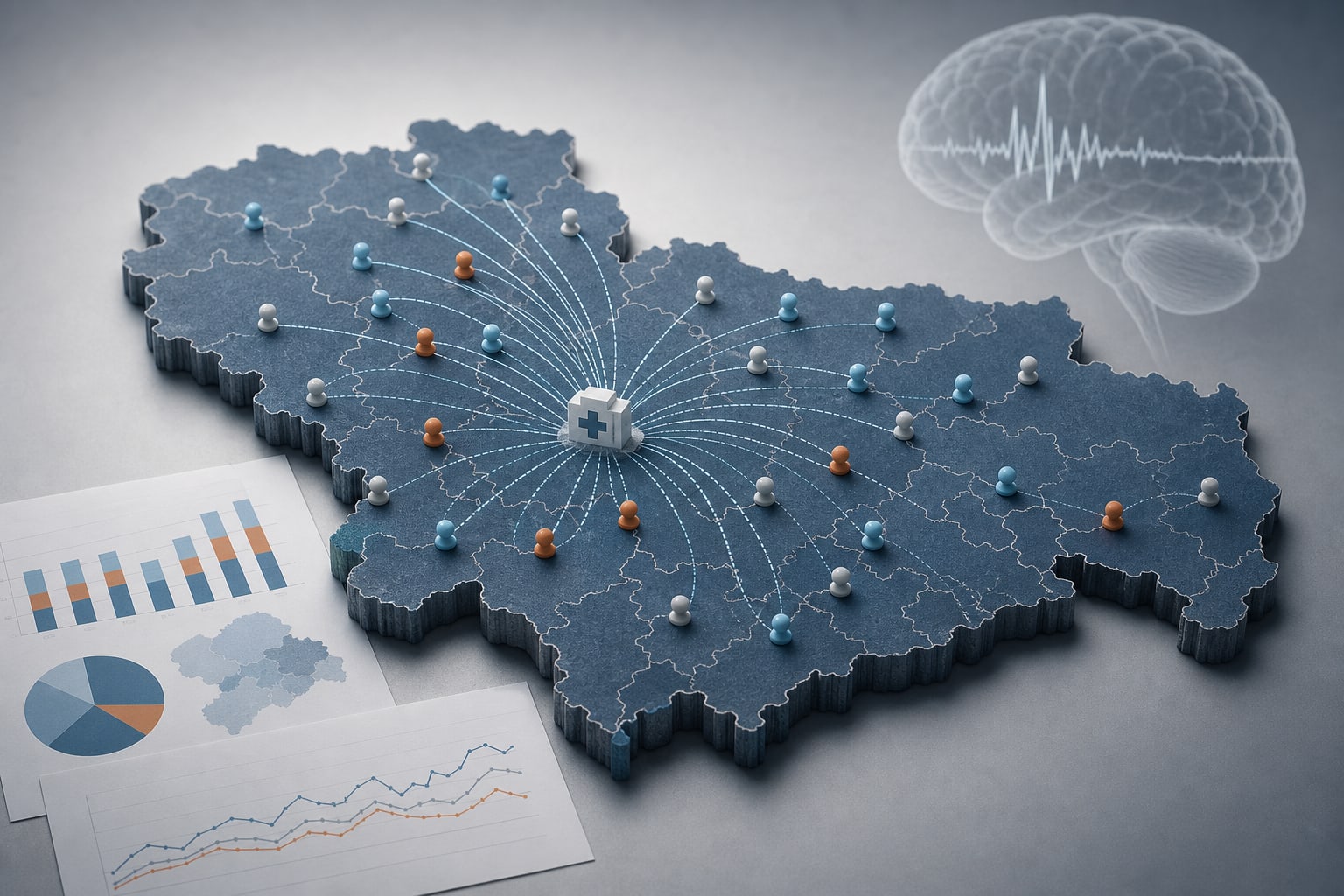
Utilization of levetiracetam (LEV) as a proxy for focal epilepsy care showed that approximately 36% of patients met criteria for drug resistance, yet only a minority accessed specialized center care.

Key Findings

  • 36% of patients met a pharmacological proxy for drug resistance.
  • Only a minority of patients with drug-resistant epilepsy accessed specialized care.
  • Prescribing patterns favored levetiracetam across all sectors, with regional variations in LEV: lamotrigine ratios.
  • Adoption of newer antiseizure medications was concentrated in specialized hubs.
  • Referral activity was uneven, with minimal connectivity to formal escalation pathways in several regions.

Clinical Implications

The findings suggest a need for standardized referral criteria and improved cross-sectoral networks to facilitate timely access to specialized care for patients with drug-resistant epilepsy. Addressing these gaps is essential for aligning decentralized care systems with evidence-based treatment pathways.

Conclusion

The study highlights the challenges in epilepsy management in Saxony.

Related Resources & Content

  1. Drugs - Real World Outcomes, Springer, 2016 -- Monitoring Adverse Drug Reactions in Inpatients Treated with Newer Antiepileptic Medications Through Systematic Analysis of Routine Clinical Data
  2. Brain, Oxford Academic, 2025 -- The Impact of Academia-Industry Separation on the Timeliness of New Treatment Availability
  3. Phoenix Children's Medical Connection -- Innovative, Minimally Invasive Treatment for Drug-Resistant Epilepsy
  4. NCBI Bookshelf -- Epilepsies in children, young people and adults
  5. International League Against Epilepsy -- Updated classification of epileptic seizures (2025)
  6. Intensive Care Medicine — Determining the Beneficiaries of Continuous EEG Monitoring in Critical Care Settings
  7. DGfE - Informationspool Epilepsie
  8. Sachsen Statistics - Ärzte, Zahnärzte, Apotheker
  9. Bundesärztekammer - Ärztestatistik 2025
  10. Epilepsies in children, young people and adults - NCBI Bookshelf
  11. Updated classification of epileptic seizures (2025) // International League Against Epilepsy
  12. Deep brain stimulation of the thalamus for intractable epilepsy (FRANCE study): A randomized clinical trial - Chabardès - Epilepsia - Wiley Online Library
  13. Intracranial biomarkers for anterior thalamic deep brain stimulation in epilepsy: a long-term observational study - PubMed
  14. Timing of Referral to Evaluate for Epilepsy Surgery: Expert Consensus Recommendations from the Surgical Therapies Commission of the International League Against Epilepsy - PMC
  15. AES ILAE North America Symposium: Guiding Evidence-Based Epilepsy Management - Nathalie Jette, Kette Valente, Nicholas S. Abend, Lara Jehi, Lacey Smith, J. Helen Cross, 2026
  16. Real-world effectiveness and tolerability of cenobamate in drug-resistant epilepsy: A retrospective analysis of the patients included into the Early Access Programs (EAP) in Germany, France, and United Kingdom - PubMed
  17. Intersectoral global action plan on epilepsy and other neurological disorders
  18. Intersectoral global action plan on epilepsy and other neurological disorders 2022–2031: implementation toolkit
  19. Improving access to medicines for neurological disorders
  20. Accessibility, availability and common practices regarding genetic testing for epilepsy across Europe: A survey of the European Reference Network EpiCARE - PMC
  21. Time to evaluation and characteristics of patients evaluated at epilepsy centers within an integrated health care delivery system - ScienceDirect

Original Source(s)

Related Content