Interpretable gradient boosting machine model for predicting in-hospital mortality in sepsis-induced myocardial injury: a multicenter development, validation, and web-based clinical implementation - Report - MDSpire
Conexiant’s news site is now MDSpire News. Learn more
Advertisement
An Interpretable Gradient Boosting Machine Approach for Forecasting In-Hospital Mortality in Patients with Sepsis-Induced Myocardial Injury: A Multicenter Development, Validation, and Online Clinical Application
Clinical Report: Interpretable Gradient Boosting Machine for In-Hospital Mortality in SIMI
Overview
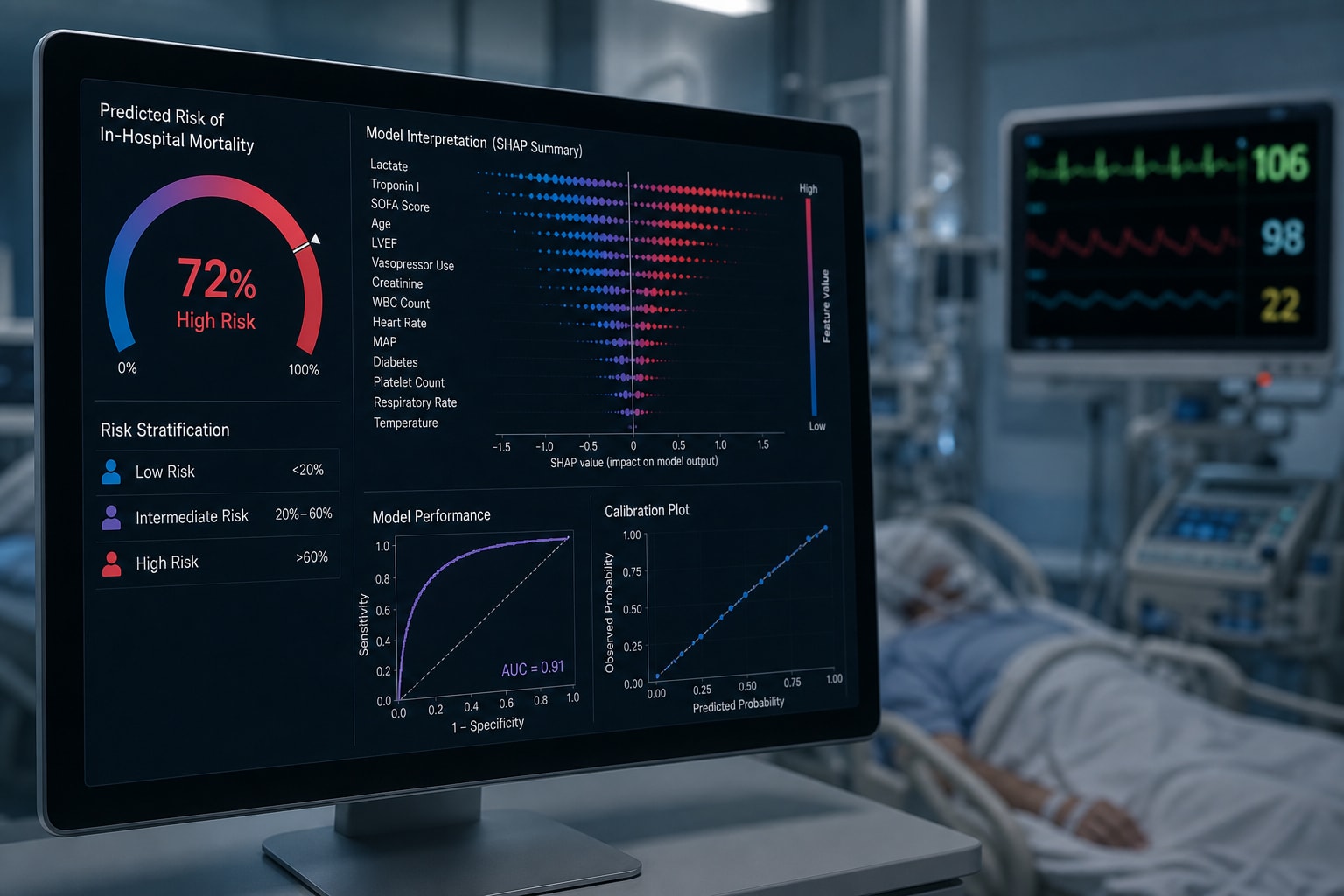
This study developed an interpretable Gradient Boosting Machine (GBM) model to predict in-hospital mortality in patients with sepsis-induced myocardial injury (SIMI). The model demonstrated strong performance in both internal and external validations.
Background
Sepsis-induced myocardial injury (SIMI) is a severe complication of sepsis, significantly increasing in-hospital mortality rates. Traditional risk prediction models lack interpretability and multi-center validation, which limits their clinical utility. This study addresses the limitations of current models.
Data Highlights
Model
AUC
95% CI
GBM (Internal Validation)
0.751
0.614–0.867
External Validation (eICU)
0.924
N/A
External Validation (Chinese Cohort)
0.703
N/A
Simplified Model
0.789
N/A
Key Findings
The GBM model outperformed other algorithms in predicting in-hospital mortality for SIMI patients.
Key predictors identified included APS III Score, Hypertension, Albumin, Diabetes, SOFA Score, ALT, RBC, and Lactate.
A simplified model with five variables achieved an AUC of 0.789.
The model was deployed on a user-friendly online platform for real-time risk assessment.
External validation confirmed the model's generalizability across different cohorts.
Clinical Implications
The development of an interpretable predictive model for SIMI patients may enhance risk assessment.
Conclusion
This multicenter study successfully created and validated an interpretable model for predicting in-hospital mortality in SIMI patients.