Urgent right ventricular outflow tract stenting in a dual risks of thrombosis and bleeding in uncorrected adult with cyanotic congenital heart disease: a case report - Report - MDSpire
Advertisement
Urgent right ventricular outflow tract stenting in a dual risks of thrombosis and bleeding in uncorrected adult with cyanotic congenital heart disease: a case report
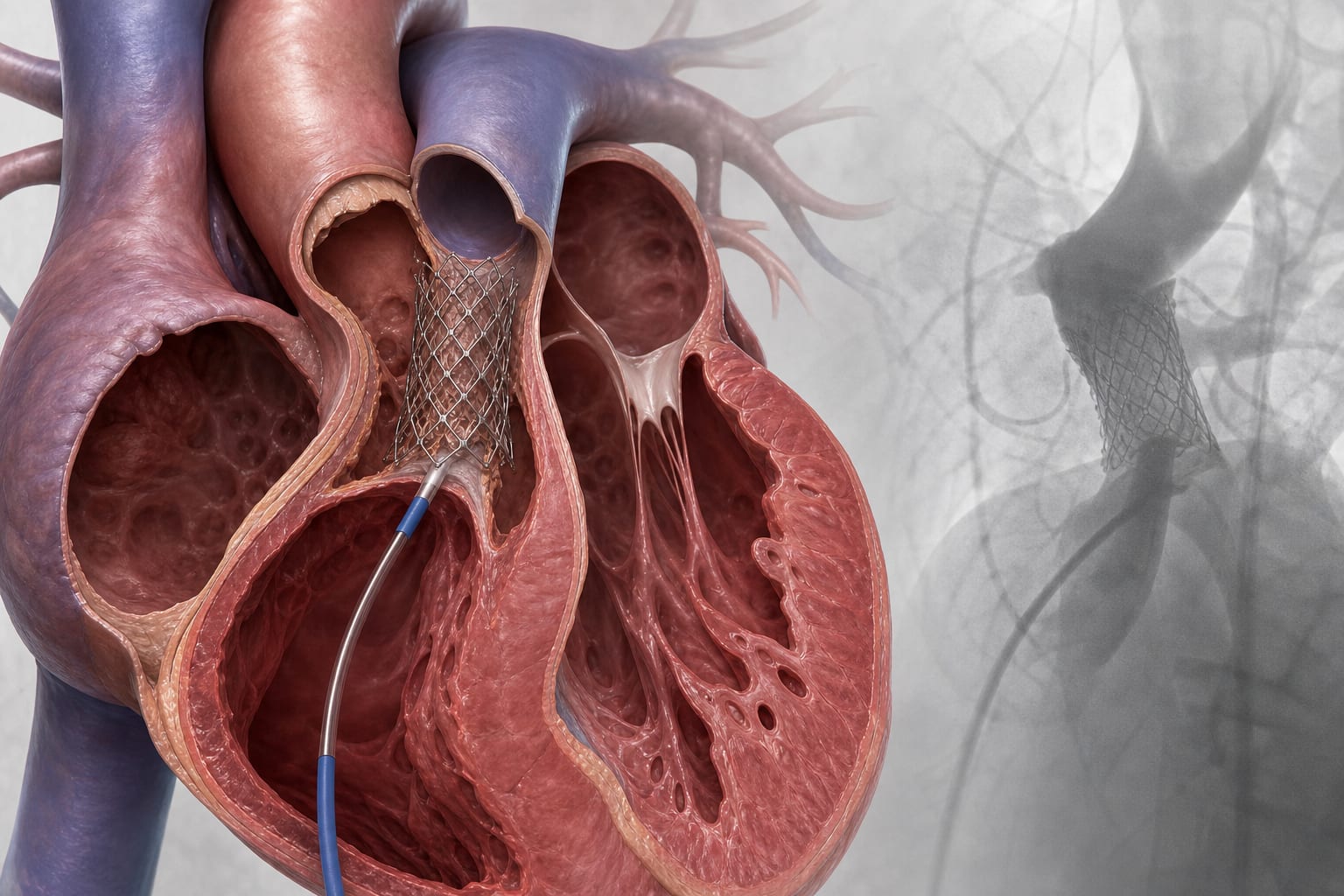
Emergency Stenting of the Right Ventricular Outflow Tract in an Adult with Cyanotic Congenital Heart Disease Facing Thrombosis and Bleeding Risks: A Case Study
Overview
This case study presents a 30-year-old woman with complex congenital heart disease who underwent emergency right ventricular outflow tract (RVOT) stenting due to severe hypoxia and associated risks of thrombosis and bleeding. Post-procedure, her oxygen saturation improved to 92%, and gastrointestinal bleeding ceased.
Background
Management of congenital heart diseases has improved significantly, with many patients surviving into adulthood. However, uncorrected adult congenital heart disease can lead to severe complications, including chronic hypoxia and dual risks of thrombosis and bleeding. RVOT stenting is a palliative option for patients with severe pulmonary underperfusion, particularly when surgical repair is deemed too risky.
Data Highlights
No numerical data or trial data available in the source material.
Key Findings
A 30-year-old woman with double-outlet right ventricle and severe pulmonary stenosis underwent emergency RVOT stenting.
She presented with profound hypoxia, polycythemia, and upper extremity deep vein thrombosis.
Post-stenting, her oxygen saturation improved to 92%, and gastrointestinal bleeding ceased.
Deep vein thrombosis regressed without the need for anticoagulation.
Clinical Implications
Emergency RVOT stenting can restore pulmonary blood flow in patients with complex congenital heart disease facing significant surgical risks.
Conclusion
The case illustrates that urgent RVOT stenting can be a therapeutic option for high-risk patients with cyanotic congenital heart disease.
National survey findings suggest many US adults report making health decisions based on social media despite widespread concerns about the accuracy of health information shared to the platforms.