Machine learning-driven risk assessment of severe Mycoplasma pneumoniae in children: analysis based on core clinical and immunological features - Report - MDSpire
Advertisement
Utilizing Machine Learning for Risk Evaluation of Severe Mycoplasma Pneumonia in Pediatric Patients: Insights from Key Clinical and Immunological Data
Clinical Report: Utilizing Machine Learning for Risk Evaluation of Severe Mycoplasma Pneumonia in Pediatric Patients
Overview
This study developed and validated a machine learning model to predict severe Mycoplasma pneumoniae pneumonia (SMPP) in children, achieving an AUC of 0.805. The model identified 16 key predictors.
Background
Severe Mycoplasma pneumoniae pneumonia (SMPP) poses significant health risks in pediatric populations, leading to serious complications and requiring aggressive treatment. Early identification of high-risk children is crucial. Traditional risk assessment methods are often inadequate.
Data Highlights
Model
AUC
95% CI
Gradient Boosting Machine
0.805
0.724–0.886
Key Findings
The Gradient Boosting Machine model was developed using clinical and immunological data from 402 pediatric patients.
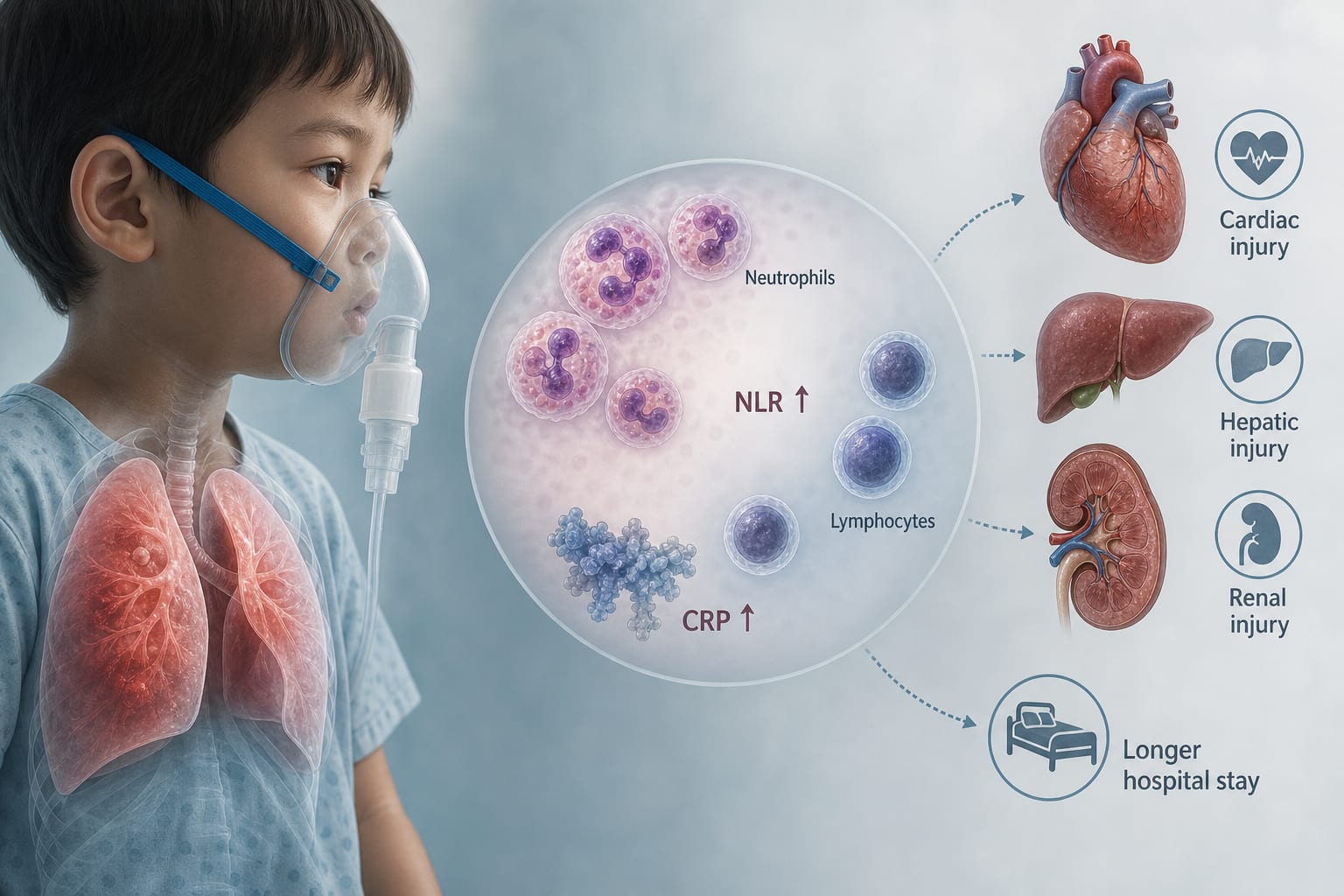
Sixteen core predictors were identified, including dyspnea, CRP levels, and total T lymphocytes.
SHAP analysis indicated that dyspnea, elevated CRP, and decreased T lymphocytes significantly increase the risk of severe illness.
Prospective multi-center validation of the model is planned.
Clinical Implications
The machine learning model provides a framework for early identification of children at risk for severe Mycoplasma pneumoniae pneumonia.
Conclusion
The study demonstrates the potential of machine learning in predicting SMPP risk.