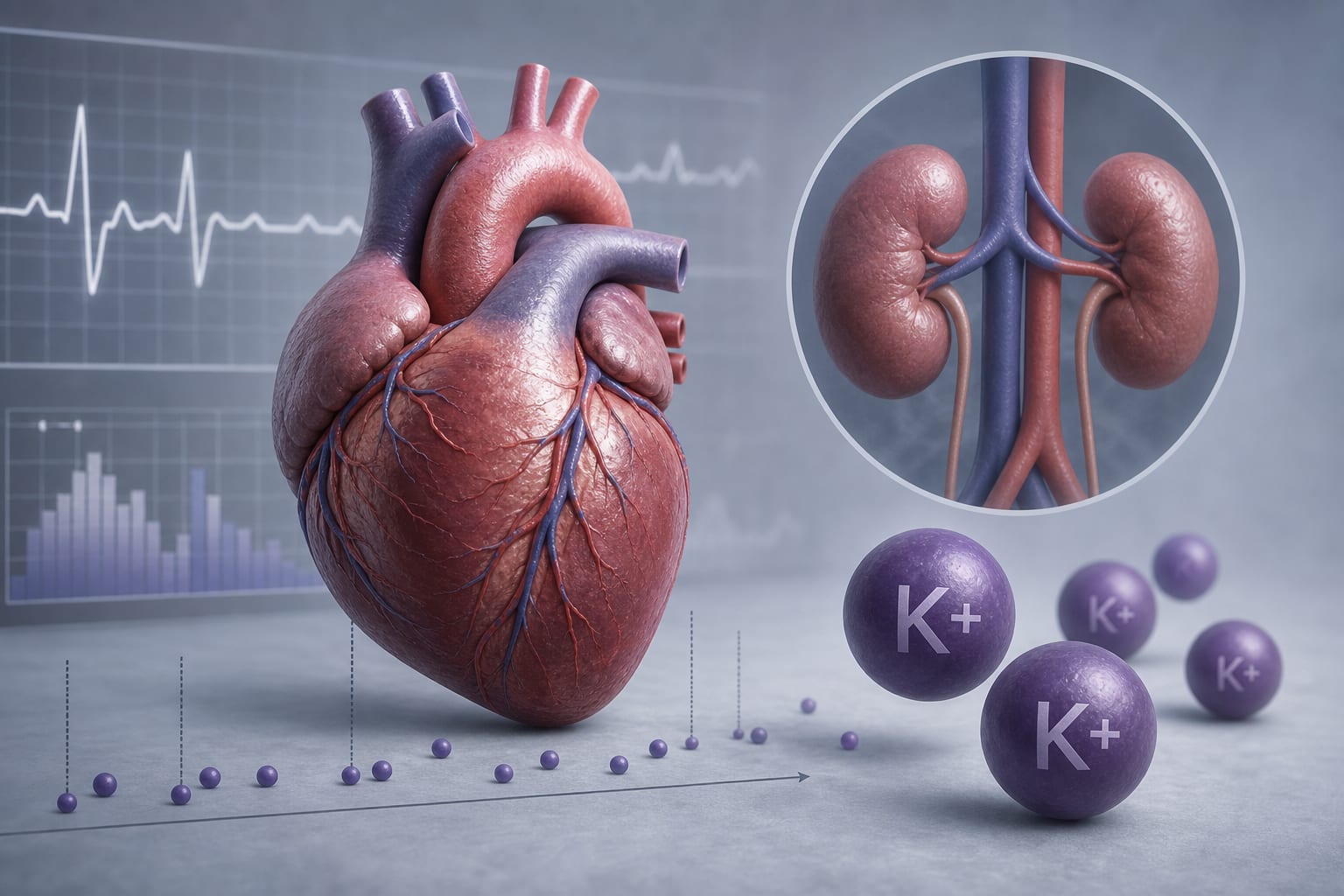
Clinical Report: Recurrence Patterns and Associated Risk Factors for Hyperkalemia in Patients with Heart Failure
Overview
This cohort study identifies high rates of recurrent hyperkalemia in heart failure patients, with significant risk factors including a history of hyperkalemia and comorbid conditions. The findings highlight the need for targeted interventions to manage hyperkalemia in this population.
Background
Hyperkalemia poses a serious risk in heart failure patients, potentially leading to life-threatening arrhythmias and sudden cardiac death. Despite its prevalence, particularly among those with chronic kidney disease and diabetes, research on recurrence patterns and associated risk factors remains limited. Understanding these factors is crucial for optimizing management strategies and improving patient outcomes.
Data Highlights
Characteristic
Full Cohort
No-CKD Subgroup
Patients
15,512
Not specified
Median Age
68 years
Not specified
Recurrent Hyperkalemia (%)
49.5%
37.3%
Mean Number of Recurrences
2.5
2.0
Mean K+ at Recurrence
∼5.5 mmol/L
∼5.5 mmol/L
Key Findings
49.5% of heart failure patients experienced recurrent hyperkalemia within 12 months.
The mean number of hyperkalemia recurrences was 2.5 in the full cohort.
History of hyperkalemia was identified as the strongest risk factor for recurrence (OR 2.3).
Other significant risk factors included hypertension, advanced CKD, immunosuppressant therapy, and malignancy.
Time to recurrence decreased with each successive hyperkalemia event.
Clinical Implications
Healthcare providers should closely monitor heart failure patients for hyperkalemia, particularly those with a history of the condition and relevant comorbidities. Implementing targeted management strategies may help mitigate the risk of recurrence and improve overall patient care.
Conclusion
The study underscores the high prevalence of recurrent hyperkalemia in heart failure patients and highlights critical risk factors that necessitate further research and targeted management approaches.