Clinical Report: Evaluation of Upadacitinib for Dermatitis from ICIs
Overview
This study evaluates the efficacy and safety of upadacitinib in patients with severe immune checkpoint inhibitor (ICI)-related dermatitis. The results indicate a 100% resolution rate of dermatitis by day 28, with rapid improvement in pruritus and minimal adverse events.
Background
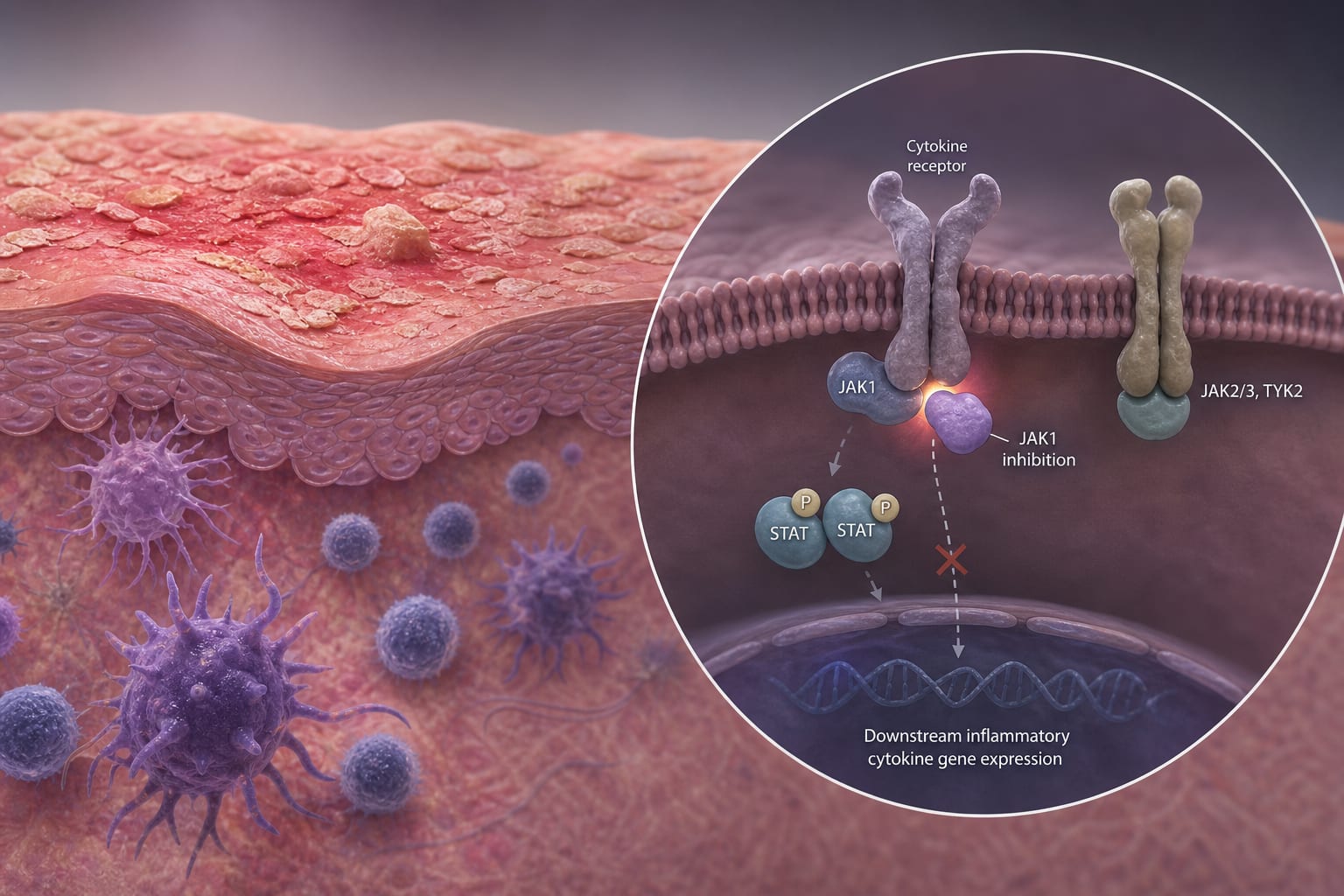
Immune checkpoint inhibitors are increasingly used in cancer therapy but can cause severe skin reactions, traditionally managed with high-dose corticosteroids. These corticosteroids carry significant risks and may reduce the efficacy of the ICI treatment. Upadacitinib, a selective JAK1 inhibitor, presents a potential alternative for managing ICI-related dermatitis.
Data Highlights
Parameter
Value
Patients Enrolled
33
Resolution Rate at Day 28
100% (95% CI, 89%-100%)
Patients Reporting Rash Relief within 3-5 Days
51.5%
Adverse Events
27.3% of patients
Most Common AE
Creatine kinase elevation (15.2%)
Key Findings
All patients experienced significant rash relief after starting upadacitinib.
The resolution rate of dermatitis was 100% by day 28.
Rash resolution occurred within 3 to 5 days for 51.5% of patients.
93.9% of patients continued their ICI treatment as scheduled.
Adverse events were fewer than in previous studies, with no serious AEs observed.
Clinical Implications
Upadacitinib may serve as a viable alternative to corticosteroids for managing severe ICI-related dermatitis, offering rapid symptom relief and a favorable safety profile. Clinicians should consider this option, especially in patients who are corticosteroid-refractory or at high risk for corticosteroid-related complications.
Conclusion
Reiterate the need for randomized trials more explicitly to emphasize the preliminary nature of the findings.