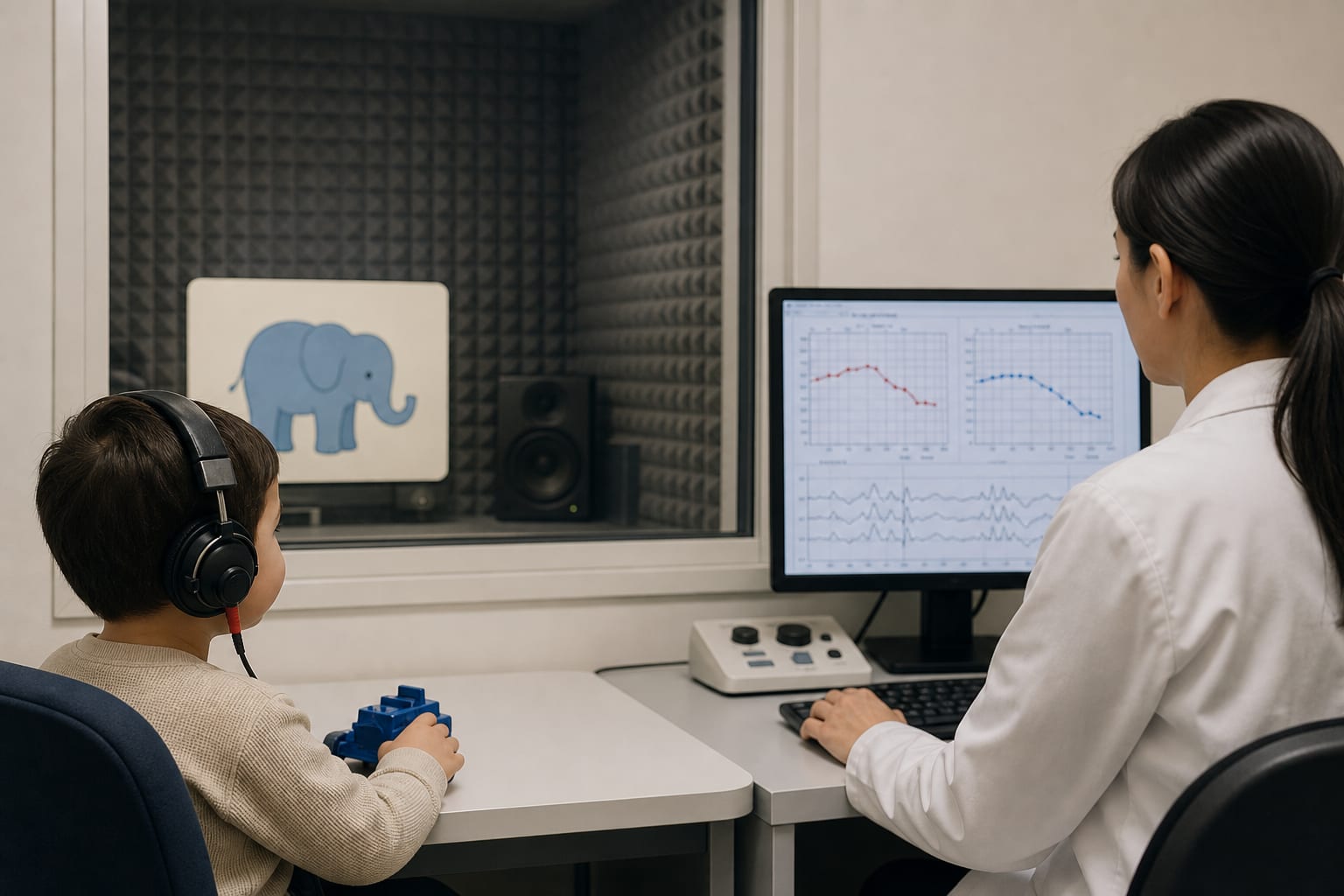
Clinical Report: Assessment of a Hearing Evaluation Protocol for Children
Overview
This study evaluates a standardized hearing assessment protocol for children aged 18 months to 8 years, focusing on those with communication challenges or autism spectrum disorder (ASD). Results indicate that while a high percentage of children met speech criteria, autistic children were less likely to meet both speech and discharge criteria compared to their peers.
Background
Hearing evaluations are crucial for children with communication challenges, particularly those with autism spectrum disorder (ASD), as they can significantly impact developmental outcomes. The study addresses the barriers autistic children face in accessing timely and accurate hearing assessments, which are essential for effective speech-language evaluations and interventions.
Data Highlights
Criteria
Percentage of Children Meeting Criteria
Speech Criteria
93.9%
Discharge Criteria
56.6%
Key Findings
93.9% of children met speech criteria for hearing evaluations.
56.6% of children met discharge criteria from audiology care.
Autistic children were significantly less likely to meet speech or discharge criteria compared to non-autistic peers.
Autistic children required nearly twice as many encounters to meet evaluation criteria.
Physiological measures were relied upon more heavily for autistic children.
Many autistic children successfully met criteria by the second encounter.
Clinical Implications
Clinicians should consider the increased number of encounters required for autistic children when planning evaluations.
Conclusion
The study highlights the effectiveness of a standardized hearing assessment protocol.
A literature review published in Future Cardiology suggests that providers should look beyond chronological age to various modifiable physiologic factors when planning a superior cavopulmonary connection (SCPC) procedure.