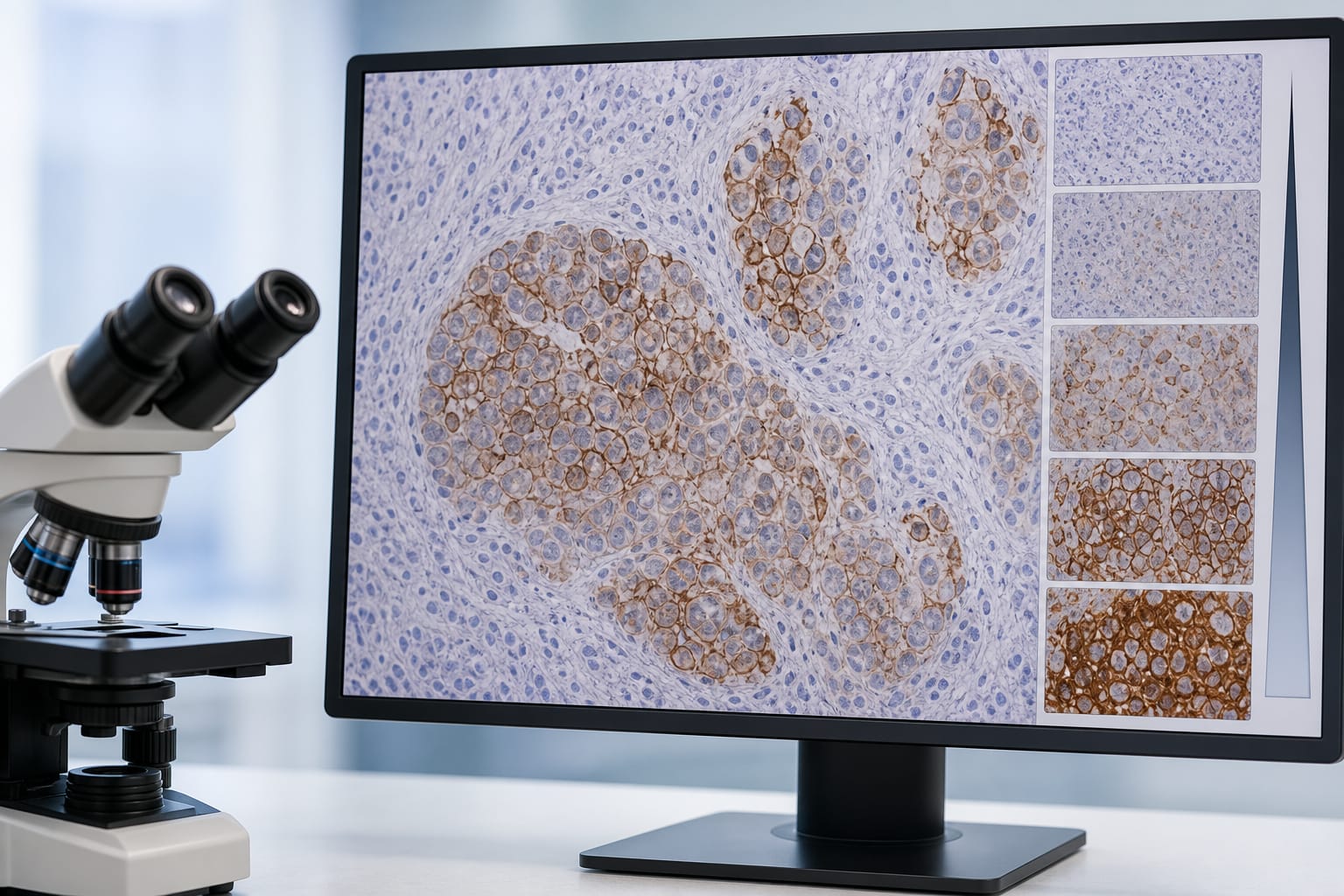
Training on PD-L1 scoring in non-small cell lung cancer with high intra- and inter-reader agreement: results of a worldwide microscopic/digital image-based training of 751 pathologists - Report - MDSpire
Conexiant’s news site is now MDSpire News. Learn more
Advertisement
Global Training Initiative on PD-L1 Scoring in Non-Small Cell Lung Cancer Achieves High Consistency Among Pathologists: Findings from a Study Involving 751 Participants
Clinical Report: Global Training Initiative on PD-L1 Scoring in NSCLC
Overview
A global training initiative for pathologists on PD-L1 scoring in non-small cell lung cancer (NSCLC) demonstrated high inter- and intra-reader agreement. The study involved 751 participants from 63 countries and highlighted the effectiveness of standardized training protocols.
Background
Lung cancer remains the leading cause of cancer-related mortality worldwide, with non-small cell lung cancer (NSCLC) accounting for approximately 85% of cases. Accurate assessment of PD-L1 expression is critical for determining eligibility for immune checkpoint inhibitors, which have significantly improved treatment outcomes. Variability in PD-L1 scoring necessitates expert training to ensure consistent and reliable results across different pathologists.
Data Highlights
Agreement Type
TPS ≥1%
TPS ≥50%
Overall Inter-Reader Agreement
95.6%
87.3%
Intra-Reader Agreement
95.9%
91.4%
Negative Percent Agreement
85.6%
91.9%
Positive Percent Agreement
97.6%
81.0%
Key Findings
The training program involved 751 pathologists from 63 countries.
High inter-reader agreement was observed at 95.6% for TPS ≥1% and 87.3% for TPS ≥50%.
Intra-reader agreement was 95.9% for TPS ≥1% and 91.4% for TPS ≥50%.
Positive percent agreement was 97.6% for TPS ≥1% and 81.0% for TPS ≥50%.
The training utilized a digital image-led approach, enhancing remote learning capabilities.
Clinical Implications
The findings underscore the importance of standardized training for pathologists to improve the consistency of PD-L1 scoring in NSCLC. Enhanced agreement among pathologists can lead to more accurate patient selection for immunotherapy, ultimately improving treatment outcomes.
Conclusion
The global training initiative successfully improved the consistency of PD-L1 scoring among pathologists, highlighting the need for ongoing education in this critical area of cancer diagnostics.
A new study from researchers at Fox Chase Cancer Center and collaborators across multiple institutions has identified a hidden subset of lung cancers that behave more like aggressive neuroendocrine tumors than traditional non-small cell lung cancer (NSCLC).
The American Thoracic Society's 2026 International Conference brought together leading voices in pulmonary, critical care, and sleep medicine — and Temple Health was well represented.