Combination of Anlotinib and Temozolomide Results in Sustained Response in Multimodal-Resistant Primary Breast Angiosarcoma with Metastasis to Skull Base and Dural Involvement: A Case Study - Report - MDSpire
Advertisement
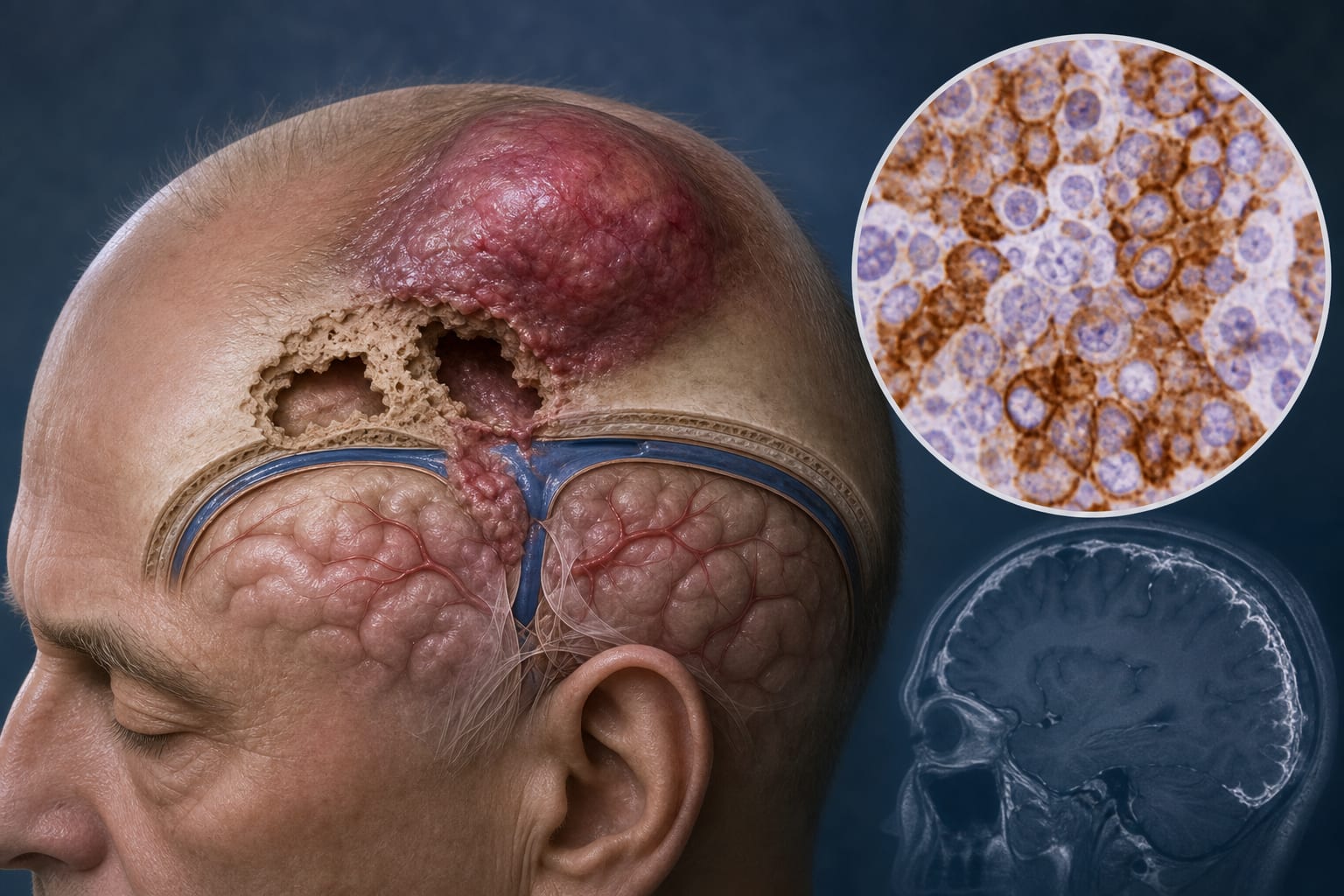
Combination of Anlotinib and Temozolomide Results in Sustained Response in Multimodal-Resistant Primary Breast Angiosarcoma with Metastasis to Skull Base and Dural Involvement: A Case Study
Clinical Report: Anlotinib and Temozolomide in Breast Angiosarcoma Case Study
Overview
This case study presents a 52-year-old woman with primary breast angiosarcoma who developed skull base metastasis and dural involvement. The combination of anlotinib and temozolomide resulted in rapid symptomatic relief and stable disease at three months, marking a novel therapeutic approach for this rare malignancy.
Background
Primary breast angiosarcoma is an extremely rare and aggressive malignancy, accounting for only 0.04% of breast cancers. It is characterized by a high propensity for metastasis, typically to the lungs, liver, or bones. This case highlights the unusual occurrence of skull base metastasis and the potential for innovative treatment strategies in managing such complex cases.
Data Highlights
The patient achieved rapid symptomatic relief within one week of starting the combination therapy. Three-month MRI results showed stable disease with resolution of temporalis enhancement and reduced dural thickening. At five-month follow-up, the patient remained progression-free.
Key Findings
The patient had a unique case of skull base metastasis and dural involvement from primary breast angiosarcoma.
Anlotinib and temozolomide demonstrated synergistic efficacy against both angiogenesis and CNS disease.
The treatment regimen was well-tolerated with no reported adverse events.
This case expands the known spectrum of metastatic sites for breast angiosarcoma.
Rapid symptomatic control was achieved after failure of multimodal therapy.
Clinical Implications
The findings suggest that the combination of anlotinib and temozolomide may be an effective treatment option for patients with refractory central nervous system metastases from angiosarcoma. Clinicians should consider this regimen in similar cases where conventional therapies have failed.
Conclusion
This case study underscores the importance of innovative therapeutic strategies in managing rare and aggressive malignancies like primary breast angiosarcoma, particularly in the context of atypical metastatic presentations.