Clinical Report: Leveraging Artificial Intelligence to Enhance Immunotherapy
Overview
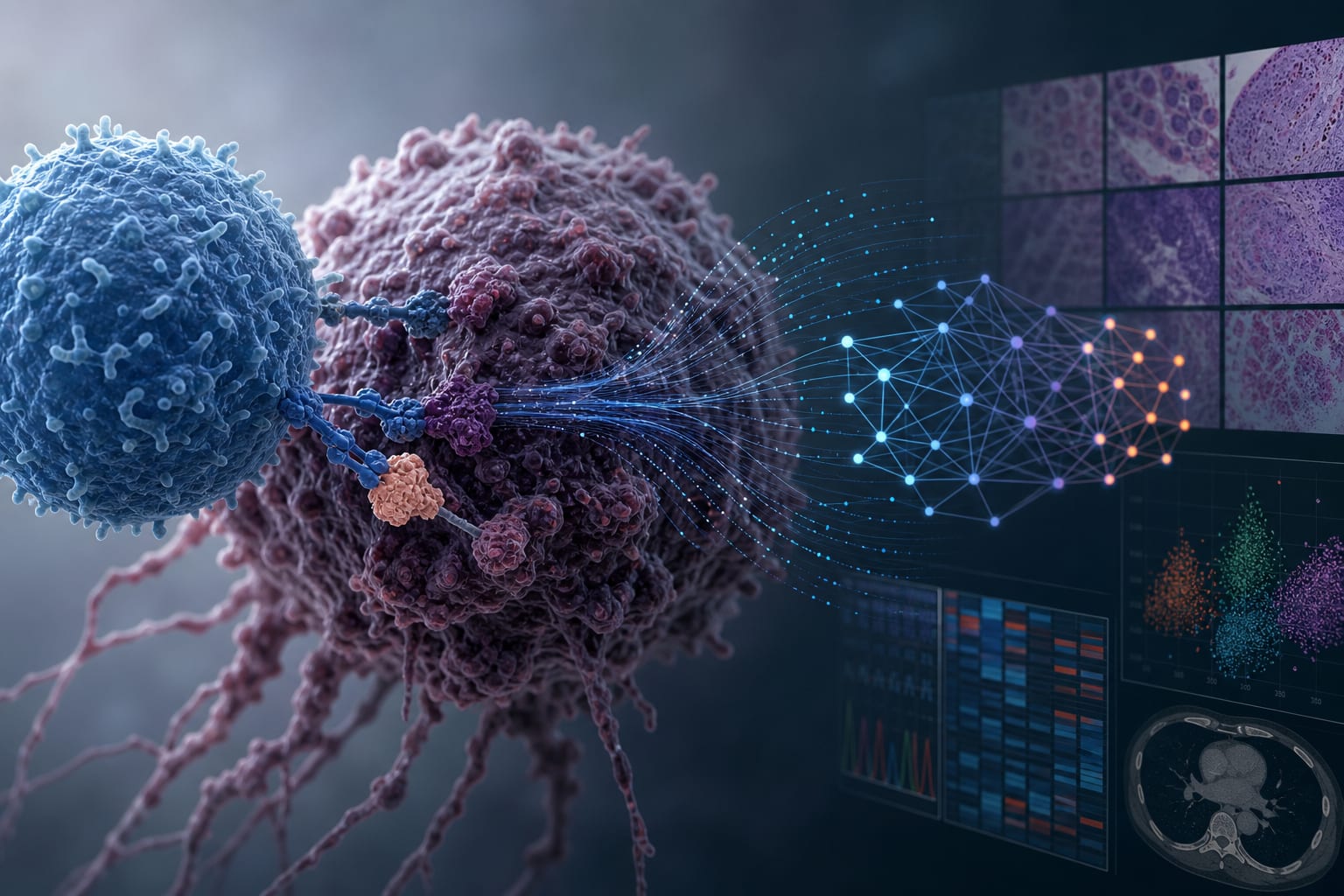
This report discusses the transformative role of artificial intelligence (AI) in optimizing cancer immunotherapy, highlighting its applications in treatment personalization and drug development. Key advancements include predictive and generative AI technologies that enhance patient stratification and treatment planning.
Background
The integration of AI in cancer treatment represents a significant advancement in precision oncology, particularly in immunotherapy, which aims to enhance the immune system's ability to combat tumors. AI technologies have shown promise in improving the efficiency and effectiveness of immunotherapy, addressing critical challenges such as patient safety and treatment personalization. Understanding these applications is essential for healthcare professionals aiming to leverage AI in clinical practice.
Data Highlights
No specific numerical data provided in the article.
Key Findings
AI technologies, including machine learning and deep learning, are enhancing cancer immunotherapy by improving response prediction and patient stratification.
Generative AI is being explored for applications such as treatment plan generation and adverse event prediction.
AI has the potential to optimize the delivery of immunotherapy and accelerate drug development processes.
Challenges remain in data quality control, patient safety, and ethical considerations that must be addressed for AI's full integration into clinical practice.
Future AI frameworks may involve multiple specialized AI agents working collaboratively with human oversight.
Clinical Implications
Healthcare professionals should consider the integration of AI technologies in immunotherapy to enhance treatment personalization and improve patient outcomes. Ongoing education about AI's capabilities and limitations is crucial for effective implementation in clinical settings.
Conclusion
AI holds significant promise for advancing immunotherapy, but careful consideration of ethical and practical challenges is necessary for its successful application in clinical oncology.