Clinical Report: The Role of the cGAS-STING Signaling Pathway in Innate Immunity
Overview
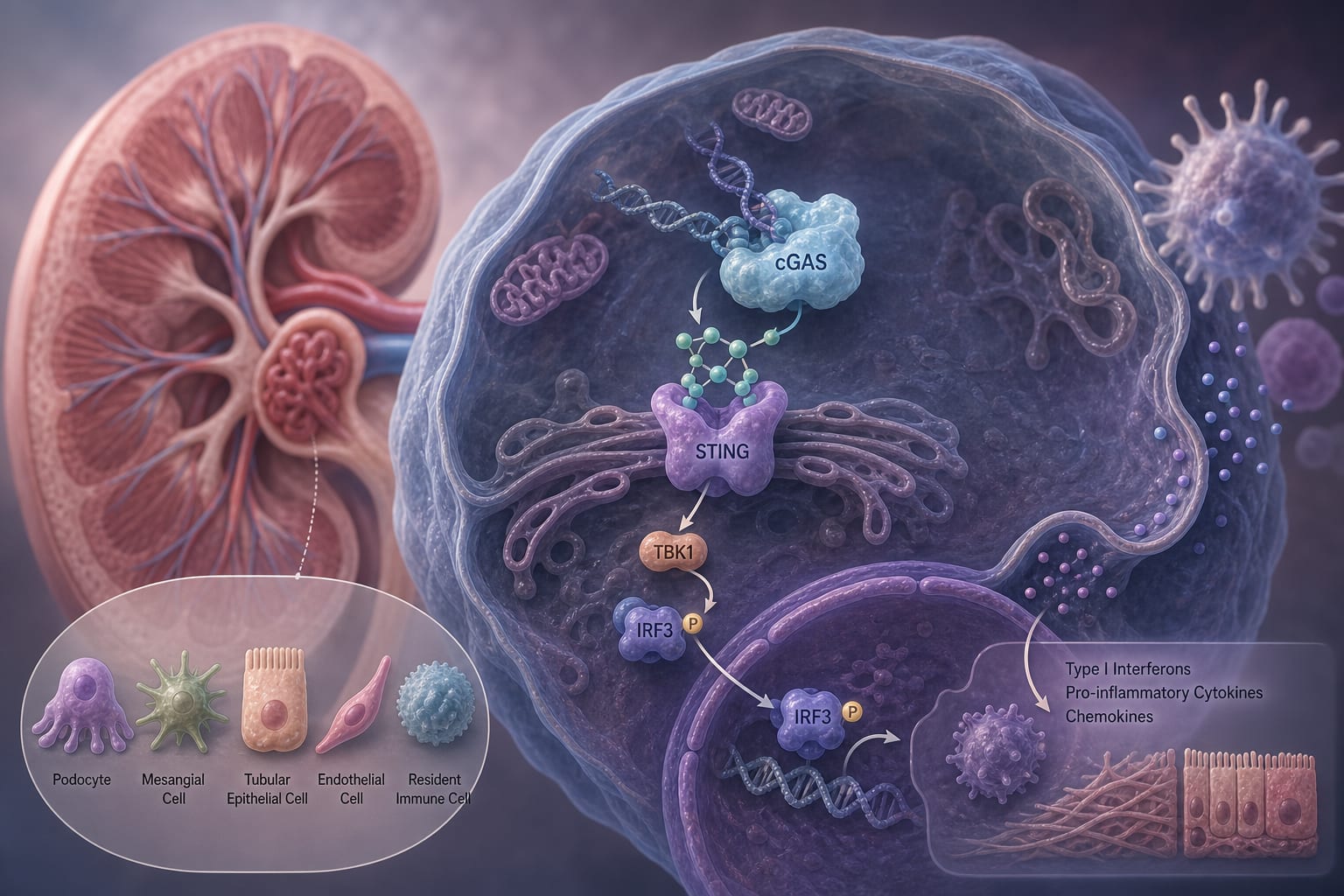
The cGAS-STING signaling pathway is crucial for innate immunity, responding to cytoplasmic DNA to initiate inflammatory responses. Its dysregulation is linked to various renal disorders.
Background
Kidney diseases, including chronic kidney disease (CKD) and acute kidney injury (AKI), represent a significant global health issue. The cGAS-STING pathway plays a pivotal role in the immune response to DNA, and its activation in renal cells contributes to inflammation and fibrosis.
Data Highlights
No numerical data available in the source material.
Key Findings
The cGAS-STING pathway is activated by cytoplasmic DNA, triggering immune responses.
Activation of this pathway in renal cells leads to inflammation, fibrosis, and cell damage.
Dysregulation of the cGAS-STING pathway is implicated in the pathogenesis of kidney diseases.
Specific renal cell types, including podocytes and tubular epithelial cells, exhibit distinct responses to cGAS-STING activation.
Research indicates potential therapeutic applications of targeting the cGAS-STING pathway in kidney diseases.
Clinical Implications
The cGAS-STING pathway is involved in renal inflammation and fibrosis. Further research is needed to explore its specific mechanisms in clinical settings.
Conclusion
The cGAS-STING signaling pathway is a critical component of innate immunity with implications for renal health.