Clinical heterogeneity and treatment optimization in anti-KLHL11 encephalitis: two case reports and literature review - Report - MDSpire

Clinical heterogeneity and treatment optimization in anti-KLHL11 encephalitis: two case reports and literature review

  • By

  • Lin Han

  • Ying Li

  • Chuan Li

  • Lin Li

  • Dan Yao

  • Yunfeng Hao

  • Xuan Zhou

  • Yuting Dang

  • Rong Zhang

  • Lan Gao

  • Jun Luo

  • Jiaxin Yang

  • Ying Du

  • Wei Zhang

  • June 1, 2026

  • 0 min

Share

Clinical Report: Diverse Clinical Presentation and Treatment Strategies in Anti-KLHL11 Encephalitis

Overview

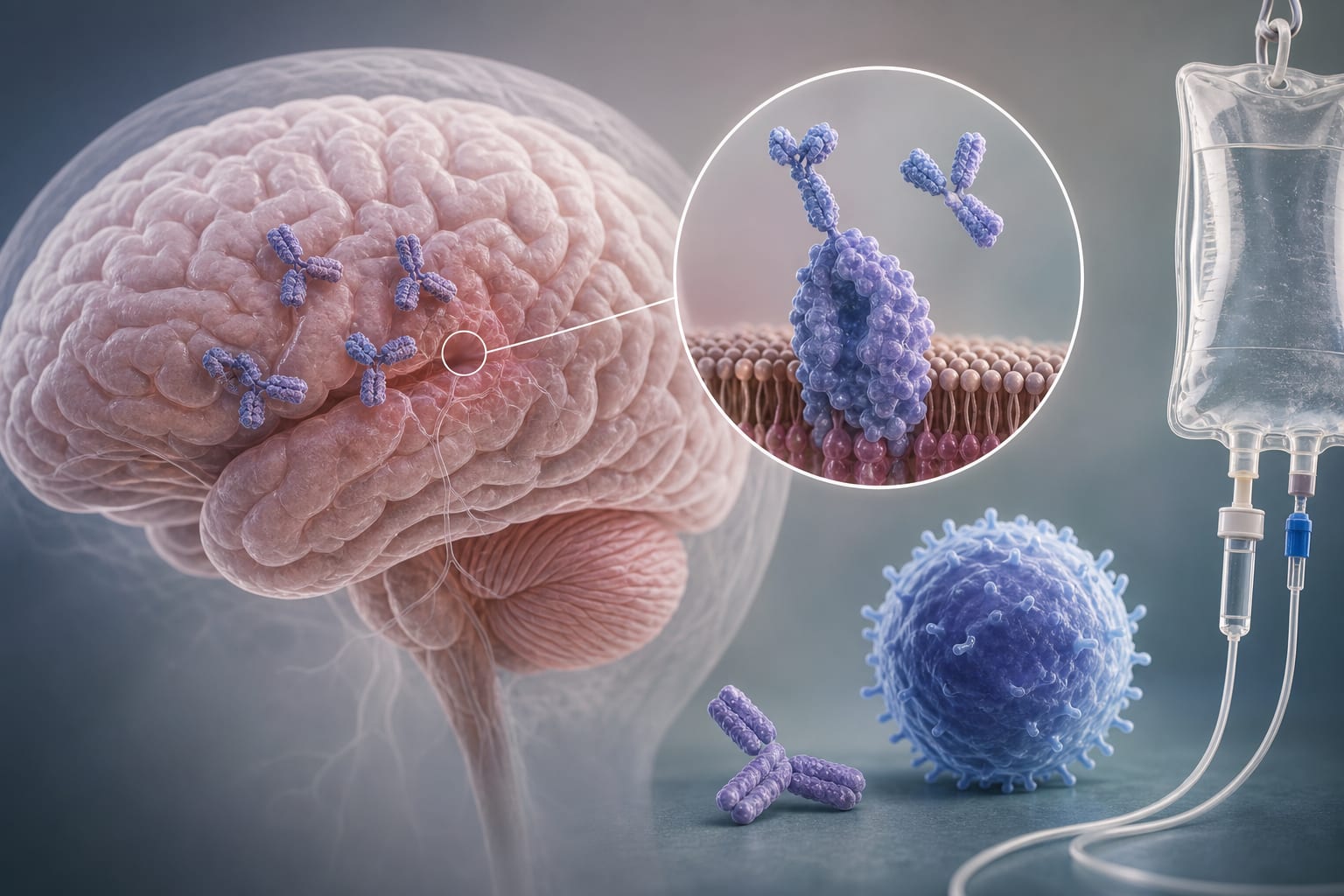
This report details two cases of anti-KLHL11 encephalitis, highlighting the clinical heterogeneity and varying treatment responses. Notably, efgartigimod emerged as a promising therapeutic option for refractory cases.

Background

Anti-KLHL11 encephalitis is a recently identified autoimmune encephalitis subtype associated with paraneoplastic syndromes, particularly in males with testicular germ cell tumors. Its clinical manifestations can vary widely, complicating diagnosis and treatment. Understanding the diverse presentations and treatment responses is crucial for improving patient outcomes.

Data Highlights

CaseAgeGenderSerum TiterCSF TiterTreatmentOutcome
152Female1:100N/AIVIG + RituximabComplete recovery
265Male1:3201:100Glucocorticoids + Rituximab + EfgartigimodMarked improvement

Key Findings

  • Anti-KLHL11 encephalitis shows significant clinical heterogeneity.
  • High serum anti-KLHL11 titer (1:320) may correlate with treatment refractoriness.
  • Immunotherapy, including IVIG and rituximab, is a cornerstone of management.
  • Efgartigimod demonstrated marked clinical improvement in a refractory case.
  • Comprehensive tumor screening is essential in managing affected patients.

Clinical Implications

Clinicians should be aware of the diverse presentations of anti-KLHL11 encephalitis and the potential for refractory cases. Early identification and treatment with immunotherapy, including novel agents like efgartigimod, may improve outcomes. Regular tumor surveillance is critical, especially in male patients.

Conclusion

The findings underscore the importance of individualized treatment strategies in anti-KLHL11 encephalitis, particularly in cases with high antibody titers. Continued research is needed to validate these observations and optimize management protocols.
Related Resources & Content

  1. Frontiers in Neurology, 2026 -- Middle-aged predominance and diagnostic delays in anti-LGI1 encephalitis: the role of antibody testing
  2. Frontiers in Neurology, 2026 -- Neurosyphilis and limbic encephalitis: practical guidance for diagnosis and treatment sequencing at an infection–autoimmunity interface
  3. Infection, 2023 -- Geographical Cluster Identification of BoDV-1 Encephalitis in Two Children from a Single Village: Insights on Treatment and Epidemiology
  4. Open Forum Infectious Diseases -- Comparative Analysis of Encephalitis in Patients with Compromised Immunity versus Those with Normal Immunity
  5. Kelch-like Protein 11 Antibodies in Seminoma-Associated Paraneoplastic Encephalitis - PMC
  6. Updated Diagnostic Criteria for Paraneoplastic Neurologic Syndromes - PMC
  7. Canadian Consensus Guidelines for the Diagnosis and Treatment of Autoimmune Encephalitis in Adults
  8. Kelch-like Protein 11 Antibodies in Seminoma-Associated Paraneoplastic Encephalitis - PMC
  9. Updated Diagnostic Criteria for Paraneoplastic Neurologic Syndromes - PMC
  10. Canadian Consensus Guidelines for the Diagnosis and Treatment of Autoimmune Encephalitis in Adults

Original Source(s)

Related Content