Exploring the predictive capacity of smartphone-based digital phenotyping to monitor pain and physical quality of life in advanced cancer patients, family caregivers, and dyads - Report - MDSpire

Exploring the predictive capacity of smartphone-based digital phenotyping to monitor pain and physical quality of life in advanced cancer patients, family caregivers, and dyads

  • By

  • Kristen Allen-Watts

  • Andres Azuero

  • Kyungmi Lee

  • Erin R. Harrell

  • Erin Currie

  • Avery C. Bechthold

  • Sally Engler

  • Kayleigh Curry

  • Frank Puga

  • Natashia Bibriescas

  • Arif H. Kamal

  • Christine S. Ritchie

  • George Demiris

  • Alexi A. Wright

  • Marie A. Bakitas

  • Burel R. Goodin

  • J. Nicholas Odom

  • July 6, 2026

  • 0 min

Share

Clinical Report: Assessing the Predictive Potential of Smartphone-Based Digital Phenotyping

Overview

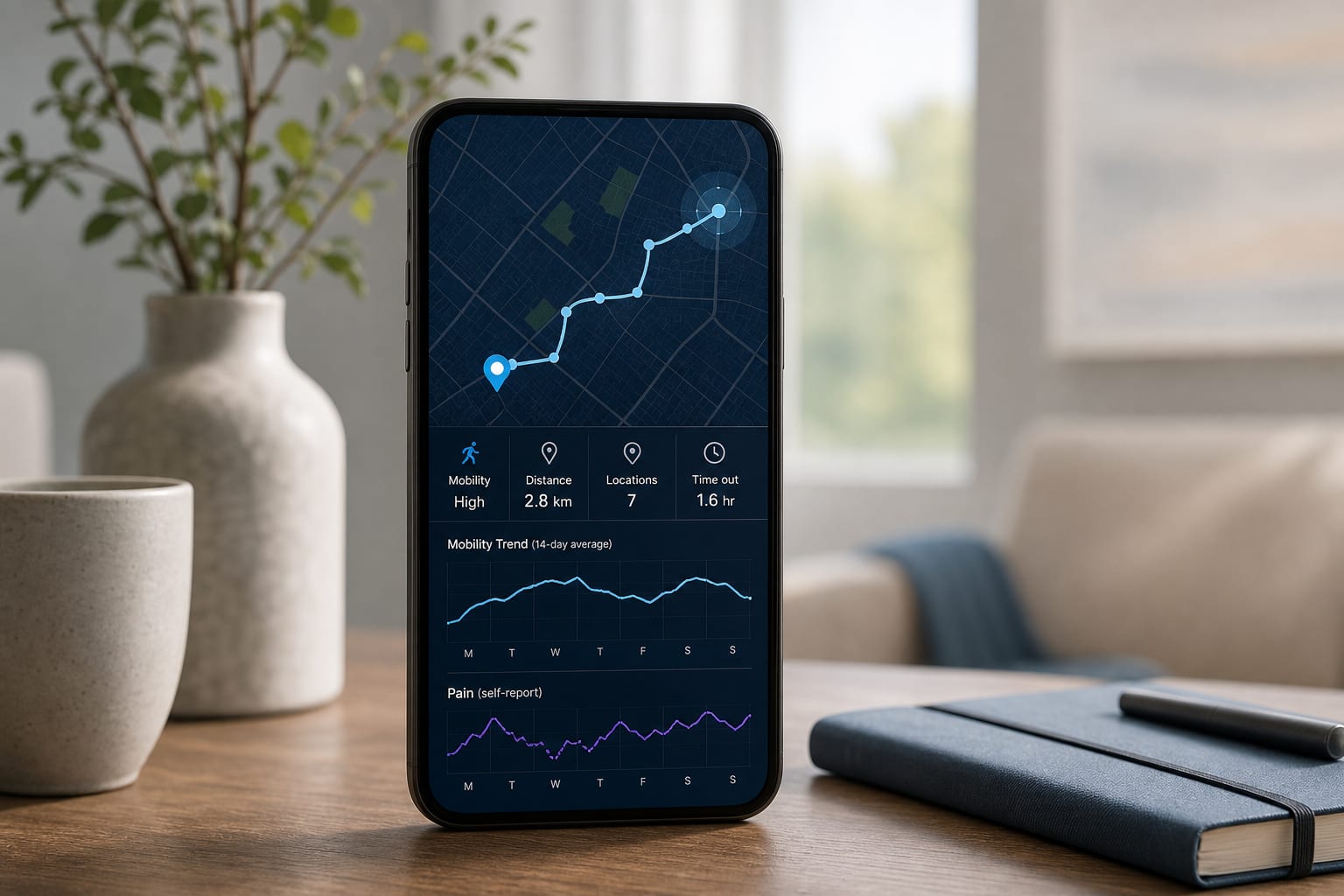
This study investigates the use of smartphone-based digital phenotyping to monitor pain and quality of life in advanced cancer patients and their caregivers. Findings indicate that caregiver mobility data significantly predicts patient pain intensity and interference.

Background

Pain is a prevalent and debilitating symptom in advanced cancer, affecting over 70% of patients. The physical and emotional toll of pain impacts patients and places a burden on family caregivers. Innovative methods such as digital phenotyping may offer new ways to assess and manage these complex symptom dynamics in real-time.

Data Highlights

OutcomeR² Value
Caregiver mobility predicting patient pain intensity0.31
Caregiver mobility predicting pain interference0.32
Combined mobility data predicting caregiver physical QOL0.43
Patient mobility predicting pain intensity0.05
Patient mobility predicting pain interference0.08

Key Findings

  • Caregiver GPS-derived mobility features predicted a large proportion of variance in patient pain intensity (R² = 0.31).
  • Caregiver mobility features also predicted pain interference with an R² of 0.32.
  • Combined caregiver and patient mobility data predicted a large variance in caregiver physical QOL (R² = 0.43).
  • Patient mobility features alone predicted small variance in caregiver physical QOL (R² = 0.02).
  • Patient mobility features were associated with small variance in physical QOL (R² = 0.03).

Clinical Implications

The findings indicate that integrating caregiver mobility data may enhance the assessment of pain and quality of life in advanced cancer care.

Conclusion

Digital phenotyping presents a method for monitoring pain and quality of life in advanced cancer, particularly through the lens of caregiver involvement.

Related Resources & Content

  1. The ASCO Post, 2026 -- Symptom-Monitoring App Helps Patients With Advanced Cancer Maintain Quality of Life
  2. The ASCO Post, 2018 -- Artificial Intelligence–Based Smartphone App Decreases Pain and Reduces Inpatient Hospitalizations in Patients With Cancer
  3. Journal of Medical Internet Research, 2024 -- Examining the Effectiveness of Electronic Patient-Reported Outcomes in People With Cancer: Systematic Review and Meta-Analysis
  4. The ASCO Post — Artificial Intelligence–Based Smartphone App Decreases Pain and Reduces Inpatient Hospitalizations in Patients With Cancer APP FOR PAIN MANAGEMENT Related Articles
  5. Frontiers in Digital Health — Feasibility of weekly patient-reported symptom monitoring using patients' own smartphones in outpatient cancer chemotherapy: the SMART-PRO study
  6. Palliative Care for Patients With Cancer: ASCO Guideline Update - PubMed
  7. Feasibility and Acceptability of Collecting Passive Smartphone Data for Potential Use in Digital Phenotyping Among Family Caregivers and Patients With Advanced Cancer - PMC
  8. https://urology.wiki/Guidelines/Cancers/NCCN/2024/%EF%BC%882024.V3%EF%BC%89NCCN%E4%B8%B4%20%E5%BA%8A%E5%AE%9E%E8%B7%B5%E6%8C%87%E5%8D%97%EF%BC%9A%E6%88%90%E4%BA%BA%E7%99%8C%E7%97%9B.pdf
  9. Journal of Medical Internet Research - Examining the Effectiveness of Electronic Patient-Reported Outcomes in People With Cancer: Systematic Review and Meta-Analysis

Original Source(s)

Related Content