Paramedian Transparietal Approach for Dominant Hemisphere Lateral Ventricle Tumors
Overview
This report details a mini-craniotomy variant of the paramedian transparietal approach for resecting atrial intraventricular tumors in the dominant hemisphere. Utilizing preoperative DTI MRI fiber tracking combined with mixed reality intraoperative navigation, a cortically conservative surgical corridor was achieved, minimizing disruption to critical white matter tracts.
Background
Atrial intraventricular tumors, often meningiomas, ependymomas, or gliomas, are rare lesions located deep within the lateral ventricles and pose significant surgical challenges due to their proximity to eloquent brain regions and critical vascular structures. Surgical approaches include transtemporal, interhemispheric transcallosal, and transparietal routes, each with distinct risks, especially in the dominant hemisphere where language and cognitive functions are at stake. Advances in neuronavigation and imaging have improved the safety and efficacy of these resections. The transparietal approach offers a balance between access and preservation of critical white matter tracts such as the optic radiation, superior longitudinal fasciculus, and arcuate fasciculus.
Data Highlights
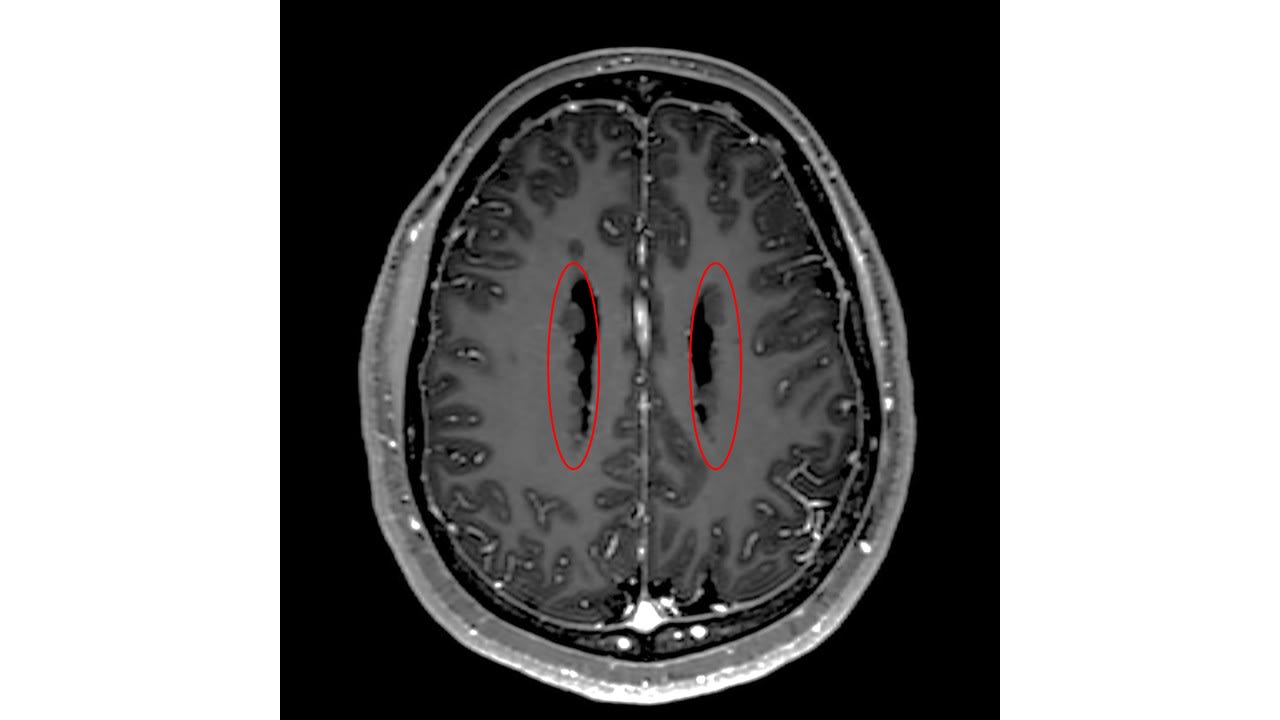
A 22-year-old left-handed female presented with a 45 × 28 mm intraventricular lesion in the left temporal horn and atrium causing ventricular dilation and moderate uncal herniation. Preoperative DTI MRI fiber tracking delineated critical white matter tracts surrounding the lesion. A mini-craniotomy with an 8-cm midline incision and two burr holes spaced 5 cm apart was performed. The transparietal corridor was extended approximately 10 mm through cortex and white matter to access the lateral ventricle and tumor.
Key Findings
The paramedian transparietal approach allows a nearly vertical, line-of-sight corridor to the atrial tumor while sparing critical white matter tracts (optic radiation, SLF, AF).
Preoperative DTI MRI fiber tracking combined with mixed reality intraoperative navigation enables precise surgical planning and cortically conservative access.
A mini-craniotomy with a single midline incision and two burr holes provides sufficient exposure while minimizing dural opening and cortical disruption.
Patient positioning with a neutral head and slight chin tuck facilitates optimal surgical trajectory and neuromonitoring.
The approach avoids the risks associated with transtemporal and interhemispheric transcallosal routes, such as injury to language areas or memory impairment.
Clinical Implications
This technique offers a safer alternative for resecting dominant hemisphere atrial tumors by minimizing injury to eloquent cortex and white matter tracts. Incorporation of advanced imaging and mixed reality navigation enhances surgical precision and may reduce postoperative neurological deficits. The mini-craniotomy approach also reduces operative morbidity by limiting the extent of bone and dural exposure.
Conclusion
The mini-craniotomy paramedian transparietal approach, guided by DTI fiber tracking and mixed reality, provides a cortically sparing and effective corridor for dominant hemisphere lateral ventricular tumor resection. This method balances maximal tumor access with preservation of critical neurological functions.
References
Andrews et al. 2021 -- Paramedian Transparietal Approach for Atrial Intraventricular Meningioma
Kempe and Blaylock -- Interhemispheric Transcallosal Approach
Epilepsy remains a life-altering condition, particularly due to the unpredictable nature of seizures and their cumulative impact on cognition, independence and quality of life.