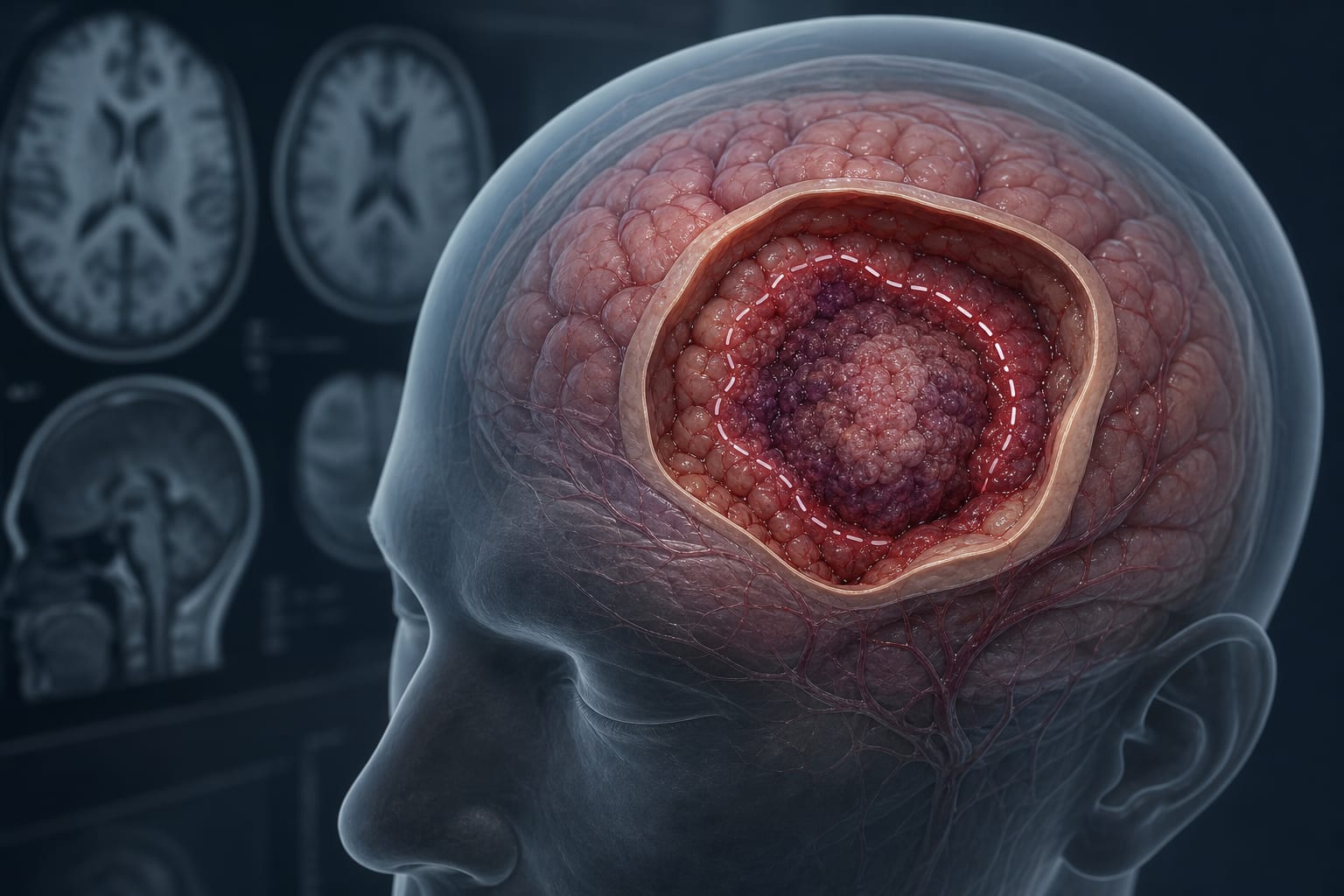
Preoperative nTMS Evaluation Identifies Motor Impairment Risk in Brain Tumor Patients
Overview
This study demonstrates that navigated transcranial magnetic stimulation (nTMS) combined with neurophysiological parameters effectively predicts postoperative motor deficits in patients with gliomas in motor eloquent areas. Incorporating cortical silent period (CSP) and recruitment curve (RC) measurements alongside anatomical data enhances risk stratification for motor impairments after surgery.
Background
Brain tumor surgery requires balancing maximal tumor resection with preservation of motor function to avoid postoperative deficits that negatively impact quality of life and survival. Preoperative nTMS is a validated tool for localizing motor eloquent cortex and guiding surgical planning. Previous models predicting postoperative motor outcomes used tumor infiltration, tumor-to-corticospinal tract distance, and resting motor threshold ratios. This study aims to improve prognostic accuracy by including additional neurophysiological parameters such as CSP and RC in a large patient cohort.
Data Highlights
Parameter
Patient Count
Measurement Description
Resting Motor Threshold (RMT)
170
Lowest intensity evoking MEP >50 µV in 5/10 stimulations
Recruitment Curve (RC)
124
MEP amplitudes vs stimulation intensity slope from 80 TMS pulses
Cortical Silent Period (CSP)
72
Duration of EMG silent period at 130% RMT during muscle contraction
Follow-up Motor Status
160
Assessed at postoperative day 7 and month 3
Key Findings
Preoperative nTMS mapping accurately identifies motor cortex infiltration and tumor proximity to corticospinal tract.
Resting motor threshold ratios between hemispheres correlate with postoperative motor outcomes.
Recruitment curve slope provides additional information on corticospinal excitability relevant for risk prediction.
Cortical silent period duration reflects GABA-B mediated cortical inhibition and serves as a novel predictor of motor impairment risk.
Incorporating CSP and RC into the existing regression model improves individualized risk stratification for postoperative motor deficits.
Use of nTMS data in surgical planning facilitates maximal tumor resection while minimizing functional deficits.
Clinical Implications
Integrating advanced nTMS neurophysiological parameters such as CSP and RC into preoperative assessment enhances prediction of motor deficits, enabling tailored surgical strategies. This approach supports informed risk-benefit discussions and may improve postoperative functional outcomes by guiding extent of resection and intraoperative monitoring. Routine use of nTMS mapping should be considered in patients with gliomas near motor eloquent cortex.
Conclusion
Preoperative nTMS combined with neurophysiological measures provides a robust method to identify patients at risk for postoperative motor impairments. This facilitates individualized surgical planning aimed at preserving motor function while achieving maximal tumor resection.
References
Ille et al. 2024 -- Preoperative nTMS Evaluation: An Effective Method for Identifying Potential Motor Impairments in Patients with Brain Tumors
by Ina Moritz, Melina Engelhardt, Tizian Rosenstock, Ulrike Grittner, Oliver Schweizerhof, Rutvik Khakhar, Heike Schneider, Andia Mirbagheri, Anna Zdunczyk, Katharina Faust, Peter Vajkoczy, Thomas Picht
These 10 states make it more practical for physicians to participate in hospital ownership by aligning statutory structure, corporate practice of medicine rules, and population trends.