Telerehabilitation in children and adolescents with intellectual disability: a systematic review - Report - MDSpire

Telerehabilitation in children and adolescents with intellectual disability: a systematic review

  • By

  • Martina Micai

  • Letizia Gila

  • Angela Caruso

  • Daniela Morelli

  • Maria Grazia Totino

  • Giulia Balboni

  • Carmen Belacchi

  • Alessandra Colucci

  • Chiara Fantini

  • Tiziana Metitieri

  • Margherita Orsolini

  • Alessandra Rampazzi

  • Ciro Ruggerini

  • Cristiana Stefani

  • Marco Bertelli

  • Francesca Fulceri

  • Maria Luisa Scattoni

  • June 11, 2026

  • 0 min

Share

Clinical Report: Telehealth Rehabilitation for Youth with Intellectual Disabilities

Overview

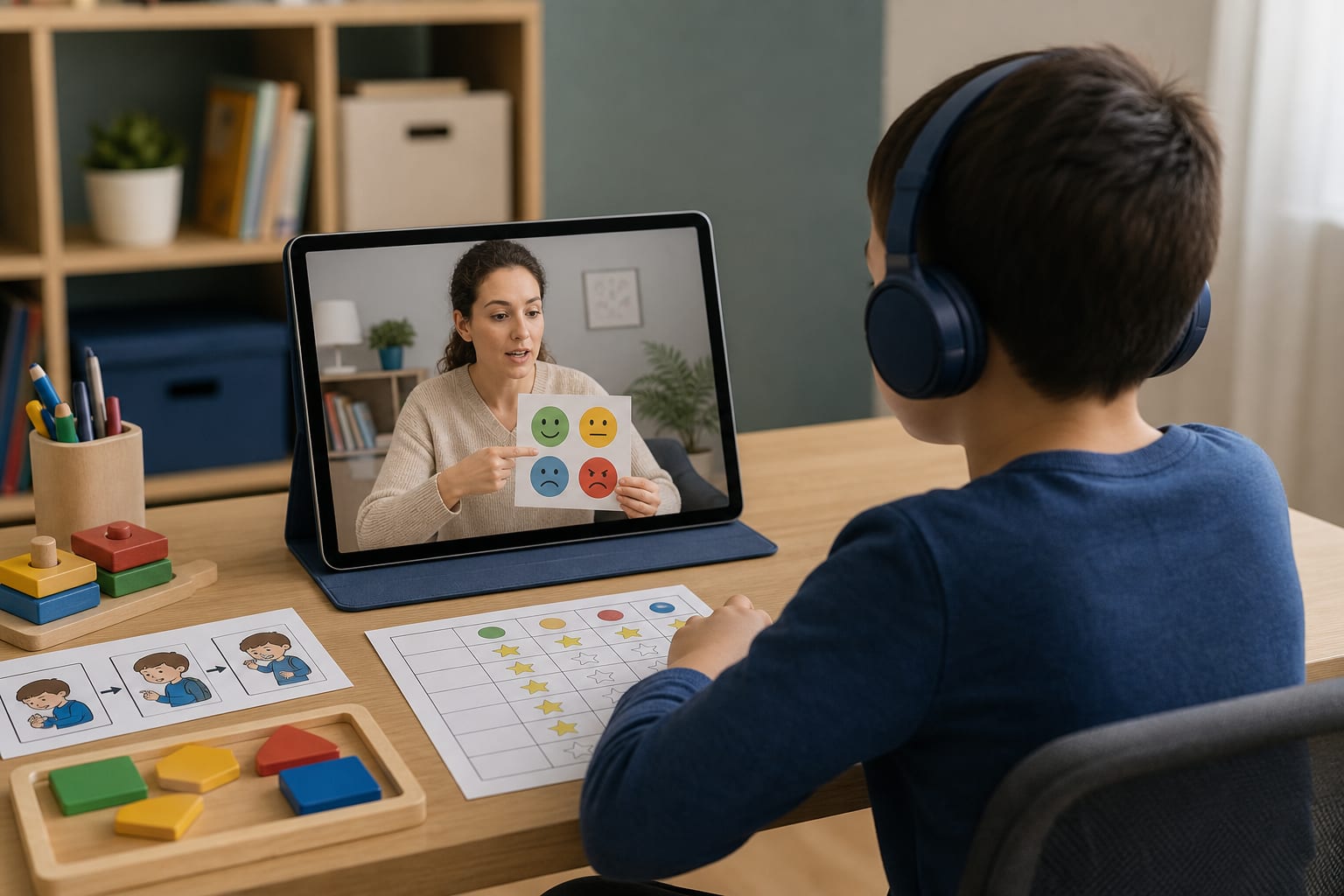
This systematic review evaluates the impact of telerehabilitation on cognitive, behavioral, and functional outcomes in children and adolescents with intellectual disabilities (ID). Findings indicate that telerehabilitation can improve language skills, reduce challenging behaviors, and enhance executive functions, particularly when caregivers are involved.

Background

Intellectual disabilities affect a significant number of children, leading to challenges in adaptive behavior and co-occurring conditions. Access to effective rehabilitation services is crucial for improving the quality of life for these individuals. Telerehabilitation has emerged as a promising solution to enhance service delivery, especially highlighted during the COVID-19 pandemic.

Data Highlights

Study TypeParticipantsIntervention TypesKey Outcomes
28 studies668Parent-mediated, cognitive training, behavioral interventionsImprovements in language, behavior, executive functions, motor outcomes

Key Findings

  • Telerehabilitation interventions generally improved language and communication skills.
  • Parent-mediated and telehealth-delivered behavioral interventions reduced externalizing behaviors and parental stress.
  • Digital cognitive training programs showed feasibility and short-term gains in working memory and attention.
  • Interventions targeting lifestyle and mental health demonstrated promising preliminary results.
  • Studies exhibited substantial variability in design, intervention protocols, and outcome measures.

Clinical Implications

Healthcare providers should consider integrating telerehabilitation into care plans for children with ID, particularly involving caregivers in the process. Further research is needed to establish standardized protocols and assess long-term outcomes.

Conclusion

Telerehabilitation presents a feasible and potentially effective approach for supporting youth with intellectual disabilities, warranting further investigation to optimize intervention strategies.

Related Resources & Content

  1. Frontiers in Digital Health, 2026 -- Artificial intelligence in rehabilitation: a review of clinical effectiveness, real-world performance, safety, and equity across modalities and settings
  2. npj Digital Medicine, 2026 -- Assessing Youth Mental Health Needs Through an Adaptive Digital Tool: Findings from a Cross-Sectional Analysis
  3. Journal of Medical Internet Research (JMIR), 2026 -- Opportunities and Concerns of Gamified, Extended Reality for Home-Based Motor Rehabilitation for Children With Brain Injury: Qualitative Case Study on Design Elements Related to the Engagement and Fatigue Perspectives
  4. Scaling up telemedicine in the WHO European Region, WHO, 2025
  5. Package of interventions for rehabilitation: module 5: neurodevelopmental disorders, WHO, 2025
  6. phoenix children's medical connection — Digital Health in Pediatric Neurology: From Episodic to Continuous Care
  7. Digital Health in Pediatric Neurology: From Episodic to Continuous Care
  8. Reaching a Consensus on the Definition of Telerehabilitation: World Federation of Neurorehabilitation Telerehabilitation Special Interest Group - PMC
  9. Prescribing Assistive Technology: Focus on Children With Complex Communication Needs: Clinical Report | Pediatrics | American Academy of Pediatrics
  10. Scaling up telemedicine in the WHO European Region
  11. Package of interventions for rehabilitation: module 5: neurodevelopmental disorders
  12. Frontiers | Telerehabilitation in Children and Adolescents with Intellectual Disability: A Systematic Review
  13. Journal of Medical Internet Research - Early Intervention for Children With Developmental Disabilities and Their Families via Telehealth: Systematic Review
  14. Telehealth Parent Training for Challenging Behavior in Children with Developmental Disabilities: A Systematic Review and Meta-Analysis | Review Journal of Autism and Developmental Disorders | Springer Nature Link
  15. A feasibility randomised trial of remotely delivered Video Interaction Guidance for parents of children with intellectual disability referred to specialist mental health services | Pilot and Feasibility Studies | Springer Nature Link
  16. Telehealth-Based Parent-Mediated Pivotal Response Treatment for Preschool Children With Autism Spectrum Disorder: A Pilot Randomized Controlled Study
  17. JMIR Rehabilitation and Assistive Technologies - The Safety of Telerehabilitation: Systematic Review

Original Source(s)

Related Content