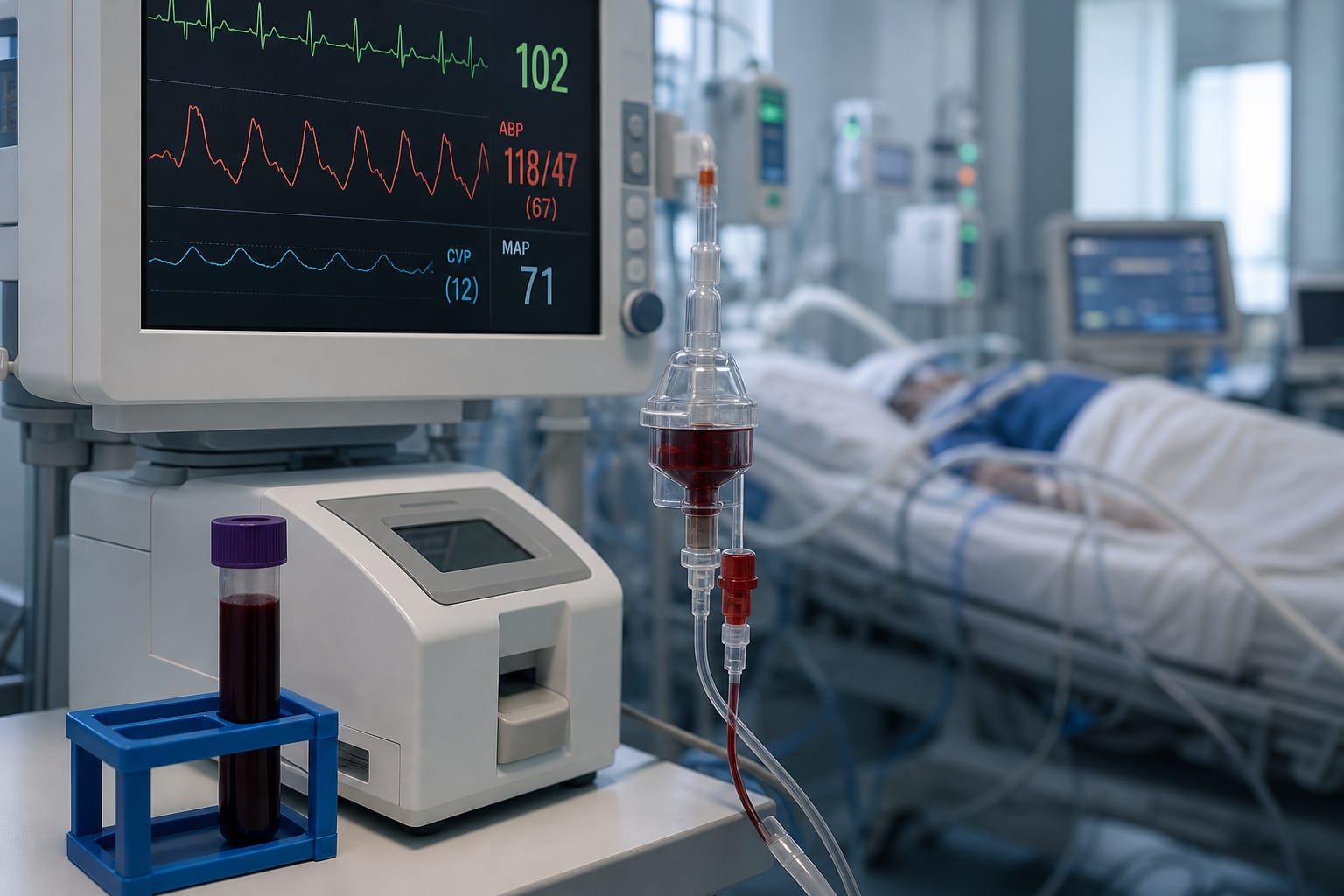
Clinical Report: The Role of Bronchoscopy in Enhancing Safety During Percutaneous Tracheostomy
Overview
Routine bronchoscopy during percutaneous dilational tracheostomy (PCT) does not reduce major complications, mortality, or length of hospitalization, while significantly prolonging both preparation and procedural duration. The study highlights the need for careful consideration of bronchoscopy's role in PCT, particularly in mechanically ventilated ICU patients, as its routine use may not be justified based on current evidence.
Background
Percutaneous dilational tracheostomy (PCT) is a common procedure in critically ill patients requiring mechanical ventilation. The use of bronchoscopy during PCT has been debated, with concerns regarding its impact on procedural outcomes, patient safety, and potential complications. Understanding the efficacy of routine bronchoscopy is crucial for optimizing clinical practices and resource utilization in intensive care settings.
Data Highlights
No significant difference in major complications, mortality, or length of hospitalization was observed between bronchoscopy and non-bronchoscopy groups, despite longer procedural times in the bronchoscopy group, which raises questions about its routine application.
Key Findings
Routine bronchoscopy did not reduce major complications or mortality in PCT.
Procedural duration was significantly longer in the bronchoscopy group, which may affect resource allocation.
No significant difference in desaturation events was observed between groups, suggesting similar safety profiles.
Only one of three deaths within 24 hours was considered procedure-related, indicating that the absence of bronchoscopy did not adversely affect outcomes.
Bronchoscopy may be beneficial in selected patients with difficult anatomy, highlighting the need for individualized assessment.
Clinical Implications
Clinicians should weigh the benefits and drawbacks of routine bronchoscopy in PCT, considering that it may not improve outcomes for all patients. Individualized approaches based on patient anatomy, operator experience, and specific clinical scenarios may enhance procedural safety and efficiency.
Conclusion
The findings suggest that while bronchoscopy can be a valuable tool in specific scenarios, its routine use during PCT may not be justified based on current evidence, emphasizing the need for further research.
by Akiva Nachshon, Avishai Shapiro, Smadar Goldfarb, Natalia Kuzmina, Marc Romain, Asaf Schwartz, Avraham Abutbul, Ido Vilchik, Michael Beil, Peter V. van Heerden