Clinical Report: Comparison of First-Line Enfortumab Vedotin Combined with Pembrolizumab
Overview
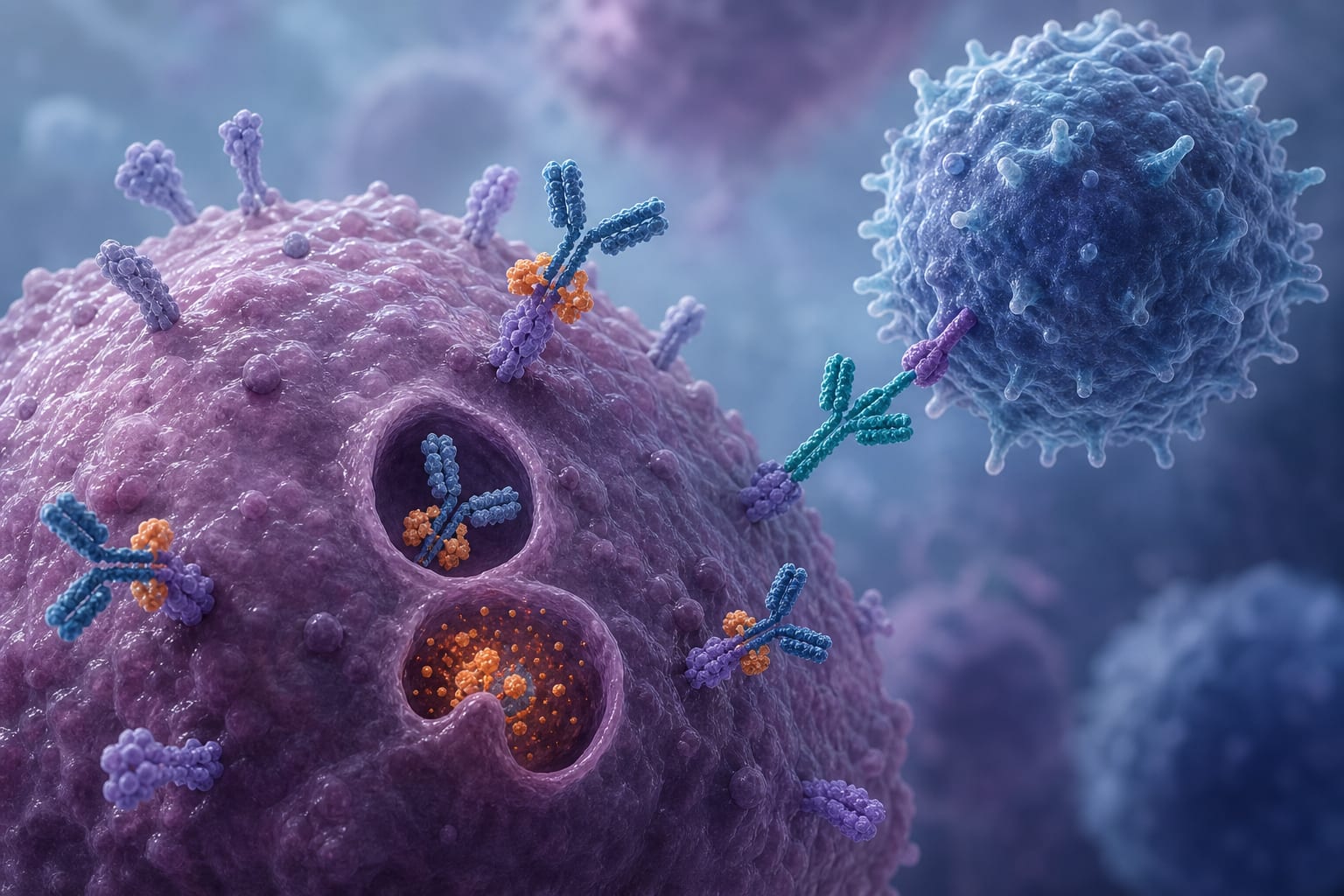
This study evaluates the overall survival (OS) of patients with metastatic urothelial carcinoma (mUC) receiving first-line enfortumab vedotin plus pembrolizumab (EV/P) compared to gemcitabine and cisplatin (G/C).
Background
Metastatic urothelial carcinoma is associated with poor long-term survival, and traditional platinum-based chemotherapy has shown limited efficacy. The phase 3 EV-302 trial indicated that EV/P provides superior OS and progression-free survival compared to standard chemotherapy, leading to its FDA approval as a first-line treatment.
Data Highlights
This study utilized deidentified electronic health record data from the TriNetX database, including over 140 healthcare organizations. The primary outcome was overall survival (OS) from the initiation of therapy, with secondary outcomes including treatment sequencing patterns and adverse events.
Key Findings
EV/P demonstrated superior overall survival compared to G/C in a retrospective cohort of patients with mUC.
Patients receiving EV/P had a longer time to next treatment, indicating potential benefits in progression-free survival.
Subgroup analyses revealed variations in OS based on age, race, sex, and site of metastasis.
Adverse events were monitored, with a focus on treatment-related complications in both treatment groups.
The study adhered to the STROBE reporting guidelines for observational studies.
Clinical Implications
Observational data can help assess the effectiveness of EV/P in routine practice.
Conclusion
This retrospective analysis supports the use of EV/P as a first-line treatment option for mUC.
by Eusebio Luna Velasquez, Renil S. Titus, David-Dan Nguyen, Carlos Riveros, Aly-Khan Lalani, Dharam Kaushik, Guru P. Sonpavde, Petros Grivas, Christopher J. D. Wallis, Raj Satkunasivam