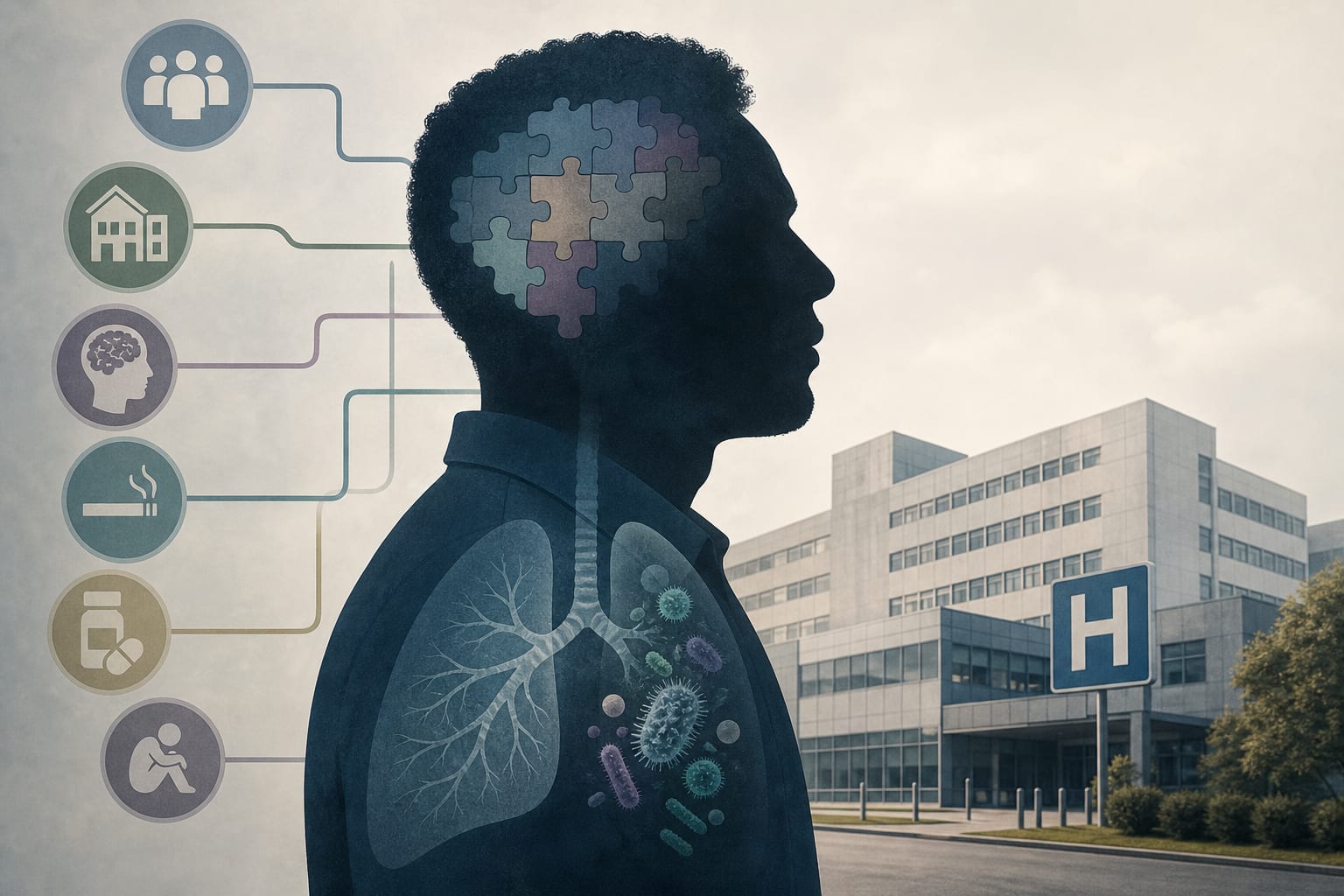
Determinants of Infection-Related Hospital Admissions in Individuals with Severe Mental Illness
Overview
This study identifies key factors associated with infection-related hospitalizations in individuals with severe mental illness (SMI), highlighting the role of prior hospital admissions and specific medication use.
Background
Individuals with severe mental illness (SMI) face a significantly higher risk of infection-related hospitalizations compared to the general population, contributing to increased morbidity and mortality.
Data Highlights
Factor
Hazard Ratio (HR)
95% Confidence Interval (CI)
General hospital admissions for ambulatory care sensitive conditions
2.31
2.08 to 2.56
Clozapine prescribing
1.67
1.45 to 1.92
Severe problems with physical illness/disability
1.36
1.31 to 1.42
Key Findings
Individuals with SMI have a higher risk of infection-related hospitalizations compared to the general population.
Key factors associated with increased risk include prior general hospital admissions for ambulatory care sensitive conditions.
Clozapine prescribing is linked to a higher likelihood of infection-related hospitalizations.
Severe physical illness or disability significantly contributes to the risk of hospitalization for infections.
Two distinct patterns of risk factors were identified: one associated with older age and physical health issues, and another with younger individuals facing complex psychiatric and substance use challenges.
Clinical Implications
Healthcare providers should consider the identified risk factors when assessing individuals with SMI for infection-related hospitalizations.
Conclusion
This study enhances the understanding of factors leading to infection-related hospitalizations in individuals with SMI.