Noninvasive MRA-derived fractional flow for intracranial stenosis: methodological evaluation and hemodynamic insights - Report - MDSpire

Noninvasive MRA-derived fractional flow for intracranial stenosis: methodological evaluation and hemodynamic insights

  • By

  • Xiaohui Wang

  • Haojing Zhu

  • Zhihua Du

  • Rongju Zhang

  • Yang Bian

  • Xinfeng Liu

  • Bin Lv

  • Rui Zhang

  • Jinhao Lyu

  • Xu Guan

  • Ziwei Guo

  • Xiangyu Cao

  • Jiawen Zhu

  • Rong Zou

  • Jianping Xiang

  • Shengyuan Yu

  • Jun Wang

  • June 29, 2026

  • 0 min

Share

Clinical Report: Evaluation of a Noninvasive MRA-Based Fractional Flow Method

Overview

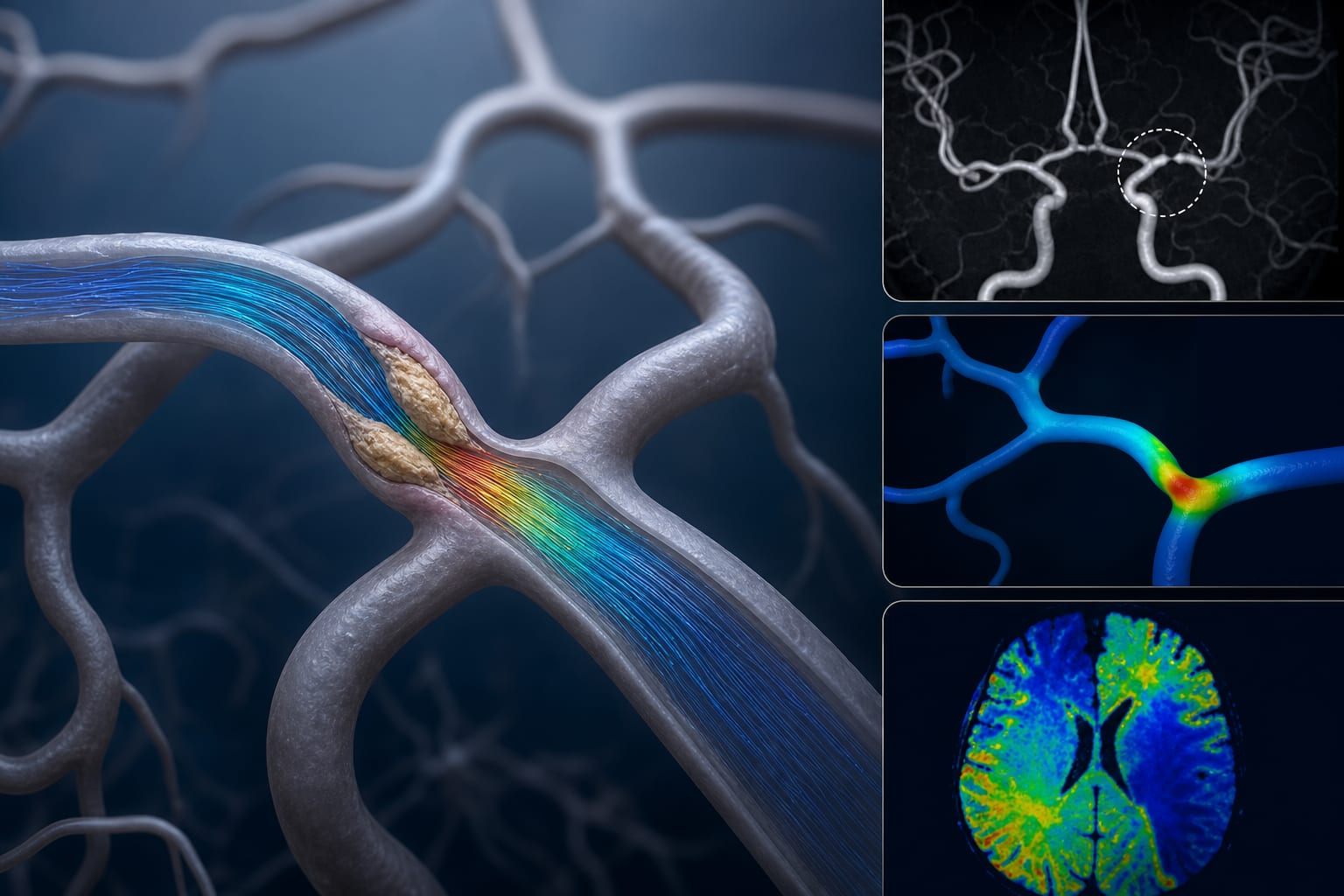
This study evaluates a noninvasive fractional flow method derived from magnetic resonance angiography (MRA-FF) for assessing intracranial atherosclerotic stenosis (ICAS). MRA-FF demonstrated good agreement with invasive and angiographic reference methods.

Background

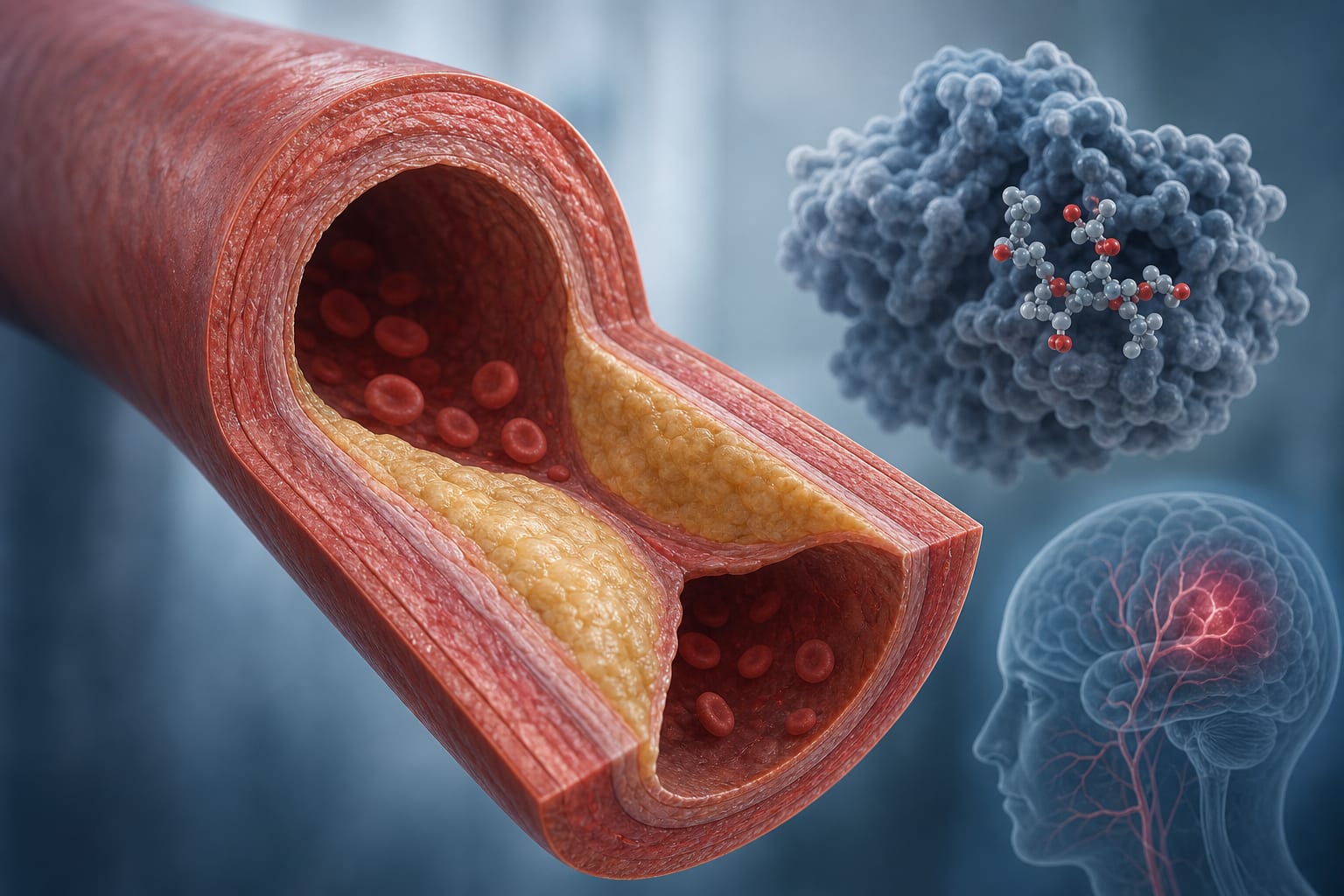
Intracranial atherosclerotic stenosis (ICAS) poses significant risks for ischemic events, necessitating accurate assessment of hemodynamic severity. Traditional methods for evaluating fractional flow (FF) are invasive and carry procedural risks. A noninvasive approach using magnetic resonance angiography (MRA) could enhance safety and accessibility in clinical practice.

Data Highlights

MethodAgreement (ICC)95% CI
MRA-FF vs PW-FF0.7430.437–0.895
MRA-FF vs DSA-FF0.7840.649–0.871

Key Findings

  • MRA-FF showed moderate-to-good agreement with PW-FF (ICC = 0.743).
  • MRA-FF demonstrated good agreement with DSA-FF (ICC = 0.784).
  • Equivalence to DSA-FF was confirmed (p < 0.01).
  • MRA-FF was lower in patients with hypoperfusion (p = 0.022).
  • ROC analysis indicated an area under the curve of 0.723 for discriminating hypoperfusion.
  • The optimal cutoff value for MRA-FF was identified as 0.855.

Clinical Implications

The findings suggest that MRA-FF could serve as a reliable noninvasive tool for assessing hemodynamic impairment in ICAS patients. This method may facilitate better patient management by providing functional assessments without the risks associated with invasive procedures.

Conclusion

MRA-FF shows good agreement with invasive and angiographic reference methods.

Related Resources & Content

  1. Frontiers in Neurology, 2026 -- CT - derived fractional flow reserve can predict recurrent ischemia in patients with MCA stenosis
  2. Frontiers in Cardiovascular Medicine, 2026 -- Stress cardiac magnetic resonance vs. fractional flow reserve–guided management for intermediate coronary stenosis
  3. Evaluating Luminal Enhancement in Intracranial Aneurysms: Is It a Reality or an Artifact?—A Comprehensive Multimodal Flow Assessment
  4. ARISE II Consensus on the Management of Intracranial Atherosclerotic Disease - PubMed
  5. Rapid Computational Modeling of Hemodynamics in Intracranial Aneurysms for Clinical Application
  6. Integrating hemodynamic analysis with traditional imaging in intracranial atherosclerotic stenosis: current status and future perspectives
  7. ARISE II Consensus on the Management of Intracranial Atherosclerotic Disease - PubMed
  8. Intracranial atherosclerotic plaque features on vessel wall imaging predict first ever and recurrence of stroke: a meta-analysis | European Radiology | Springer Nature Link

Original Source(s)

Related Content