Clinical Report: Development of a Prognostic Model Utilizing Deep Learning and PET/CT Imaging Features for Diffuse Large B-Cell Lymphoma
Overview
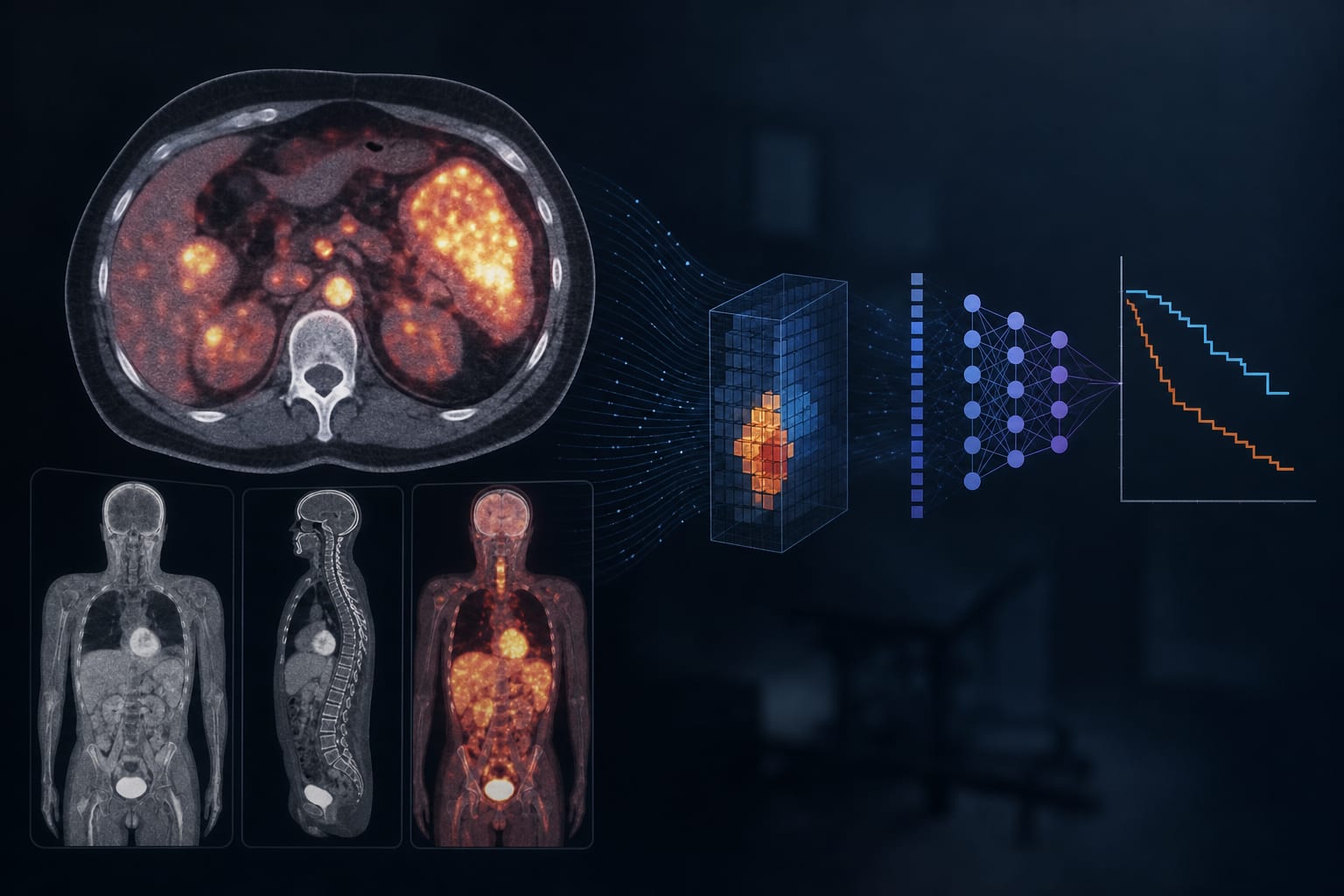
This study developed and validated a prognostic model using deep learning and PET/CT imaging features for patients with diffuse large B-cell lymphoma (DLBCL). The fusion model demonstrated superior predictive performance for 3-year overall survival compared to traditional methods.
Background
Diffuse large B-cell lymphoma (DLBCL) is a prevalent and aggressive subtype of non-Hodgkin lymphoma, accounting for a significant portion of cases. Despite advancements in treatment, a considerable percentage of patients experience poor outcomes, highlighting the need for improved prognostic tools. Traditional prognostic systems, such as the International Prognostic Index (IPI), have limitations in accurately predicting patient outcomes, necessitating the exploration of novel approaches like radiomics and deep learning.
Data Highlights
Model
Accuracy
AUC
Sensitivity
Specificity
Logistic Regression
0.865
0.950
0.875
0.863
Fusion Model
0.921
0.974
0.846
0.940
Key Findings
Age, AB group, IPI score, serum β2-microglobulin level, and maximum tumor diameter were identified as independent risk factors for 3-year survival in DLBCL patients.
The Logistic Regression model achieved an accuracy of 0.865 and an AUC of 0.950.
The fusion model, integrating PET/CT features with clinical data, improved predictive performance with an accuracy of 0.921 and an AUC of 0.974.
Decision Curve Analysis indicated significant clinical net benefit of the fusion model for prognostic risk prediction.
Kaplan-Meier survival analysis was utilized to assess the model's predictive capabilities.
Clinical Implications
The fusion model developed in this study provides a reliable prognostic tool for DLBCL, potentially aiding in personalized treatment strategies. Clinicians may consider integrating deep learning and PET/CT imaging features into their prognostic assessments to enhance patient management.
Conclusion
The study presents a promising fusion model that combines advanced imaging features with clinical data, offering a robust approach for prognostic prediction in DLBCL. This model may facilitate improved patient outcomes through more tailored treatment strategies.