Clinical Report: Molecular Comparison of Colorectal Cancer in Saudi Arabia
Overview
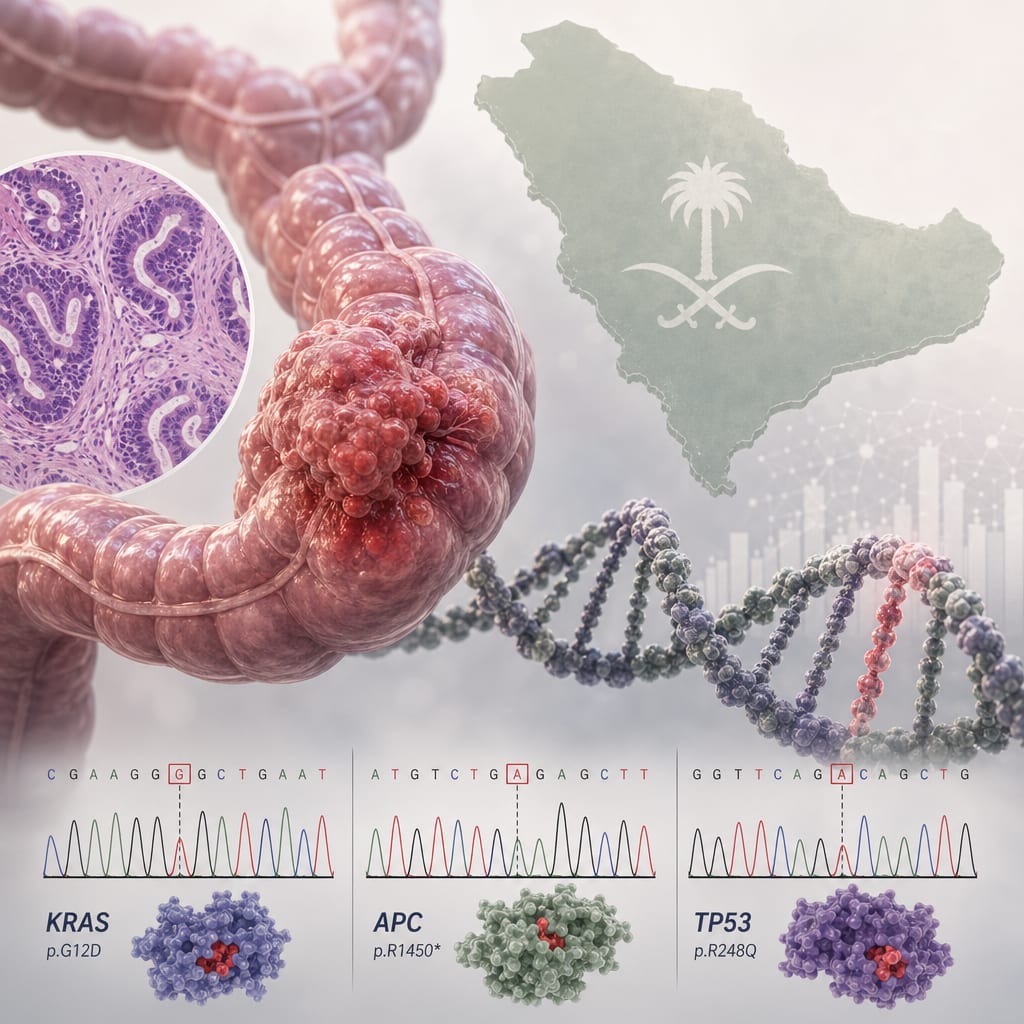
This study reveals a unique mutational profile of colorectal cancer (CRC) in Saudi Arabia, highlighting significant differences in mutation frequencies of key driver genes compared to Western populations. The findings underscore the need for population-specific data to inform diagnostics and treatment strategies.
Background
Colorectal cancer is a major public health concern globally, ranking as the third most common cancer type. In Saudi Arabia, CRC is the most prevalent cancer among males and the second most common among females, with a high rate of late-stage diagnoses. Understanding the molecular characteristics of CRC in this population is crucial for improving outcomes and tailoring treatment approaches.
Data Highlights
Mutation Type
Saudi Arabia
MDACC
TCGA
p-value
KRAS
6.5%
45.0%
41.1%
< 0.001
APC
47.8%
77.9%
79%
< 0.001
CTNNB1
0%
2.3%
10%
< 0.001
TP53
50.0%
35.9%
43.0%
< 0.05
Key Findings
Saudi CRC patients show a significantly lower prevalence of KRAS mutations (6.5%) compared to MDACC (45.0%) and TCGA (41.1%).
APC mutations were found in 47.8% of Saudi patients, markedly lower than the 77.9% at MDACC and 79% at TCGA.
CTNNB1 mutations were absent in Saudi patients, contrasting with 2.3% at MDACC and 10% at TCGA.
TP53 mutations were more common in Saudi patients (50.0%) compared to MDACC (35.9%) and TCGA (43.0%).
41.7% of Saudi CRC patients presented with sigmoid malignancy, higher than the 24.4% at MDACC.
Saudi CRC patients are typically younger (average age 58 years) than those at MDACC (62 years) and TCGA (68 years).
Clinical Implications
The distinct mutational landscape of CRC in Saudi Arabia necessitates tailored diagnostic and therapeutic strategies. Clinicians should consider these genetic differences when developing treatment plans and conducting molecular screenings for CRC in this population.
Conclusion
This study highlights the unique genetic characteristics of colorectal cancer in Saudi Arabia, emphasizing the importance of localized research to inform clinical practices and improve patient outcomes.
by Maha-Hamadien Abdulla, Jumanah Yousef Alshenaifi, Mansoor-Ali Vaali-Mohammed, Ahmad Zubaidi, Khayal Al Khayal, Noura S. Alhassan, Khalid Abdulrahman Al-Saleh, Omar Al Obeed, Scott Kopetz