A review of the application of novel intervertebral disc diagnostic technologies integrated with artificial intelligence in medical imaging - Report - MDSpire
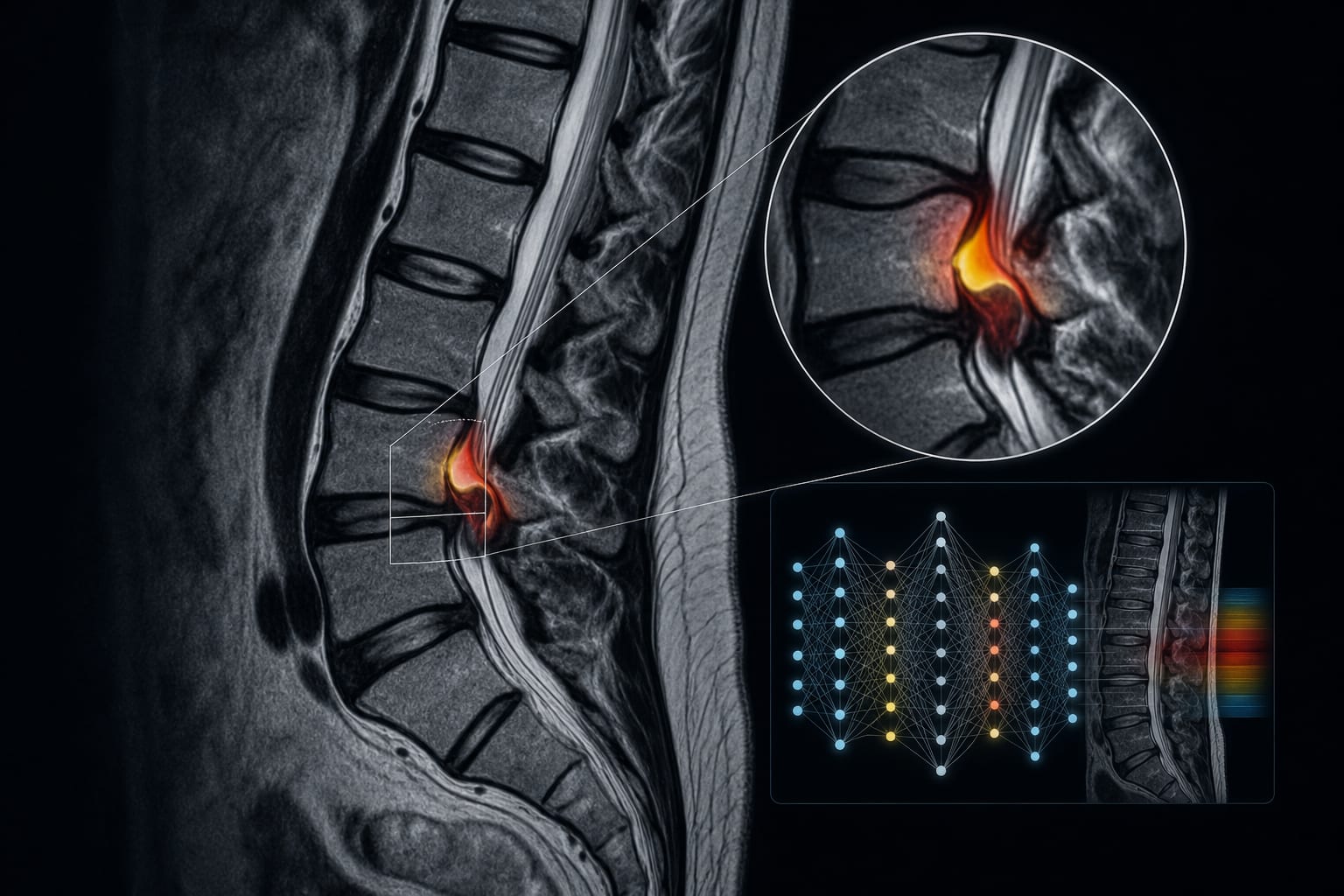
Intervertebral disc pathologies are significant contributors to chronic low back pain and neurological impairments, with an estimated annual incidence ranging from 5 to 20 cases per 1000 individuals. Accurate diagnosis is crucial for effective treatment planning, yet traditional imaging methods face challenges such as inter-observer variability and time-consuming workflows. The advent of AI presents an opportunity to improve diagnostic precision and efficiency in spinal imaging.
Data Highlights
No numerical data or trial data was provided in the source material, which limits the comprehensiveness of the findings.
Key Findings
AI can optimize image post-processing workflows, enhancing the diagnostic capabilities of existing imaging modalities.
Segmentation models like U-Net can delineate vertebral and disc contours in MRI scans rapidly, improving morphometric data accuracy.
Classification models using architectures such as ResNet can achieve over 90% accuracy in categorizing disc pathologies from MRI images.
AI detection models can identify signs of disc degeneration from X-ray images with greater accuracy than human assessment.
Conventional imaging workflows often rely on subjective visual assessments, leading to inefficiencies and compromised reliability.
Clinical Implications
The integration of AI in imaging workflows could enhance the accuracy and efficiency of diagnosing intervertebral disc disorders.
Conclusion
AI technologies represent a significant advancement in the diagnostic evaluation of intervertebral disc pathologies, addressing key limitations of traditional imaging methods.