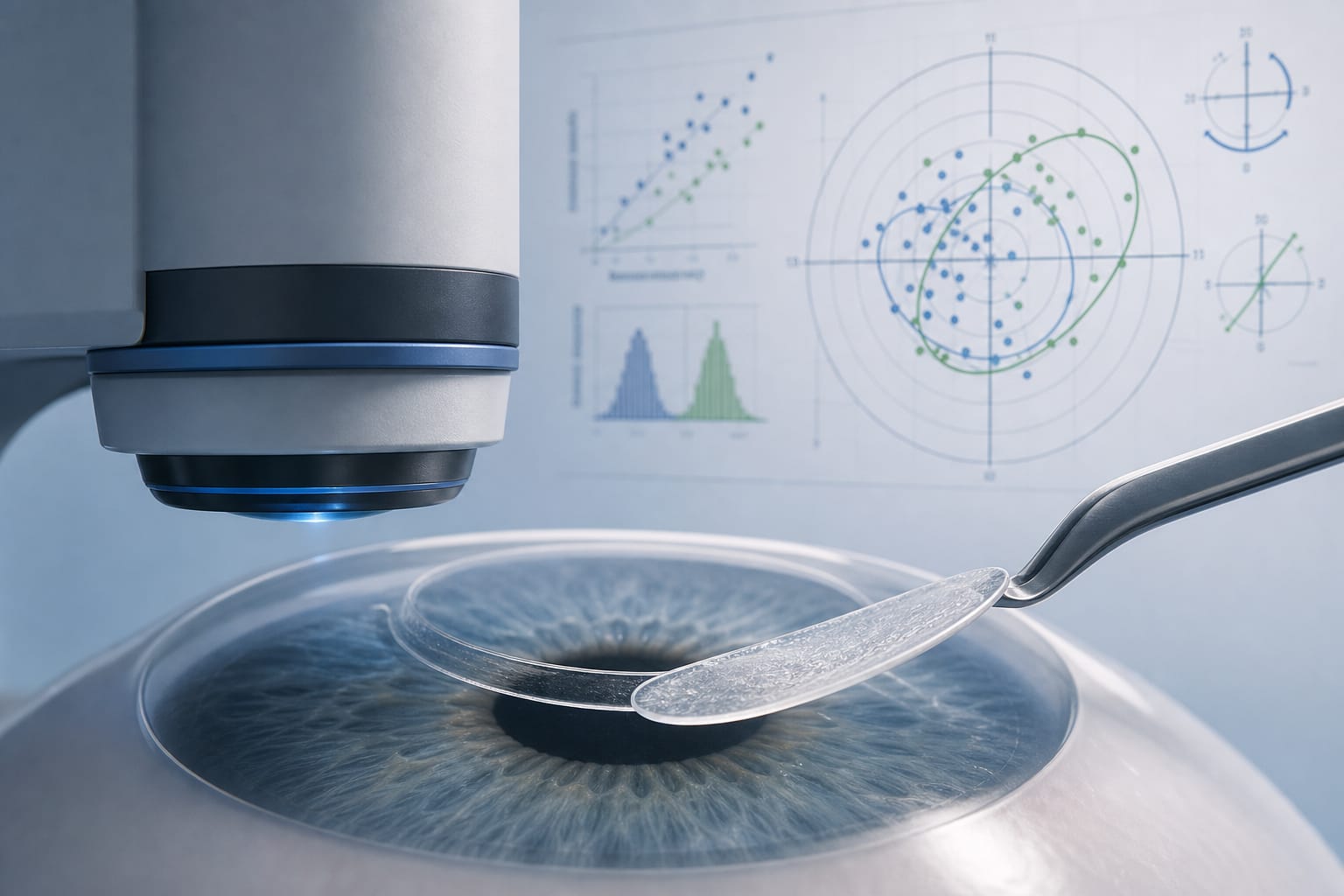
The Value of Astigmatic Keratotomy to Patients and Practices
-
April 11, 2026
-
5 min
Clinical Report: The Value of Astigmatic Keratotomy to Patients and Practices
Overview
Astigmatic keratotomy is crucial for improving patient satisfaction and uncorrected visual acuity in cataract surgery. Techniques such as limbal relaxing incisions and femtosecond laser-assisted procedures are effective and cost-efficient.
Background
Astigmatism correction is essential in cataract surgery due to its significant impact on visual outcomes and patient quality of life. Recent guidelines emphasize the importance of addressing astigmatism during cataract procedures, with various surgical options available. Understanding the effectiveness and safety of these techniques is vital for optimizing patient care.
Data Highlights
No numerical data provided in the source material.
Key Findings
- Astigmatic keratotomy can enhance uncorrected visual acuity and patient satisfaction.
- Limbal relaxing incisions are preferred for lower amounts of astigmatism, while toric lenses are better for higher amounts.
- Femtosecond laser technology improves the accuracy and safety of astigmatic keratotomies.
- Penetrating LRIs are a cost-effective method for correcting astigmatism during cataract surgery.
- Preoperative planning and shared decision-making are emphasized in contemporary cataract surgery guidelines.
Clinical Implications
Surgeons should consider astigmatic keratotomy techniques as part of their surgical repertoire to improve visual outcomes in cataract patients. Tailoring the choice of technique to the specific astigmatism characteristics and patient needs is essential for optimal results.
Conclusion
Astigmatic keratotomy techniques, including limbal relaxing incisions and femtosecond laser approaches, are integral to modern cataract surgery, significantly enhancing patient outcomes.
Related Resources & Content
- ESCRS, ESCRS Recommendations for Cataract Surgery, 2025 -- Guidelines for astigmatism management
- JAMA Ophthalmology, Femtosecond Laser Arcuate Keratotomy vs Toric Intraocular Lens Implantation in Cataract Surgery: A Randomized Clinical Trial, 2025 -- Comparative study on astigmatism correction
- Corneal Physician, Reducing Post-PK Astigmatism, 2021 -- Techniques for managing astigmatism post-corneal graft
- Contact Lens Spectrum — Orthokeratology Today
- Contact Lens Spectrum — What's New in Refractive Surgery
- Corneal Physician — Creating Arcuate Incisions to Reduce Astigmatism
- Contact Lens Spectrum — Orthokeratology Today
- Contact Lens Spectrum — What's New in Refractive Surgery
- ESCRS - ESCRS Recommendations for Cataract Surgery
- Femtosecond Laser Arcuate Keratotomy vs Toric Intraocular Lens Implantation in Cataract Surgery: A Randomized Clinical Trial | Trials | JAMA Ophthalmology | JAMA Network
Based on findings from:
The Value of Astigmatic Keratotomy to Patients and Practices
Ophthalmology Management, 2026.
https://www.ophthalmologymanagement.com/issues/2026/ascrs/astigmatic-keratotomy
This content is an AI-generated, fully rewritten summary based on a published scholarly article. It does not reproduce the original text and is not a substitute for the original publication. Readers are encouraged to consult the source for full context, data, and methodology.