Optimizing discharge outcomes in very preterm infants by a novel integrated family and rehabilitation care model—a retrospective case-matched study - Report - MDSpire
Advertisement
Optimizing discharge outcomes in very preterm infants by a novel integrated family and rehabilitation care model—a retrospective case-matched study
Clinical Report: Enhancing Discharge Results for Very Preterm Infants
Overview
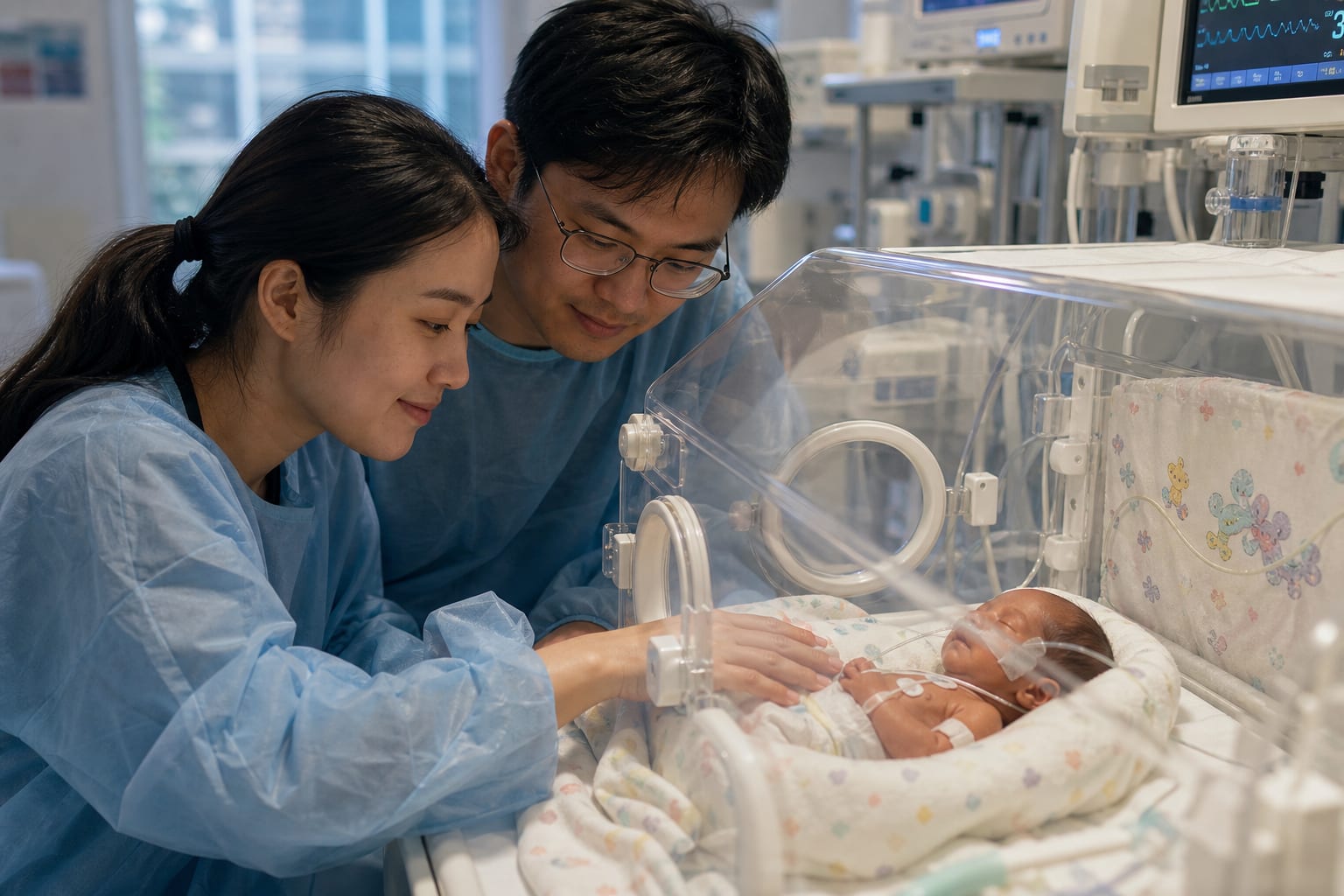
The study evaluates an innovative integrated family-centered care (NIFCC) model for very preterm infants, demonstrating significant improvements in oxygen weaning, oral feeding, and neurobehavioral outcomes compared to traditional family-centered care.
Background
Very preterm infants face high risks of respiratory insufficiency and neurodevelopmental delays. Traditional family-centered care models often lack sufficient parental involvement and rehabilitation integration.
Data Highlights
Outcome
NIFCC Group
Traditional FCC Group
P-value
Oxygen Independence
92.5%
73.6%
0.018
Oxygen Therapy Duration (days)
18
25
0.019
Full Oral Feeding Rate
100%
86.8%
0.013
NBO Scores
51
49
0.036
Key Findings
The NIFCC model resulted in significantly higher oxygen independence (92.5% vs. 73.6%, P = 0.018).
Infants in the NIFCC group required shorter durations of oxygen therapy (18 days vs. 25 days, P = 0.019).
Full oral feeding was established in 100% of the NIFCC group compared to 86.8% in the traditional FCC group (P = 0.013).
NBO scores were higher in the NIFCC group (51 vs. 49, P = 0.036).
No significant differences were observed in preterm complications, hospital stay, or costs between the two groups.
No adverse events occurred during the study.
Clinical Implications
The NIFCC model demonstrates a safe and effective approach to improving critical discharge outcomes for very preterm infants.
Conclusion
The NIFCC model addresses limitations of traditional care approaches.