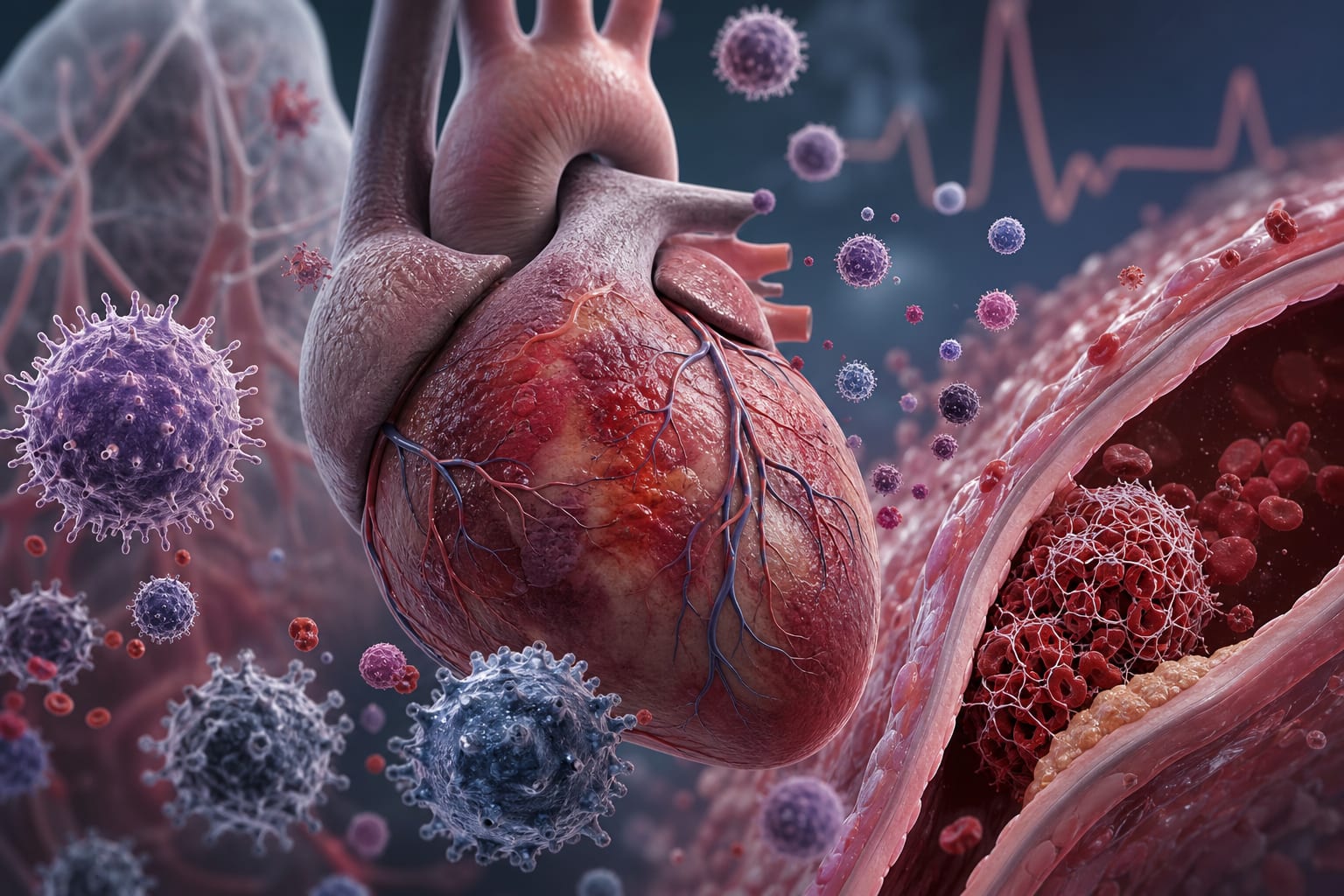
Clinical Report: Proteomic Profiles of Post-COVID Syndrome
Background
Post-COVID condition represents a significant public health challenge, characterized by a range of persistent symptoms following SARS-CoV-2 infection. The complexity of PCC, with its heterogeneous symptomatology and lack of validated diagnostic biomarkers, necessitates a deeper understanding of its underlying mechanisms. Proteomic analysis offers a promising avenue for identifying relevant biomarkers.
Data Highlights
No single protein provides adequate diagnostic performance; phenotype-linked multi-analyte panels show promise.
Key Findings
Persistent immune dysregulation is indicated by proteins such as IL-6, IL-20, MCP-1, and TNF-α.
Endothelial dysfunction and disordered haemostasis are associated with biomarkers like VEGF-A, P-selectin, vWF, ICAM-1, and D-dimer.
Neurological injury is linked to proteins including NFL, GFAP, NAAA, LXN, NBL1, and HAGH.
Harmonized case definitions and cross-platform validation are essential for advancing research on PCC.
Multi-analyte panels may improve patient stratification.
Clinical Implications
The identification of specific protein biomarkers related to PCC may enhance diagnostic accuracy. Clinicians should consider the integration of multi-analyte panels in the assessment of patients with post-COVID conditions.
Conclusion
The synthesis of proteomic data highlights the complexity of post-COVID syndrome.