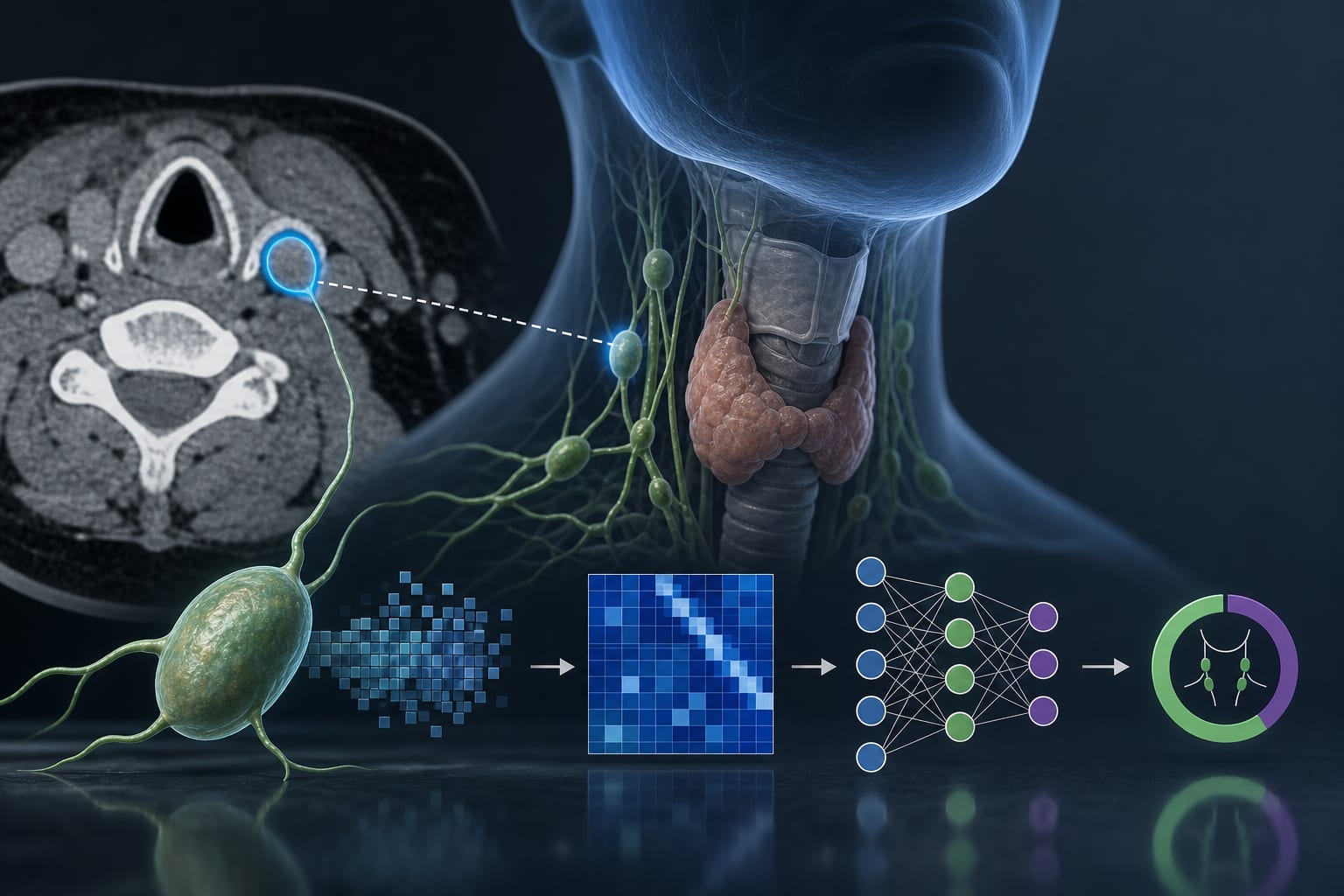
Clinical Report: Evaluating Cervical Lymph Node Reaction to 131I Treatment
Overview
This study develops a radiomics-based predictive model to assess cervical lymph node response to I-131 therapy in differentiated thyroid cancer (DTC). The model integrates clinical and imaging features.
Background
Differentiated thyroid cancer (DTC) is the most common type of thyroid malignancy, with a significant proportion of patients experiencing cervical lymph node metastases post-surgery. The efficacy of I-131 therapy can vary, and current predictive methods have limitations in sensitivity and specificity.
Data Highlights
The study analyzed a cohort of patients with pathologically confirmed DTC who underwent cervical lymph node dissection followed by I-131 therapy. The predictive model was validated using AUC and calibration curves.
Key Findings
The integrated clinical–radiomics model showed favorable discrimination in both training and validation cohorts.
Good calibration was observed across clinically relevant threshold probabilities.
Key inflammatory-related targets were identified through analysis of the GSE33630 dataset.
Representative radiomics features were extracted from pre-therapeutic CT images.
Clinical Implications
Further external validation is necessary before routine clinical adoption.
Conclusion
The proposed model requires further validation and comparison with existing predictive strategies.