A metabolic marker–based diagnostic model for precancerous and malignant endometrial lesions in insulin-resistant PCOS women with sonographically suspected endometrial polyps - Report - MDSpire
Conexiant’s news site is now MDSpire News. Learn more
Advertisement
A Diagnostic Model Utilizing Metabolic Markers for Identifying Precancerous and Malignant Endometrial Lesions in Women with Insulin-Resistant PCOS and Suspected Endometrial Polyps
Clinical Report: Diagnostic Model for Endometrial Lesions in PCOS-IR Women
Overview
This study developed a risk-stratification model for identifying endometrial neoplasia in women with insulin-resistant PCOS and suspected endometrial polyps. The model demonstrated moderate discrimination and high sensitivity.
Background
Women with insulin-resistant polycystic ovary syndrome (PCOS-IR) are at increased risk for endometrial premalignant and malignant lesions. Understanding the metabolic profiles and developing predictive models for this high-risk group is critical for early diagnosis and intervention. Current diagnostic methods may not adequately address the unique characteristics of PCOS-IR.
Data Highlights
Group
HOMA-IR
Fasting Plasma Glucose
2-hour OGTT Glucose
Fasting Insulin
HDL-C
Endometrial Neoplasia
Higher
Higher
Higher
Higher
Lower
Benign
Lower
Lower
Lower
Lower
Higher
Key Findings
The study included 185 PCOS-IR patients with ultrasound-detected endometrial polyps.
Endometrial neoplasia group showed significantly higher levels of HOMA-IR, fasting plasma glucose, 2-hour OGTT glucose, and fasting insulin compared to the benign group.
HDL-C levels were significantly lower in the endometrial neoplasia group.
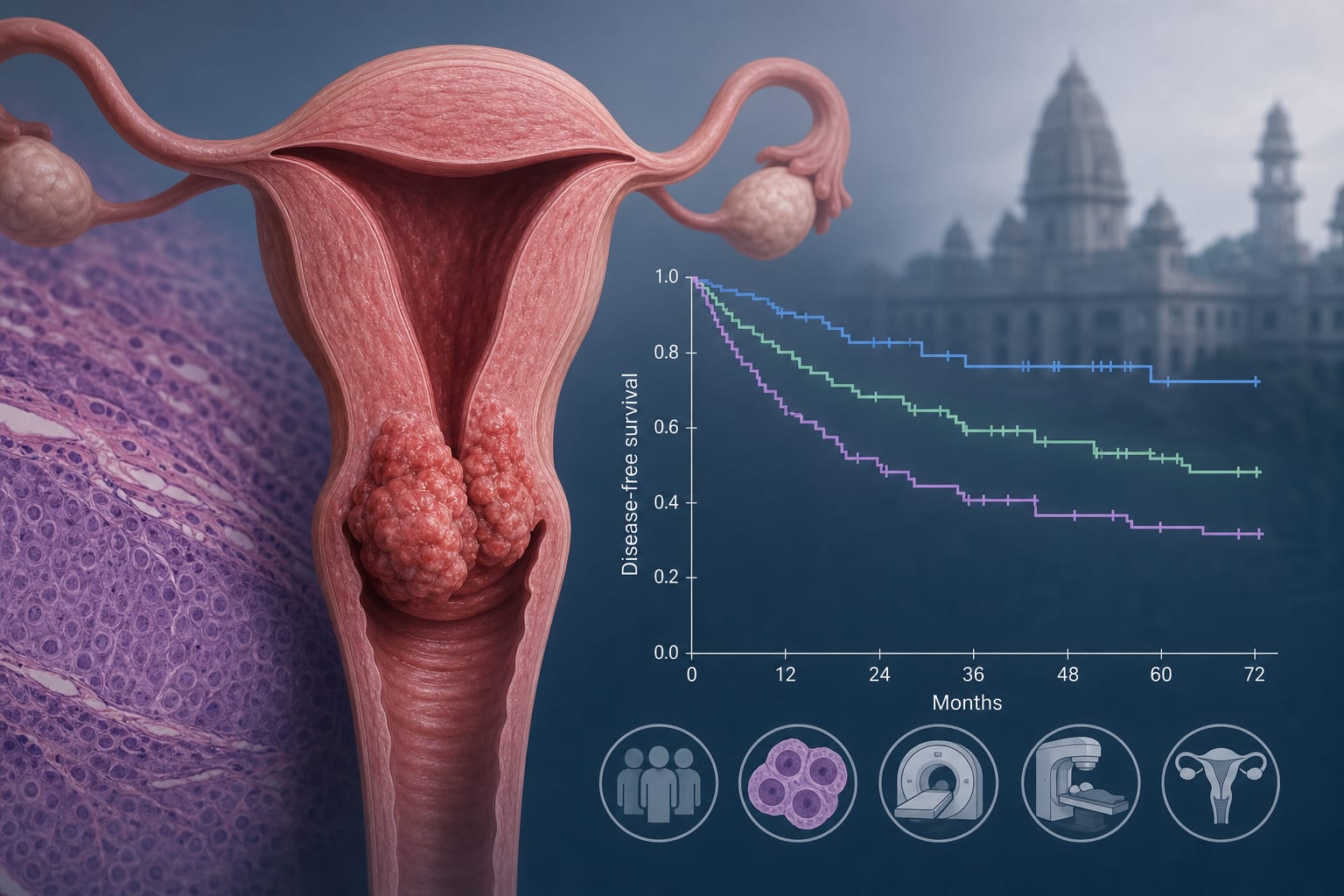
The final predictive model included age, HDL-C, free androgen index, and HOMA-IR, achieving an AUC of 0.767.
The model demonstrated high sensitivity (0.913) and a specificity of 0.500.
Further external validation is required before clinical application of the model.
Clinical Implications
The findings indicate that insulin resistance is a significant factor in the metabolic profile of PCOS-IR patients with endometrial polyps.
Conclusion
Insulin resistance is linked to metabolic alterations observed in PCOS-IR patients with endometrial polyps. The exploratory model developed in this study requires further validation.