Clinical Report: The Relationship Between Mild Traumatic Brain Injury and Musculoskeletal Injuries in US Military Personnel
Overview
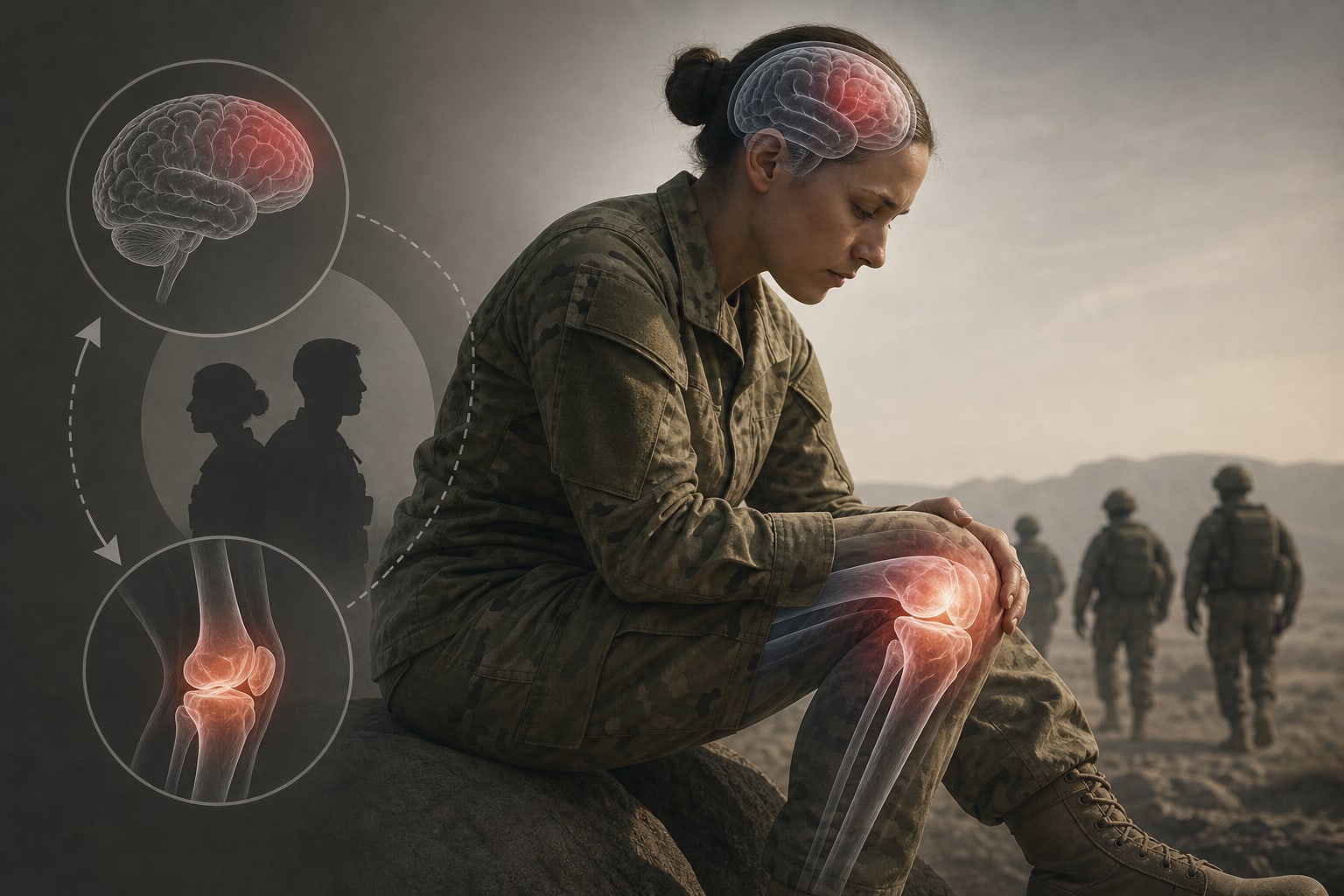
This study investigates the association between mild traumatic brain injury (mTBI) and subsequent musculoskeletal injuries (MSKIs) in US military personnel, highlighting the interaction of sex as a potential modifier. Findings suggest that female service members with a history of mTBI may have increased odds of subsequent MSKI compared to their male counterparts.
Background
Musculoskeletal injuries are a significant health concern in the US military, contributing to high rates of morbidity and disability. Understanding the risk factors for MSKIs, particularly in relation to mTBI, is crucial for developing effective prevention strategies. Given the increasing number of female service members, exploring the interaction between sex and mTBI is particularly relevant.
Data Highlights
No numerical data available in the provided source material.
Key Findings
Approximately 421,760 mTBIs occurred in the US military from 2000 to 2024.
Female service members with a history of mTBI may have higher odds of subsequent MSKI compared to males.
MSKIs are the primary reason for nondeployment in 45% of medically related cases among soldiers.
Prior studies indicate that female athletes with concussions have significantly higher odds of subsequent injuries.
Military training and operations impose high demands on the musculoskeletal system, leading to increased injury rates.
Clinical Implications
Healthcare providers should consider the history of mTBI when assessing the risk of MSKIs in military personnel, particularly among female service members. Targeted prevention strategies may be necessary to address the unique risks faced by this population.
Conclusion
The study underscores the importance of understanding the relationship between mTBI and MSKIs in military personnel, particularly in the context of sex differences. Further research is needed to inform prevention and management strategies.