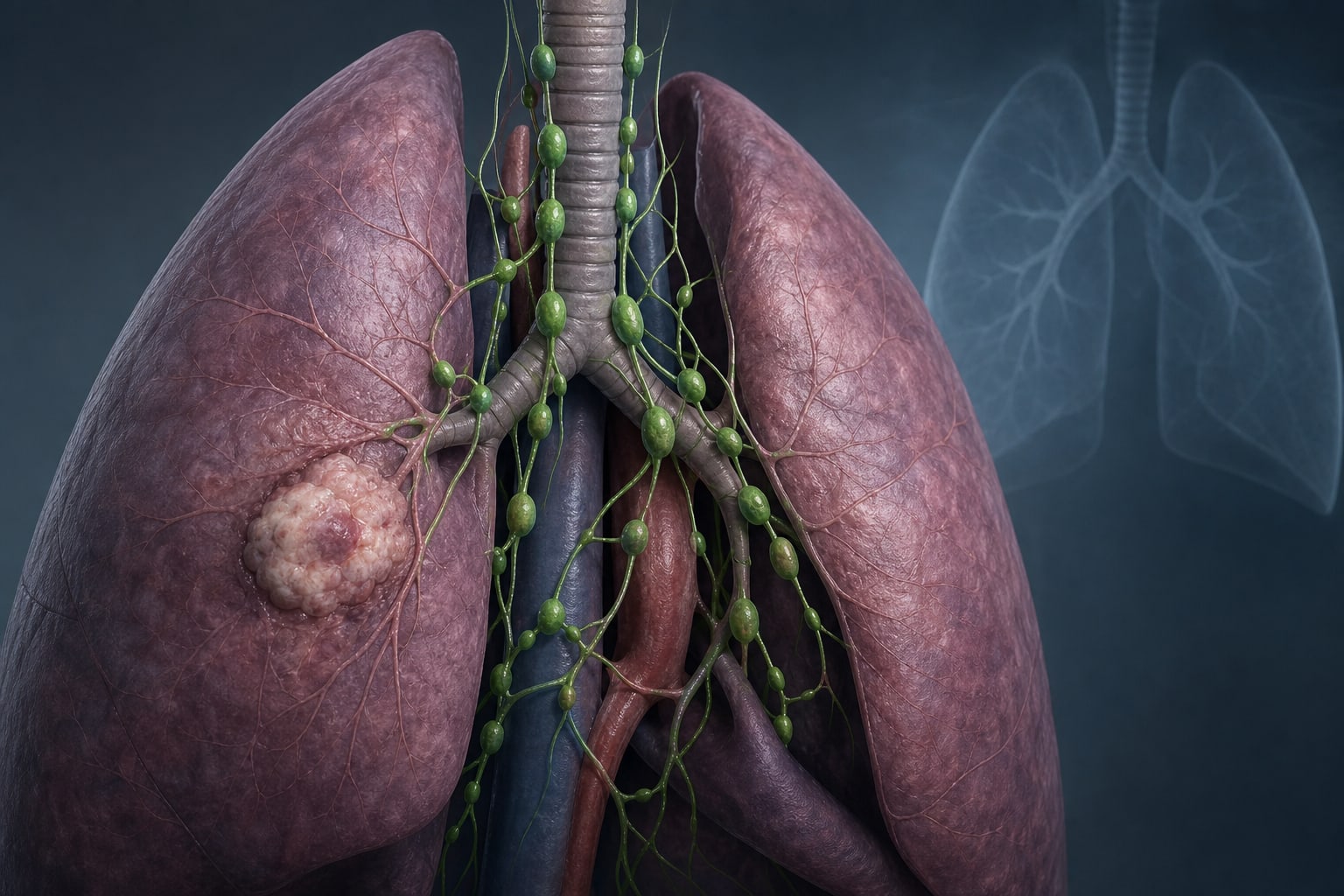
Clinical Report: Impact of Lymph Node Dissection on Postoperative Outcomes Following Resection of Lung Cancer
Overview
This study evaluates the association between adherence to the 3 + 1 lymph node sampling criteria and postoperative complications in patients undergoing resection for non-small cell lung cancer (NSCLC). It utilizes a national database to analyze outcomes and demographic characteristics.
Background
Lung cancer is a significant health concern, being the second most common cancer in the US and a leading cause of cancer-related deaths. Accurate lymph node staging is essential for prognosis and treatment eligibility in early-stage NSCLC. The evolution of lymph node sampling standards, particularly the 3 + 1 rule, reflects ongoing efforts to optimize surgical outcomes.
Data Highlights
No specific numerical data or trial data was provided in the source material.
Key Findings
The study analyzed patients with clinical stage T1 to T3, N0, M0 NSCLC who underwent surgical resection.
Demographic characteristics included age, gender, race, insurance status, and medical history.
Postoperative complications assessed included overall events, atrial arrhythmia, pleural effusion, and pneumonia.
A 1:1 propensity score match was used to compare complication rates based on 3 + 1 LNS status.
Compliance with the 3 + 1 criteria was examined in relation to demographic factors.
Clinical Implications
Understanding the impact of the 3 + 1 lymph node sampling strategy on postoperative outcomes may inform surgical practices and patient management in NSCLC. Further research is needed to clarify the relationship between lymph node dissection and surgical complications.
Conclusion
The study contributes to the understanding of lymph node sampling in lung cancer surgery and its potential effects on postoperative outcomes. Continued evaluation of these practices is essential for improving patient care.
by Isheeta Madeka, Khaled Noueihed, Jacob Woodroof, Shale Mack, Hamza Rshaidat, Gregory L. Whitehorn, Sneha Alaparthi, Scott H. Koeneman, Tyler R. Grenda, Nathaniel R. Evans, Olugbenga T. Okusanya
The goal of this clinical trial is to learn if Adaptive Radiation Therapy (ART) is safe and effective in treating patients with locally advanced pancreatic cancer.