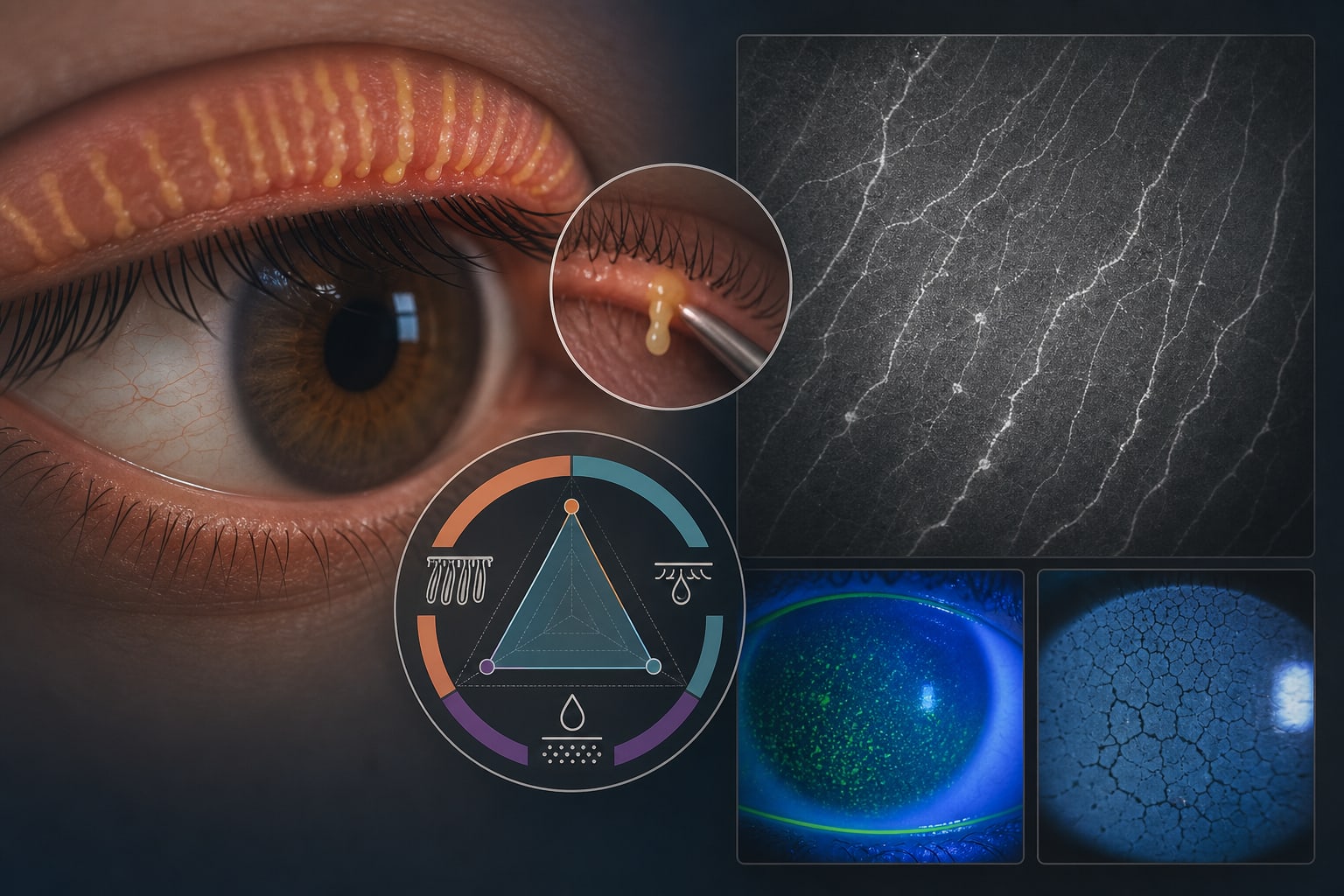
Clinical Report: Alterations in Goblet and Epithelial Cells in Dry Eye Disease
Overview
This case-control study investigates the impact of antidepressant use on goblet cell density and conjunctival epithelial changes in patients with dry eye disease.
Background
Dry eye disease (DED) is a multifactorial condition affecting ocular surface health, leading to discomfort and visual disturbances. Antidepressants, including SSRIs, SNRIs, and TCAs, have been linked to ocular dryness. Given the rising prevalence of depression and antidepressant use, understanding their ocular side effects is relevant.
Data Highlights
No numerical data or trial results were provided in the source material.
Key Findings
Antidepressant use is associated with alterations in goblet cell density (GCD) in the conjunctiva.
Histomorphological changes in conjunctival epithelium were observed in patients taking antidepressants.
Goblet cell density was quantified and correlated with routine dry eye investigations.
The study included 72 participants using antidepressants and 70 age/sex-matched controls.
Participants were assessed using the Ocular Surface Disease Index (OSDI), tear break-up time (TBUT), and Schirmer test.
Clinical Implications
Clinicians should be aware of the potential ocular side effects of antidepressants in patients presenting with dry eye symptoms.
Conclusion
Further exploration of the ocular effects of antidepressants, particularly regarding goblet cell alterations in patients with dry eye disease, is needed.