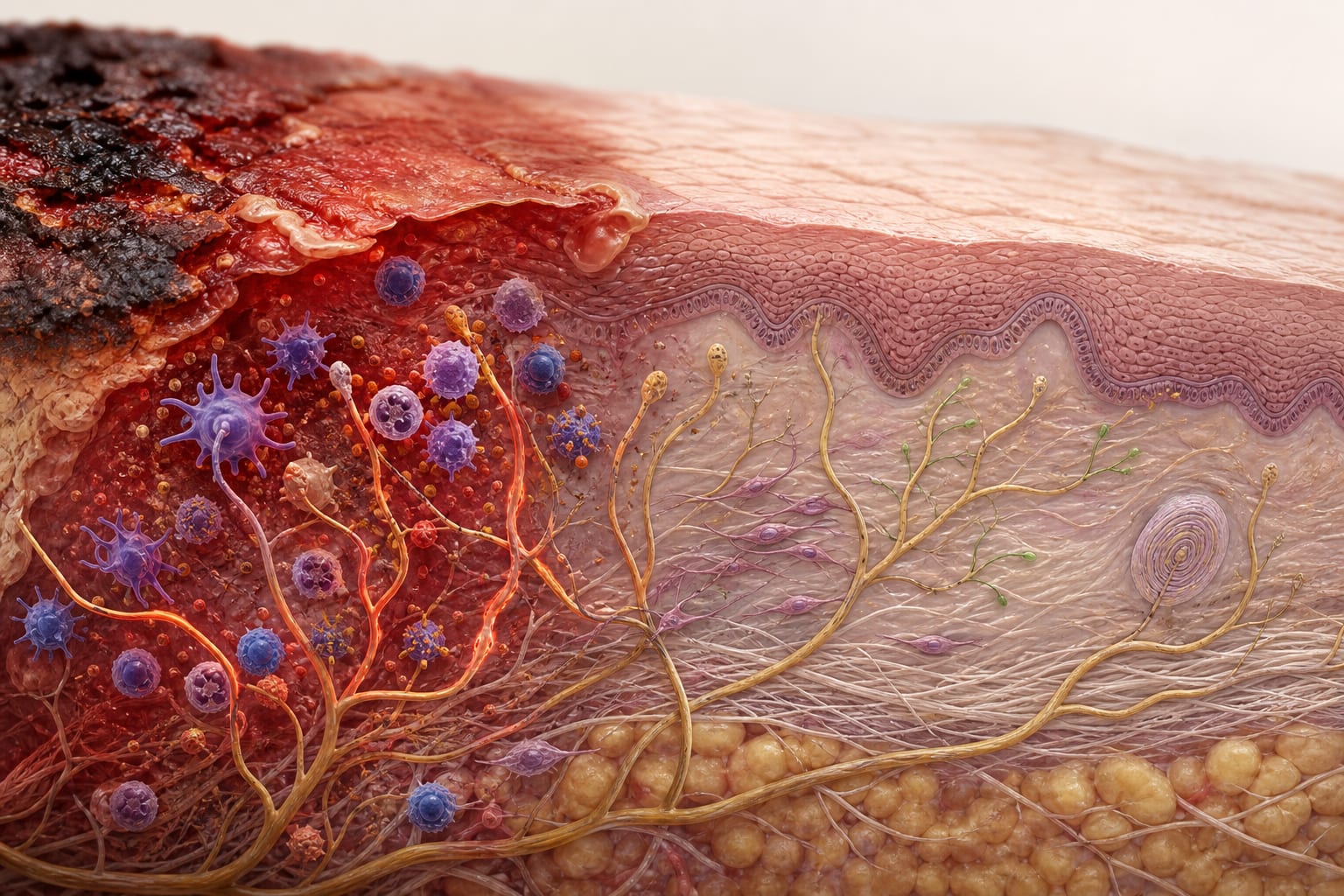
Alterations at the Cellular and Molecular Level in Skin Contributing to Enhanced Pain Sensation Following Burn Injury and Healing
-
By
-
Chiara Nappi
-
Francisco J. Taberner
-
July 2, 2026
Clinical Report: Alterations at the Cellular and Molecular Level in Skin
Overview
This review discusses how burn injuries lead to significant changes in skin cell populations, highlighting the role of various cell types in modulating nociceptor activity through inflammatory and neuroimmune pathways.
Background
Burn injuries are a leading cause of trauma, with significant personal and economic impacts. They often result in severe pain and complications such as chronic pain, which can persist long after the injury has healed. Understanding the cellular and molecular changes following burns is crucial.
Data Highlights
No numerical data or trial data provided in the source material.
Key Findings
- Burn injuries create a robust inflammatory environment that can lead to neuropathic pain.
- Alterations in keratinocytes, epidermal stem cells, melanocytes, and fibroblasts influence nociceptor activity.
- Cellular dysregulation contributes to peripheral sensitization during the wound healing continuum.
- Chronic pain in burn survivors may exhibit neuropathic features, such as burning and tingling sensations.
Clinical Implications
Healthcare professionals should consider the cellular dynamics involved in burn injuries when assessing pain management strategies.
Conclusion
The review emphasizes the importance of understanding the cellular alterations following burn injuries.
Related Resources & Content
- Frontiers in Immunology, 2026 -- Immediate post-injury HMGB1 neutralization prevents synaptic dysfunction in burn and hindlimb unloaded rats
- Understanding Pain Mechanisms in Chronic Pancreatitis: The Role of a Master and Its Flames
- Frontiers in Immunology, 2026 -- Epidermal growth factor receptor signaling modulates postoperative pain and inflammatory responses
- Frontiers in Medicine, 2026 -- Efficacy and safety of Oliceridine versus Sufentanil in postoperative analgesia for burn skin grafting: a machine learning and SHAP-based cohort study
- American Burn Association Guidelines on the Management of Acute Pain in the Adult Burn Patient: A Review of the Literature, a Compilation of Expert Opinion and Next Steps - PMC
- Pathophysiology and management of burn injury-induced pain - ScienceDirect
- American Burn Association Guidelines on the Management of Acute Pain in the Adult Burn Patient: A Review of the Literature, a Compilation of Expert Opinion and Next Steps - PMC
- Pathophysiology and management of burn injury-induced pain - ScienceDirect
- The Effect of Virtual Reality Application on Pain During Wound Care Dressing Change: A Systematic Review and Meta-analysis of Randomized Controlled Trials - ScienceDirect
Based on findings from:
Cellular and molecular changes in the skin driving increased nociception and pain during burn injury and repair
Chiara Nappi, Francisco J. Taberner. Frontiers In Pain Research, 2026.
https://www.frontiersin.org/journals/pain-research/articles/10.3389/fpain.2026.1797161/full
This content is an AI-generated, fully rewritten summary based on a published scholarly article. It does not reproduce the original text and is not a substitute for the original publication. Readers are encouraged to consult the source for full context, data, and methodology.