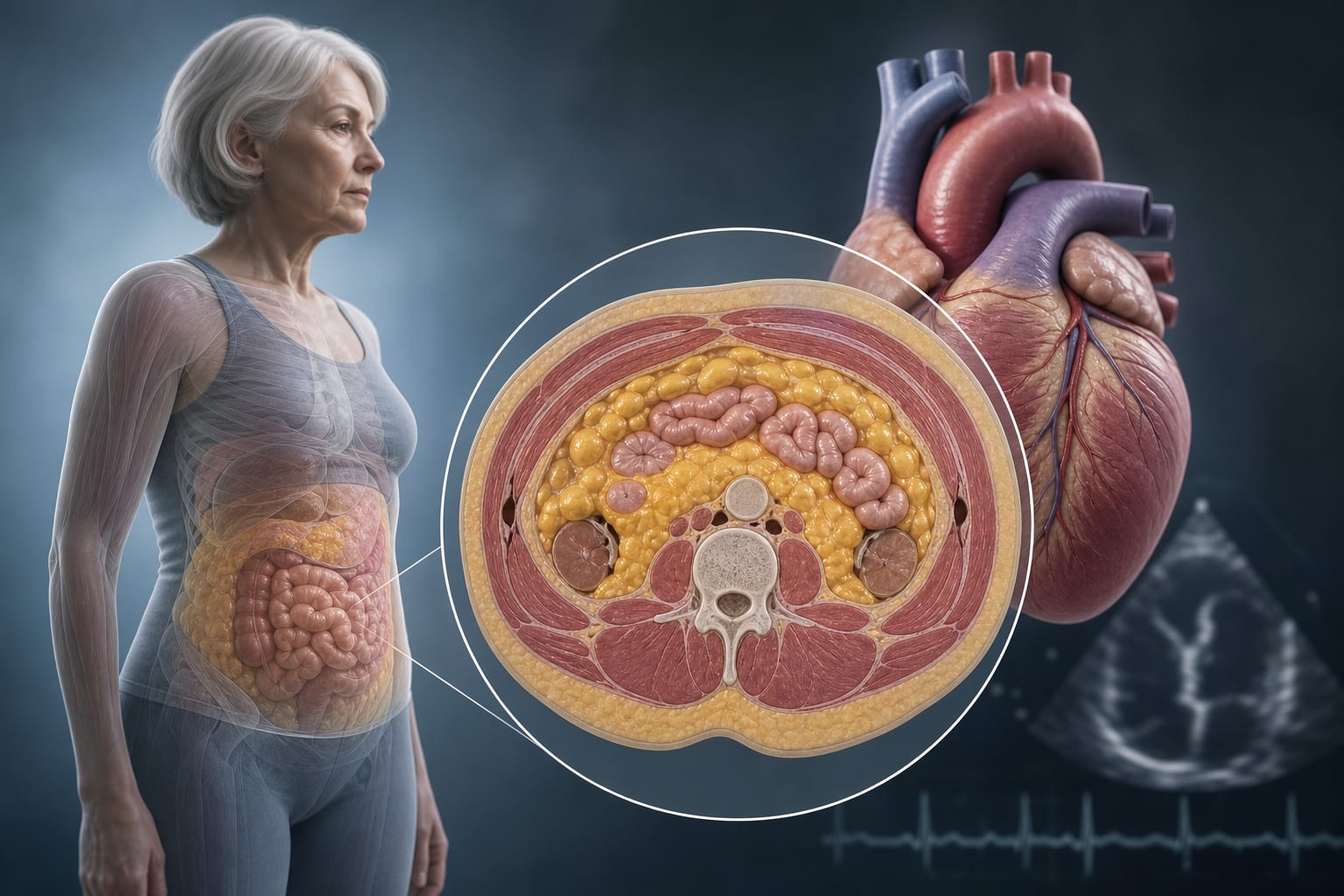
Clinical Report: Higher levels of visceral fat and lean mass elevate heart failure risk among older women
Overview
This study investigates the associations between body composition and heart failure (HF) risk in older women, highlighting the roles of visceral adipose tissue (VAT) and lean mass. Findings indicate that higher levels of both VAT and lean mass are linked to increased risk of HF, particularly HF with preserved ejection fraction (HFpEF).
Background
Heart failure is a significant health concern among older adults, especially women aged 65 and older, who represent a rapidly growing demographic. Changes in body composition due to menopause and aging contribute to cardiometabolic health issues, increasing the risk of heart failure. Understanding the impact of visceral fat and lean mass on heart failure risk is crucial for developing targeted prevention strategies.
Data Highlights
No specific numerical data or trial data was provided in the source material.
Key Findings
Higher levels of visceral adipose tissue (VAT) are associated with increased heart failure risk.
Greater lean mass may have a protective effect against heart failure.
The study focuses on a cohort of postmenopausal women, addressing a gap in previous research.
Heart failure with preserved ejection fraction (HFpEF) is particularly prevalent in older women.
Body composition changes due to menopause and aging are significant factors in heart failure risk.
Clinical Implications
Clinicians should consider body composition, specifically visceral fat and lean mass, when assessing heart failure risk in older women. Targeted interventions may be necessary to address these factors in this population.
Conclusion
The study underscores the importance of monitoring body composition in older women to better understand and mitigate heart failure risk.
by Michael J. LaMonte, Charles B. Eaton, Bernhard Haring, Jennifer W. Bea, Connor R. Miller, JoAnn E. Manson, Deepika Laddu, Marcia L. Stefanick, Andrew Odegaard
Moderate coffee consumption generally appeared safe for most adults, but randomized evidence suggested divergent effects on atrial fibrillation and premature ventricular contractions.
The proposed framework classified 30% of patients as high or extreme risk, compared with 12% classified as having severe or greater tricuspid regurgitation under established grading schemes.