An updated review on the role of extracellular vesicles in immune system modulation in breast cancer with special emphasis on immune checkpoint regulators - Report - MDSpire
Advertisement
An updated review on the role of extracellular vesicles in immune system modulation in breast cancer with special emphasis on immune checkpoint regulators
Clinical Report: Extracellular Vesicles in Immune Responses in Breast Cancer
Overview
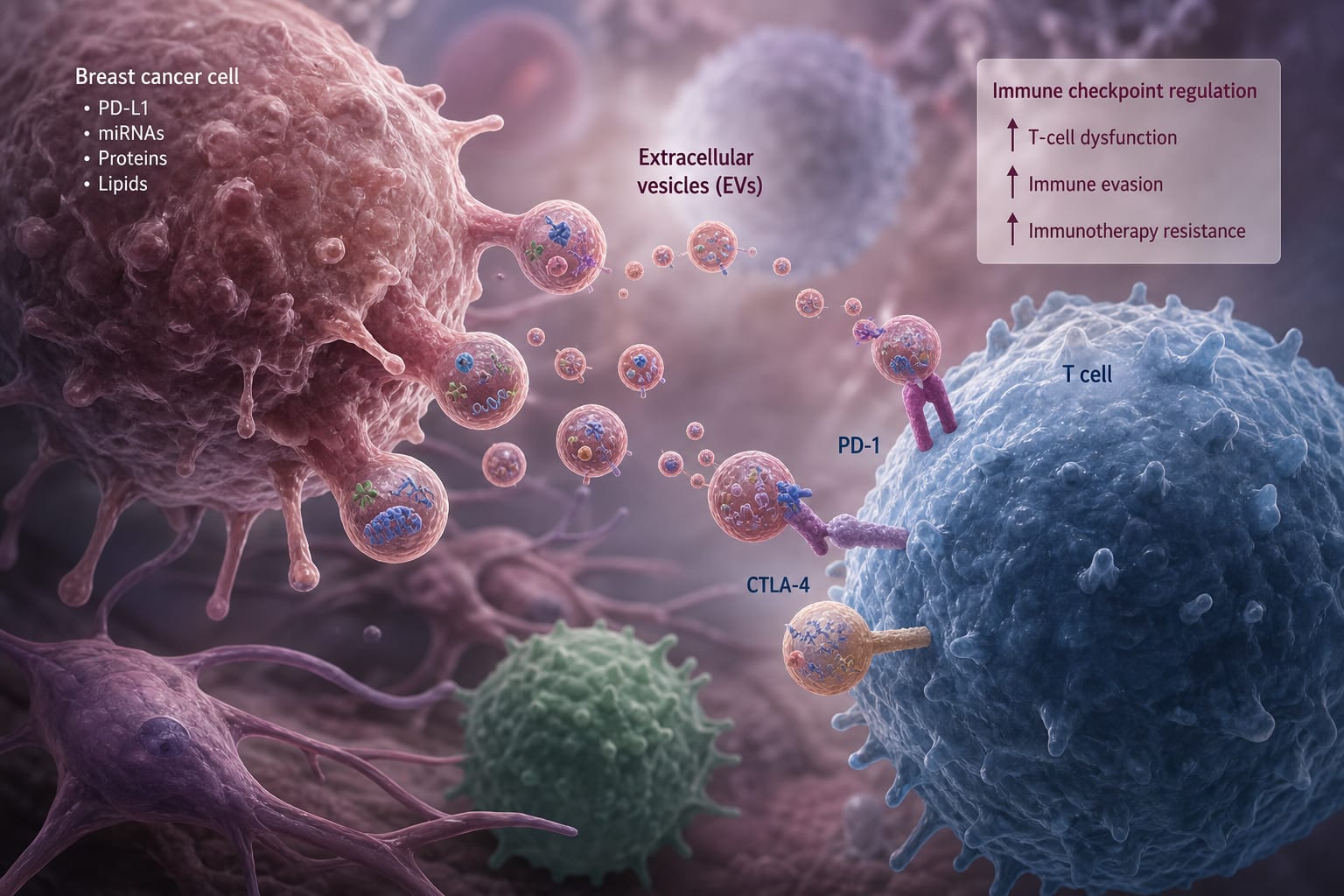
This review highlights the role of extracellular vesicles (EVs) in modulating immune responses in breast cancer, particularly through immune checkpoint regulation. It emphasizes the impact of EVs on T-cell function.
Background
Breast cancer is a leading cause of cancer-related deaths, with immune evasion playing a critical role in its progression and treatment resistance. The tumor microenvironment (TME) is complex and influences immune responses.
Data Highlights
No numerical data or trial data provided in the source material.
Key Findings
Extracellular vesicles (EVs) are key mediators of communication between tumor and immune cells.
EVs contribute to immunosuppression by impairing T-cell function and promoting immune tolerance.
PD-L1 and CTLA-4 are significant EV-associated proteins that drive immune evasion in breast cancer.
Breast cancer subtypes exhibit different responses to EV-mediated immune modulation.
Clinical Implications
Clinicians should consider the heterogeneity of breast cancer subtypes when evaluating treatment responses.
Conclusion
The review discusses the role of EVs in immune checkpoint regulation in breast cancer.