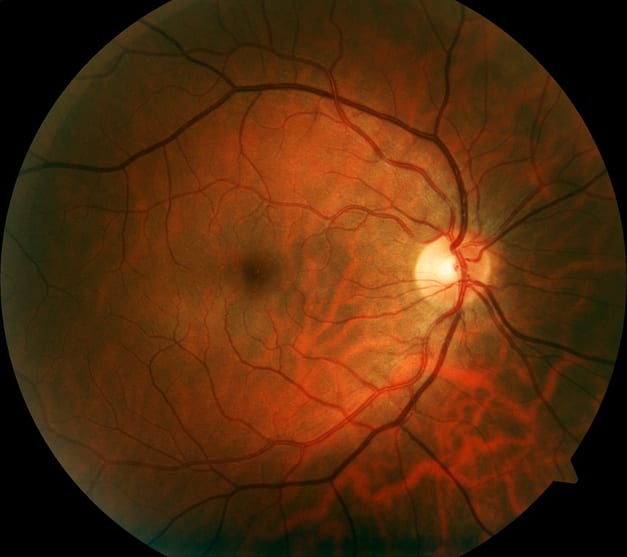
Clinical Report: Distinctive Liver Function in Individuals with High Myopia
Overview
This study investigates the relationship between liver function, lipid metabolism, and high myopia, particularly myopic macular degeneration (MMD). Findings suggest a potential liver-eye metabolic axis that may influence the progression of high myopia and its ocular complications.
Background
High myopia is increasingly prevalent and associated with severe ocular complications, including myopic macular degeneration, which can significantly impair vision and quality of life. Understanding the systemic factors, such as liver function and lipid metabolism, that contribute to these complications is crucial for developing effective prevention and management strategies.
Data Highlights
No specific numerical data was provided in the source material.
Key Findings
High myopia is defined by an axial length (AL) of the eye ≥ 26 mm.
Myopic macular degeneration (MMD) involves structural degeneration of the retina and choroid.
Liver function may influence eye health through metabolic and oxidative stress pathways.
Altered serum lipid profiles in myopic individuals may reflect systemic metabolic disturbances.
Emerging evidence suggests a liver-eye metabolic axis that warrants further investigation.
Clinical Implications
Healthcare professionals should consider the potential impact of liver function and lipid metabolism on the progression of high myopia and MMD. Monitoring these systemic factors may provide insights into patient management and the development of targeted interventions.
Conclusion
The study highlights the need for further research into the associations between liver function, lipid metabolism, and high myopia to better understand their roles in ocular health and disease progression.
At the Focus A-Eye Summit, in the session “Lessons from Formula One: Optimizing Clinical Workflow with AI,” experts examined how artificial intelligence can streamline and accelerate ophthalmic clinical workflows.