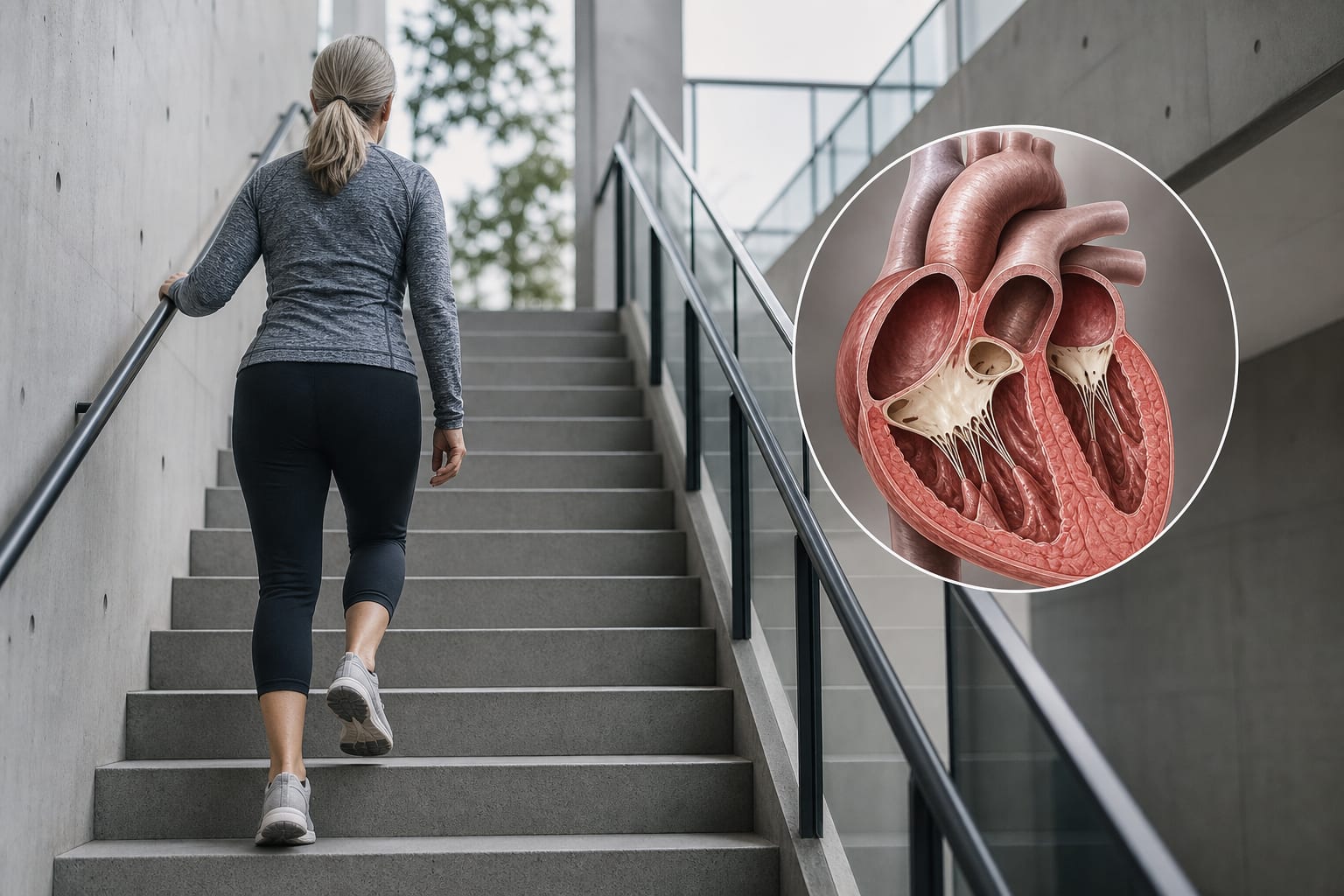
Clinical Report: Association Between Stair Climbing and Valvular Heart Disease
Overview
This study investigates the association between stair climbing and the risk of incident valvular heart disease (VHD) using data from the UK Biobank.
Background
Valvular heart disease (VHD) is a significant global health concern, affecting millions and leading to substantial morbidity and mortality.
Data Highlights
Steps Climbed per Day
Risk Reduction for VHD
10–50
12%
60–100
15%
110–150
22%
≥160
20%
Key Findings
A total of 488,964 participants were included in the study.
During a median follow-up of 13.0 years, 17,494 participants (3.6%) developed new-onset VHD.
Climbing 10–50, 60–100, 110–150, and ≥160 steps per day was associated with significant reductions in VHD risk.
Individuals climbing more than 160 steps daily had a hazard ratio of 0.79 for rheumatic valve disease and 0.78 for non-rheumatic valve disease.
Associations were more pronounced in participants with lower levels of total physical activity.
Clinical Implications
Encouraging stair climbing may serve as a simple and effective strategy to reduce the risk of valvular heart disease. Healthcare providers should consider promoting this form of physical activity as part of cardiovascular health recommendations.
Conclusion
The study highlights a significant association between stair climbing and reduced risk of new-onset valvular heart disease.
Shear wave velocity measurements in the basal anteroseptal and right ventricular walls differed between transthyretin and light chain cardiac amyloidosis when conventional echocardiographic parameters did not.