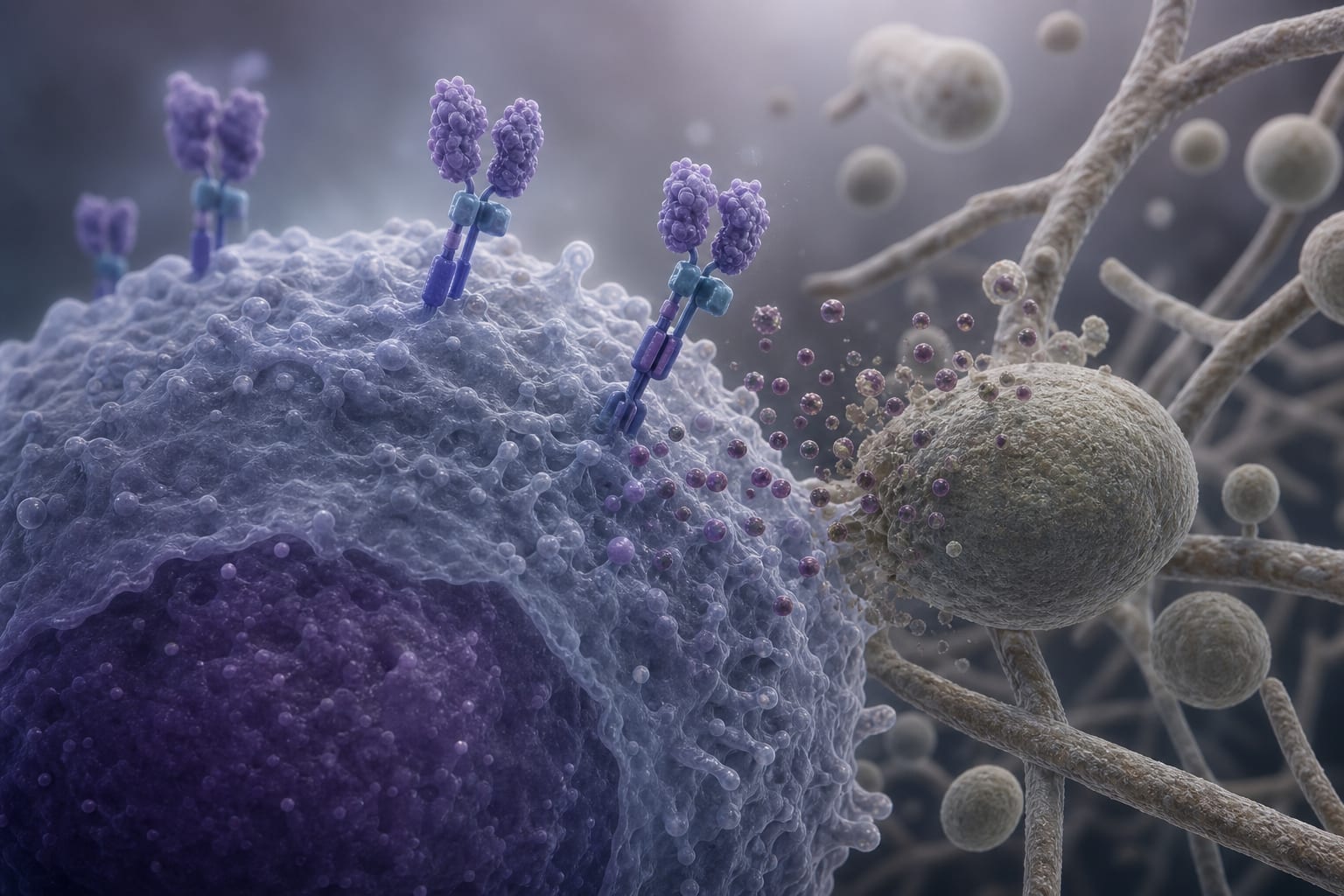
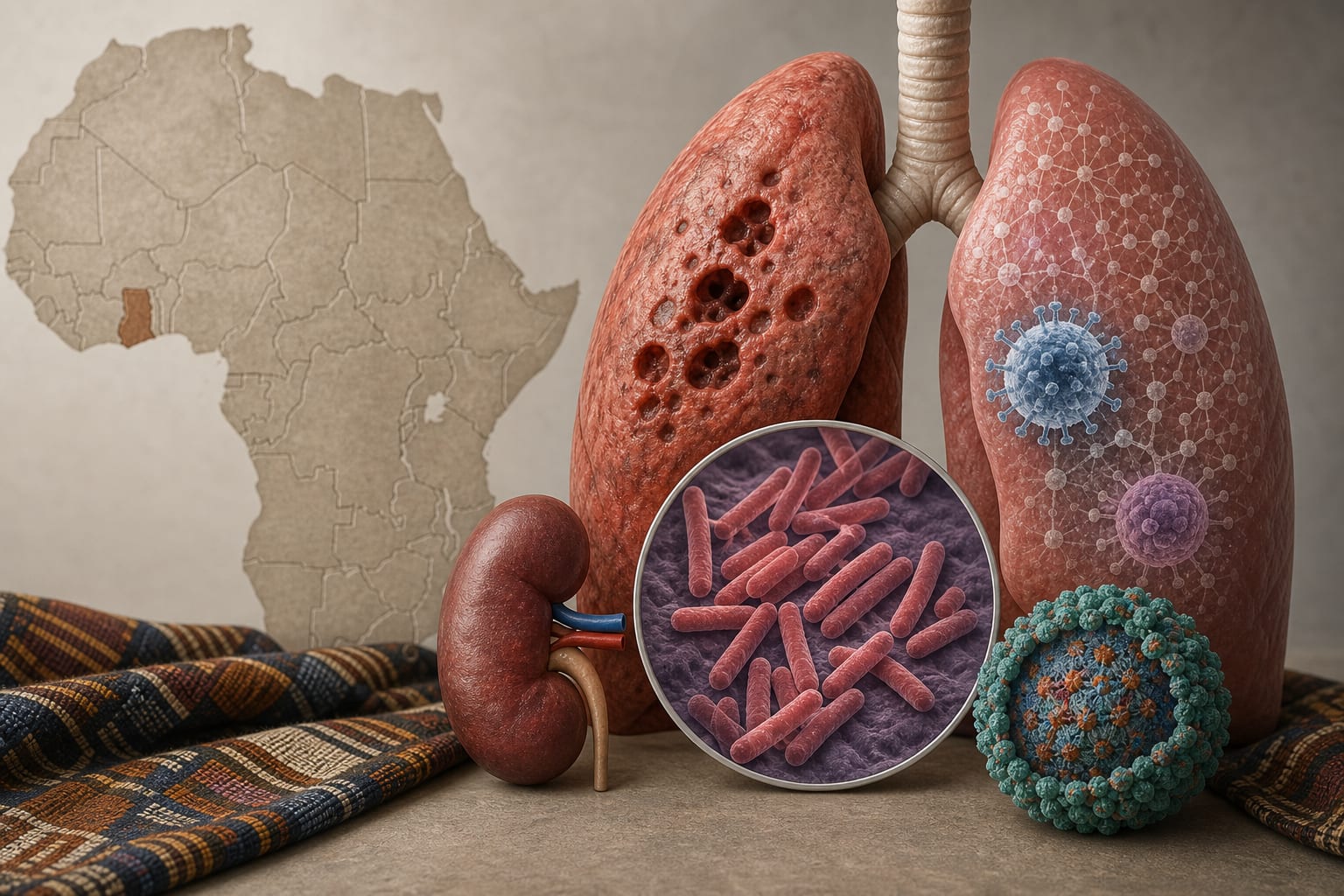
Macrophage Polarization Characteristics in Specific Lung Lesions Influence Mycobacterium tuberculosis Infection in Pulmonary Tuberculosis Patients
-
By
-
Elena G. Ufimtseva
-
Natalya I. Eremeeva
-
Sergey N. Skornyakov
-
June 12, 2026
Clinical Report: Macrophage Polarization Characteristics in Lung Lesions
Overview
This study investigates the role of macrophage polarization in pulmonary tuberculosis (TB) lesions and its influence on Mycobacterium tuberculosis (Mtb) infection. Findings indicate that macrophage polarization is shaped by local tissue environments rather than Mtb genetic diversity, underscoring the complexity of immune responses in TB pathology and its implications for treatment strategies.
Background
Tuberculosis remains a leading cause of infectious disease mortality globally, with millions of deaths annually. Macrophages play a crucial role in the host's immune response against Mtb. Understanding macrophage polarization in the context of TB lesions is essential for developing effective treatment strategies, particularly in light of rising drug-resistant TB cases.
Data Highlights
No numerical data presented in the article, which limits quantitative analysis of findings.Key Findings
Macrophage polarization is influenced by local tissue microenvironments and fibrosis severity, with pathogen control correlating with mixed M1/M2 polarization and NF-κB activation. Suppressed macrophages in fibrotic tissues exhibit an M0-like state with higher Mtb loads, and polarization dynamics are independent of Mtb's genetic and phenotypic diversity.Clinical Implications
Clinicians should consider the heterogeneity of macrophage responses in TB lesions when designing treatment plans. Targeting macrophage polarization may enhance therapeutic efficacy, particularly in patients with drug-resistant TB, by tailoring therapies to individual immune responses.
Conclusion
The study underscores the importance of macrophage polarization in TB pathology and its potential as a target for novel therapeutic strategies to improve patient outcomes, particularly in the context of drug resistance.
Related Resources & Content
- The Journal of Infectious Diseases, 2023 -- Genetically Diverse Mycobacterium tuberculosis Isolates Manipulate Inflammasome and Interleukin 1β Secretion Independently of Macrophage Metabolic Rewiring
- The Journal of Infectious Diseases, 2023 -- c-Myc Modulates the Antimycobacterial Activity of Macrophages During Mycobacterium tuberculosis Infection
- Frontiers in Immunology, 2023 -- The role and mechanisms of multiple immunoregulatory cells in pulmonary tuberculosis
- WHO consolidated guidelines on tuberculosis. Module 4: Treatment and care.
- Updated Guidelines on the Treatment of Drug-Susceptible and Drug-Resistant TB | Tuberculosis (TB) | CDC
- Oral Regimens for Rifampin-Resistant, Fluoroquinolone-Susceptible Tuberculosis | New England Journal of Medicine
- Frontiers in Immunology — The Link Between Macrophage Polarization and Response to Radiotherapy in Cancers: Mechanisms and Therapeutic Opportunities
- WHO consolidated guidelines on tuberculosis. Module 4: Treatment and care.
- Updated Guidelines on the Treatment of Drug-Susceptible and Drug-Resistant TB | Tuberculosis (TB) | CDC
- Oral Regimens for Rifampin-Resistant, Fluoroquinolone-Susceptible Tuberculosis | New England Journal of Medicine
- How macrophage heterogeneity affects tuberculosis disease and therapy | Nature Reviews Immunology
- Spatial immunometabolic zonation in tuberculosis granulomas | Nature Reviews Immunology
- Early Human Pulmonary Lesions Define a Permissive Alveolar Niche for Mycobacterium tuberculosis - PubMed
- Type I interferon exacerbates Mycobacterium tuberculosis induced human macrophage death | EMBO reports
- Macrophage-targeted versus free calcitriol as host-directed adjunct therapy against Mycobacterium tuberculosis infection in mice is bacteriostatic and mitigates tissue pathology - ScienceDirect
Based on findings from:
Lesion-specific features of macrophage polarization contribute to Mycobacterium tuberculosis infection in the lungs of patients with pulmonary tuberculosis
Elena G. Ufimtseva, Natalya I. Eremeeva, Sergey N. Skornyakov. Frontiers In Immunology, 2026.
https://www.frontiersin.org/journals/immunology/articles/10.3389/fimmu.2026.1853352/full
This content is an AI-generated, fully rewritten summary based on a published scholarly article. It does not reproduce the original text and is not a substitute for the original publication. Readers are encouraged to consult the source for full context, data, and methodology.