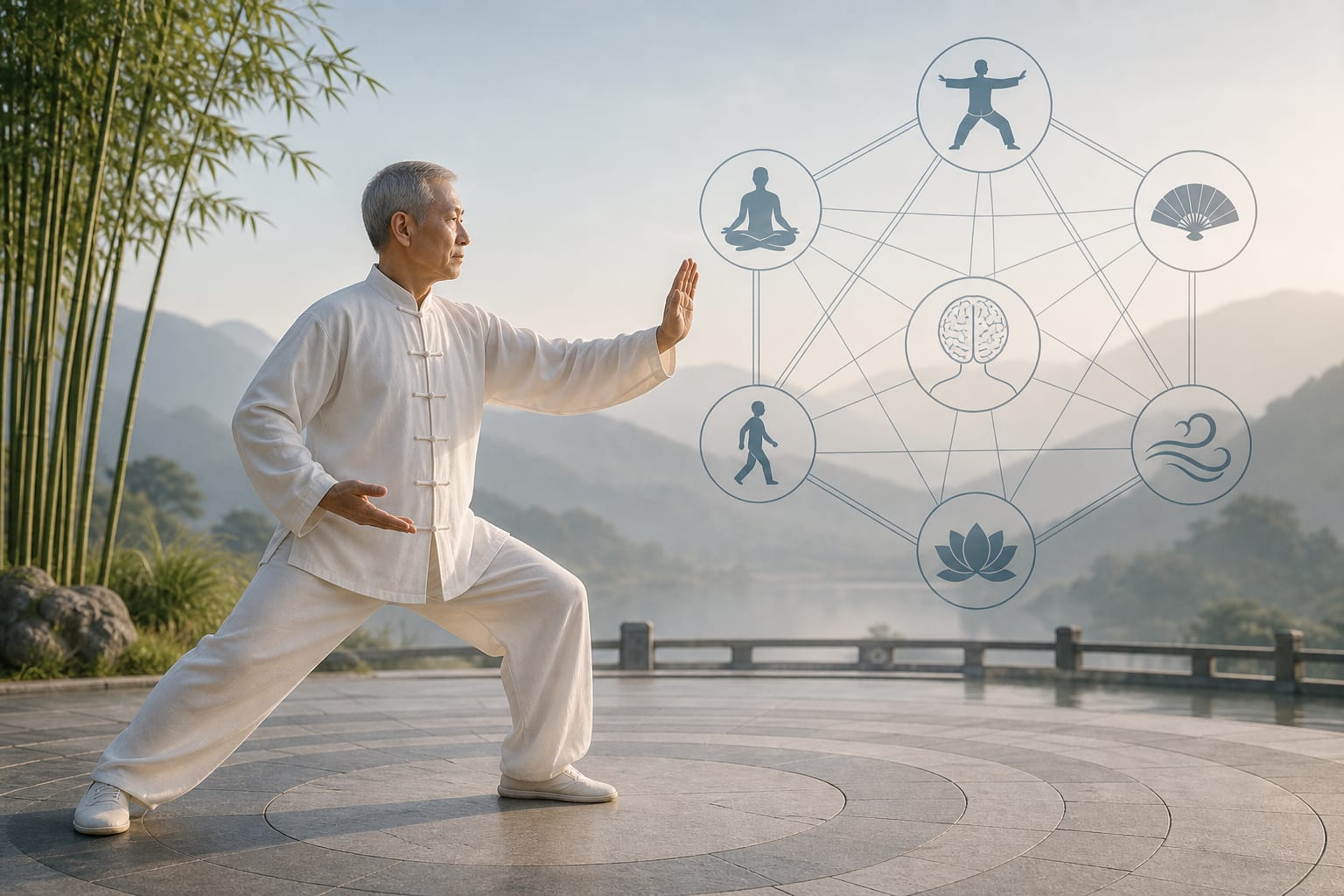
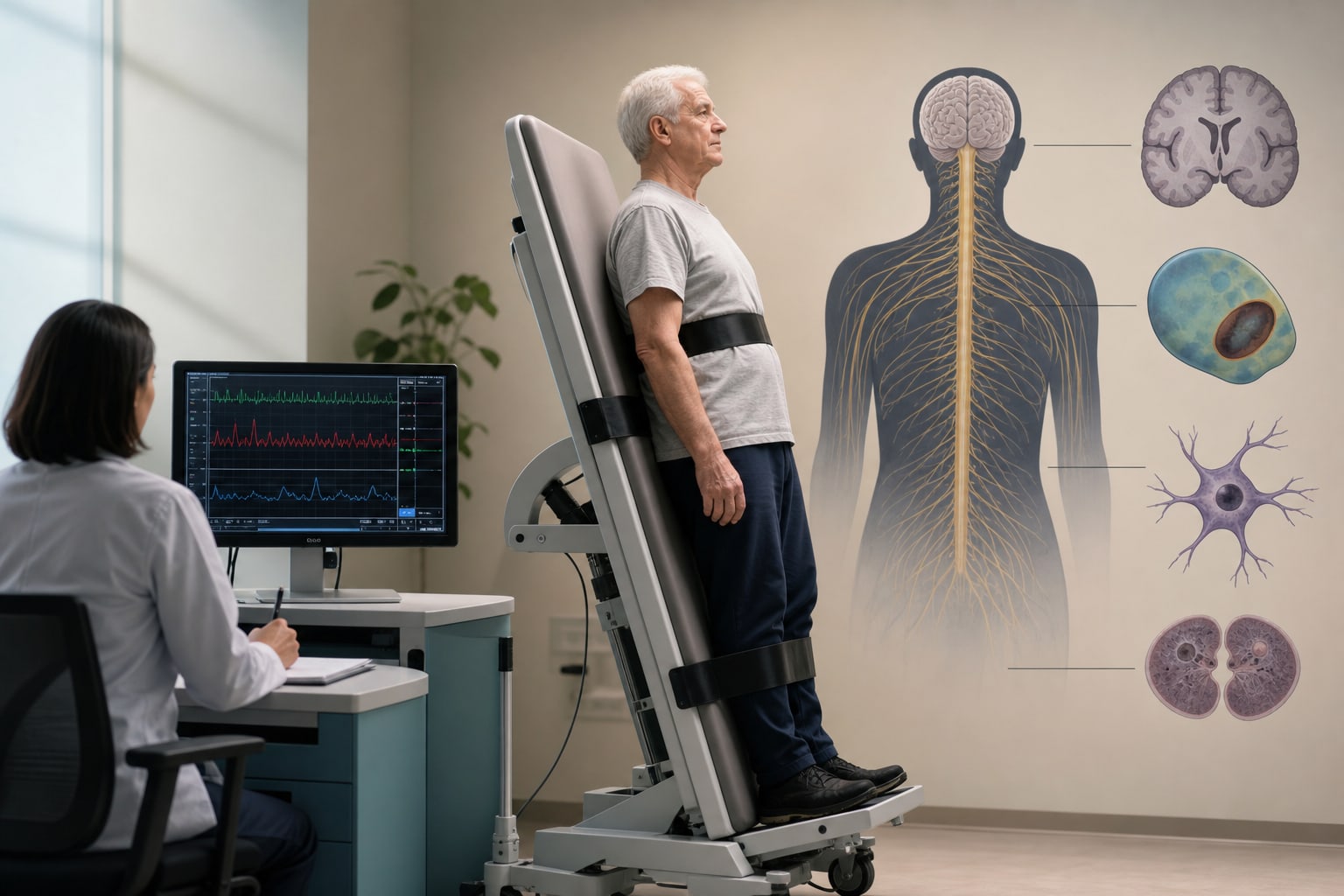
Comparative efficacy of traditional Chinese medicine qigong exercise on motor and non-motor outcomes in Parkinson's disease: a network meta-analysis
-
By
-
Shaoyue Xu
-
Yaohuan Sun
-
Wei Chen
-
July 15, 2026
Clinical Report: Efficacy Comparison of Traditional Chinese Medicine Qigong Exercises
Overview
This network meta-analysis evaluates the efficacy of various traditional Chinese Qigong exercises on motor and non-motor outcomes in Parkinson's disease patients. The analysis includes 59 randomized controlled trials.
Background
Parkinson's disease is a prevalent neurodegenerative disorder with increasing incidence rates globally, particularly in aging populations. Current treatments primarily focus on pharmacological interventions, which do not address all symptoms effectively. Non-pharmacological approaches, such as traditional Chinese Qigong exercises, are being researched for their effects on motor and non-motor symptoms in Parkinson's disease patients.
Data Highlights
| Intervention | Outcome Measure | Effect |
|---|---|---|
| Baduanjin (BDJ) | Motor Symptoms (UPDRS-III) | Improvement |
| Tai Chi (TC) | Balance (BBS) | Improvement |
| Wuqinxi (WQX) | Quality of Life (PDQ-39) | Improvement |
| Tai Chi (TC) | Depressive Symptoms (HAMD) | Reduction |
Key Findings
- 59 RCTs involving 3,743 patients were analyzed.
- Baduanjin, Qigong, and Tai Chi improved motor symptoms compared to conventional treatment.
- Baduanjin, Tai Chi, and Wuqinxi enhanced balance performance.
- Wuqinxi and Yijingjin improved quality of life metrics.
- Tai Chi and Baduanjin were associated with reductions in depressive symptoms.
- Most pairwise comparisons showed overlapping confidence intervals, indicating no statistically significant differences between most Qigong interventions.
Clinical Implications
Clinicians should consider the variability in individual responses when evaluating traditional Chinese Qigong exercises for managing symptoms in Parkinson's disease.
Conclusion
This analysis indicates that traditional Qigong interventions may be associated with improvements in various symptoms in Parkinson's disease.
Related Resources & Content
- Frontiers in Neurology, 2026 -- Comparison of the effects of different traditional Chinese exercises on improving the motor function of stroke survivors: a network meta-analysis and systematic review
- Frontiers in Medicine, 2026 -- Effectiveness of different types of exercise therapy in improving post-stroke depression: a systematic review and network meta-analysis
- Frontiers in Medicine, 2026 -- Comparative efficacy of traditional and modern mind-body exercises in middle-aged and older adults with knee osteoarthritis: a network meta-analysis of randomized controlled trials
- NICE, 2024 -- Recommendations | Parkinson’s disease in adults | Guidance
- Parkinson’s Foundation, 2026 -- Parkinson’s Disease Exercise Recommendations Updated by Parkinson’s Foundation and American College of Sports Medicine
- PMC, 2012 -- Tai Chi and Postural Stability in Patients with Parkinson's Disease
- Frontiers in Medicine — Comparative efficacy of single exercise interventions on pulmonary function and quality of life in patients with chronic obstructive pulmonary disease: a systematic review and network meta-analysis
- Frontiers | Effect of traditional Chinese exercises on motor function, balance, gait, and quality of life in patients with Parkinson’s disease: a systematic review and meta-analysis
- Comparative effects of medication combined with twenty rehabilitation therapies: core outcomes in 8202 parkinson’s patients
- Recommendations | Parkinson’s disease in adults | Guidance | NICE
- Parkinson’s Disease Exercise Recommendations Updated by Parkinson’s Foundation and American College of Sports Medicine | Parkinson's Foundation
- Tai Chi and Postural Stability in Patients with Parkinson's Disease - PMC
This content is an AI-generated, fully rewritten summary based on a published scholarly article. It does not reproduce the original text and is not a substitute for the original publication. Readers are encouraged to consult the source for full context, data, and methodology.