Influence of External Factors on Consistent Local Symptom-Biomarker Relationships
Overview
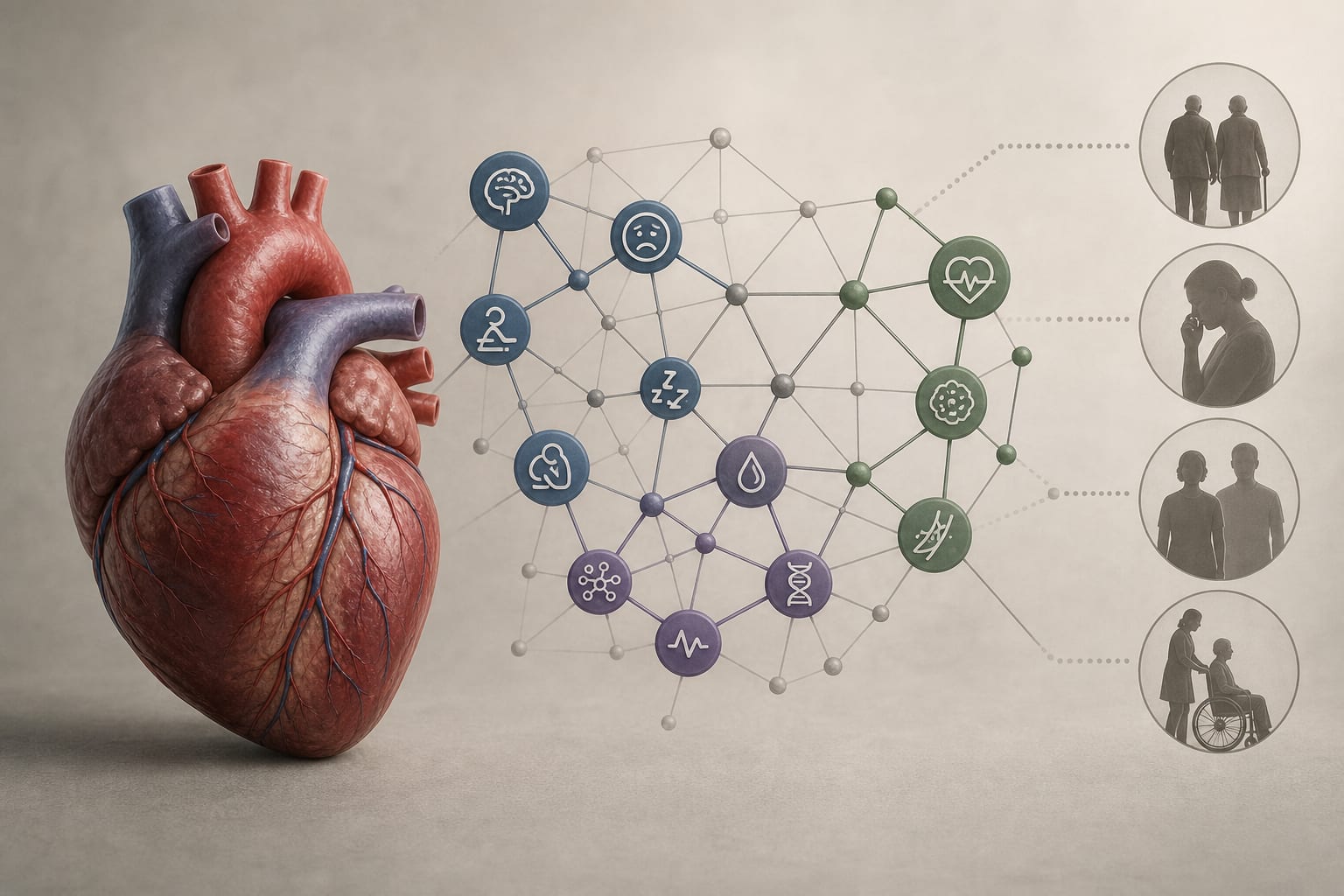
This study investigates the impact of multimorbidity, caregiving status, and sex on depressive symptom-biomarker networks in older adults with heart disease. Findings indicate that while external factors influence local symptom-biomarker associations, broad network-wide differences were not observed.
Background
Depression is prevalent among older adults with heart disease and can complicate clinical management. Understanding the heterogeneity of depressive symptoms through the lens of external factors may enhance treatment approaches. This study aims to clarify these relationships to better inform clinical practice.
Data Highlights
Factor
Association Type
Multimorbidity Burden
Broadest patterns across domains
Caregiving Status
Weaker, localized patterns
Sex
Clearest, reproducible patterns
Key Findings
External factors were associated with heterogeneous local patterns in the depressive symptom-biomarker network.
Depressed mood exhibited the highest centrality among symptom nodes across both cohorts.
Multimorbidity burden showed the broadest patterns in symptom-biomarker associations.
Caregiving status revealed weaker and more localized associations.
Sex differences were most pronounced in relation to specific biomarkers like HDL cholesterol and triglycerides.
Clinical Implications
Clinicians should consider the influence of multimorbidity, caregiving, and sex when assessing depressive symptoms in older adults with heart disease. Integrating these external factors with routine biomarker assessments may improve the characterization of depressive heterogeneity and inform treatment strategies.
Conclusion
The study underscores the importance of a nuanced approach to understanding depression in older adults with heart disease, highlighting the role of external factors in shaping symptom-biomarker relationships.
Federal prosecutors allege that a Florida physician and research staff fabricated clinical trial records that were submitted into database systems used to evaluate investigational drugs.