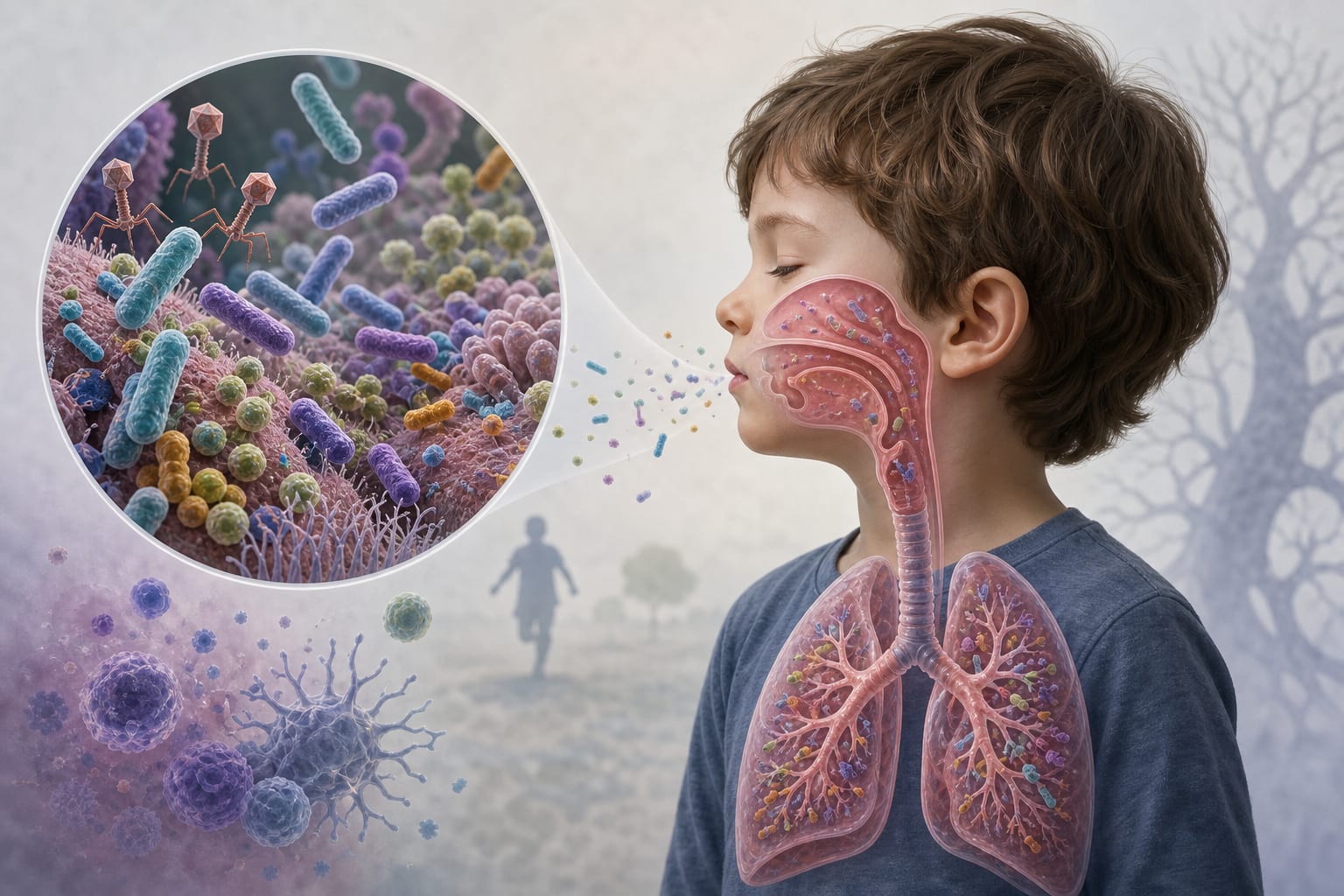
Clinical Report: The Impact of the Respiratory Microbiome on Pediatric Respiratory Disease Development
Overview
This report summarizes the significant role of the respiratory microbiome in pediatric respiratory diseases, highlighting its association with disease susceptibility and severity. It also discusses novel therapeutic strategies aimed at improving clinical outcomes in affected children.
Background
Respiratory diseases are prevalent in children and can lead to long-term health issues. Recent research indicates that the respiratory microbiome plays a crucial role in the development and severity of these diseases, including respiratory infections and asthma. Understanding the microbiome's composition and its interaction with the immune system is essential for developing targeted therapies.
Data Highlights
No numerical data available in the source material.
Key Findings
The respiratory microbiome is linked to the susceptibility and severity of respiratory diseases in children.
Microbial composition and metabolites influence the development of respiratory infections and allergic conditions.
Novel therapeutic strategies such as probiotic therapy, phage therapy, and antimicrobial peptide therapy are being explored.
Current pediatric guidelines do not yet incorporate routine microbiome testing or microbiome-directed therapies.
Observational data suggest early-life airway microbiome patterns may predict later respiratory health outcomes.
Clinical Implications
Healthcare professionals should consider the respiratory microbiome's role in pediatric respiratory diseases when evaluating and treating affected children. Future research may lead to the integration of microbiome profiling into clinical practice, potentially enhancing personalized treatment approaches.
Conclusion
The respiratory microbiome significantly impacts pediatric respiratory disease development, warranting further investigation into its therapeutic potential. Continued research may eventually inform clinical guidelines and improve patient outcomes.