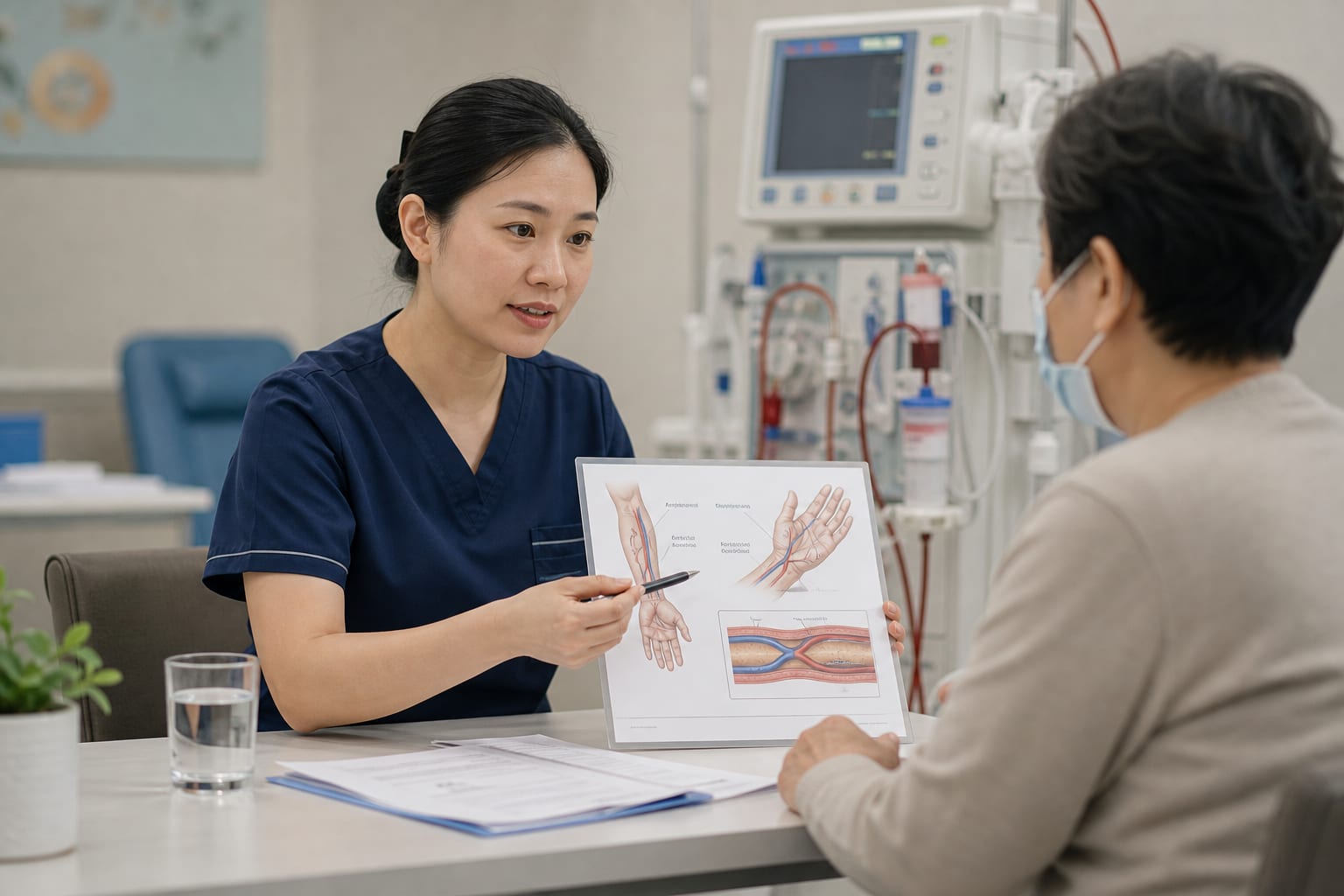
Clinical Report: Nurse-Facilitated Shared Decision-Making in Vascular Access
Overview
This study evaluates a nurse-led shared decision-making model for vascular access in hemodialysis patients.
Background
Vascular access is crucial for the effectiveness of hemodialysis, impacting patient quality of life and long-term outcomes. With the increasing prevalence of end-stage renal disease, effective management of vascular access is essential. Traditional decision-making models often overlook patient preferences and psychosocial factors, leading to suboptimal outcomes.
Data Highlights
Outcome
Experimental Group
Control Group
P-value
Decisional Conflict (DCS score)
Lower by 18.74
Higher
< 0.001
Preoperative Anxiety
Lower by 5.23
Higher
< 0.001
Decision Satisfaction
Higher by 3.69
Lower
< 0.001
AVF Selection Rate
80.0%
58.3%
0.022
6-month Postoperative Complications
Lower
Higher
N/A
Key Findings
The nurse-led SDM model significantly reduced decisional conflict (AMD: −18.74, p < 0.001).
Preoperative anxiety was significantly lower in the experimental group (AMD: −5.23, p < 0.001).
Decision satisfaction was higher in the experimental group (AMD: 3.69, p < 0.001).
The AVF selection rate was significantly higher in the experimental group (80.0% vs. 58.3%, p = 0.022).
Postoperative complications were significantly lower in the experimental group.
Clinical Implications
Implementing a nurse-led shared decision-making model can enhance patient engagement and satisfaction in vascular access decisions. This approach may lead to improved clinical outcomes and better alignment of treatment with patient values.
Conclusion
The study supports the efficacy of a structured, nurse-led shared decision-making model in improving patient-centered outcomes in vascular access management for hemodialysis patients.
A structured reporting tool improved report completeness, reduced classification errors, and achieved high physician adoption during routine lung cancer pathology reporting.