Rule-derived preoperative inflammatory-lymphocyte recovery phenotype and pathological response in resected osteosarcoma: a retrospective cohort study - Report - MDSpire
Conexiant’s news site is now MDSpire News. Learn more
Advertisement
Preoperative Inflammatory-Lymphocyte Recovery Profile and Its Association with Pathological Outcomes in Resected Osteosarcoma: A Retrospective Analysis
Clinical Report: Preoperative Inflammatory-Lymphocyte Recovery Profile in Osteosarcoma
Overview
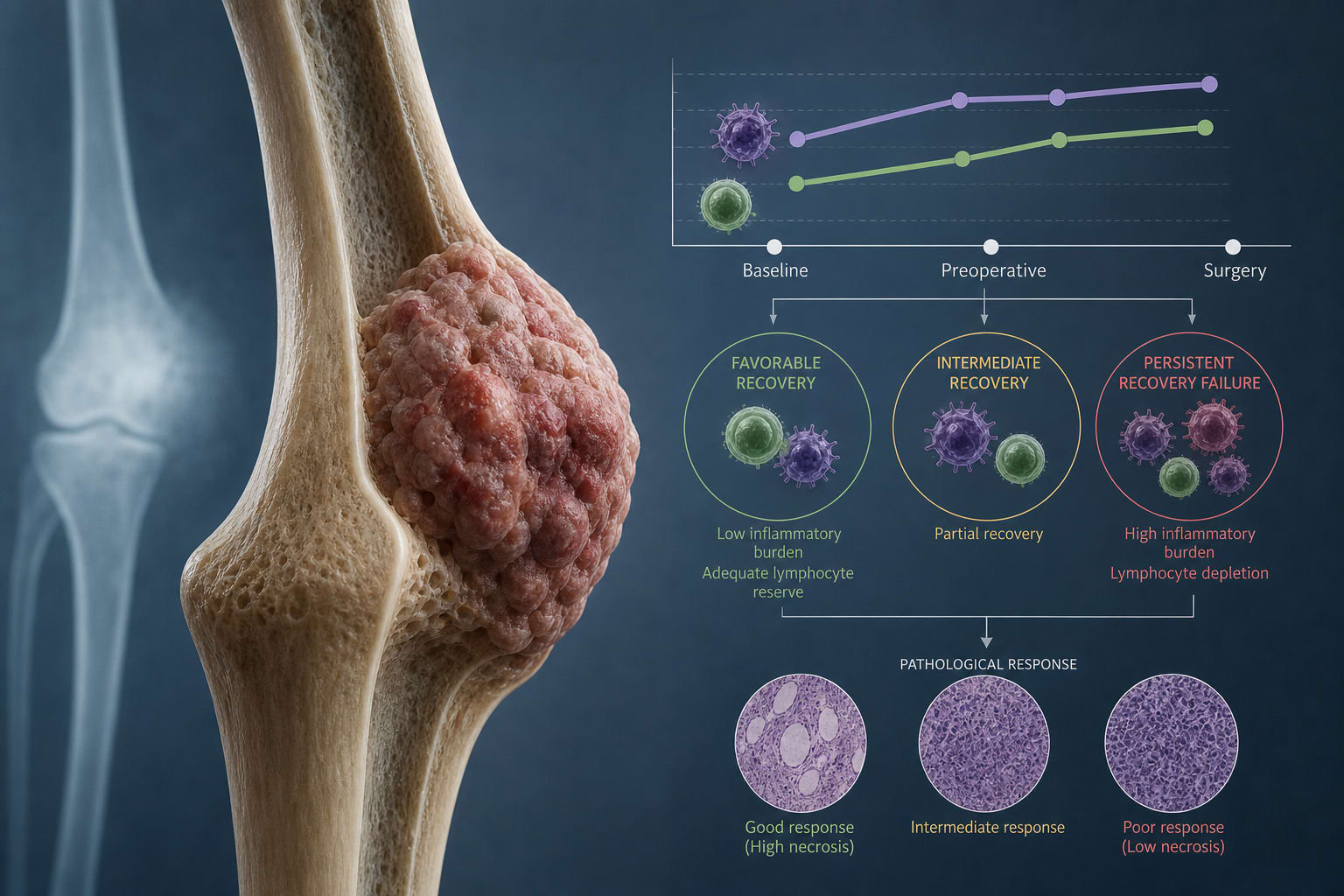
This study investigates the association between preoperative inflammatory-lymphocyte recovery phenotypes and pathological outcomes in osteosarcoma patients post-neoadjuvant chemotherapy. A significant correlation was found between persistent recovery failure and poor pathological response.
Background
Osteosarcoma is the most common primary malignant bone tumor in children and adolescents, and its treatment relies heavily on neoadjuvant chemotherapy followed by surgery. Understanding the pathological response to chemotherapy is crucial, as it serves as a significant prognostic factor for patient outcomes. Identifying early markers of treatment response could improve management strategies and patient prognostication.
Data Highlights
Recovery Phenotype
Patients
Poor Pathological Response (%)
Favorable Recovery
65
37.2
Intermediate Recovery
45
Not specified
Persistent Recovery Failure
52
75.7
Key Findings
54.3% of patients demonstrated poor pathological response post-chemotherapy.
Persistent recovery failure was associated with a significantly higher risk of poor pathological response (Firth OR, 5.72; P<0.001).
The risk difference in poor response between favorable recovery and persistent failure was 38.6 percentage points.
The phenotype model had an AUC of 0.641, while the continuous T3 score had an AUC of 0.665.
Event-free survival and pulmonary metastasis were explored as additional associations.
Clinical Implications
The findings indicate that preoperative inflammatory-lymphocyte recovery profiles are associated with pathological outcomes in osteosarcoma.
Conclusion
The study establishes a significant link between inflammatory-lymphocyte recovery phenotypes and pathological outcomes in osteosarcoma.