Conexiant’s news site is now MDSpire News. Learn more
Advertisement
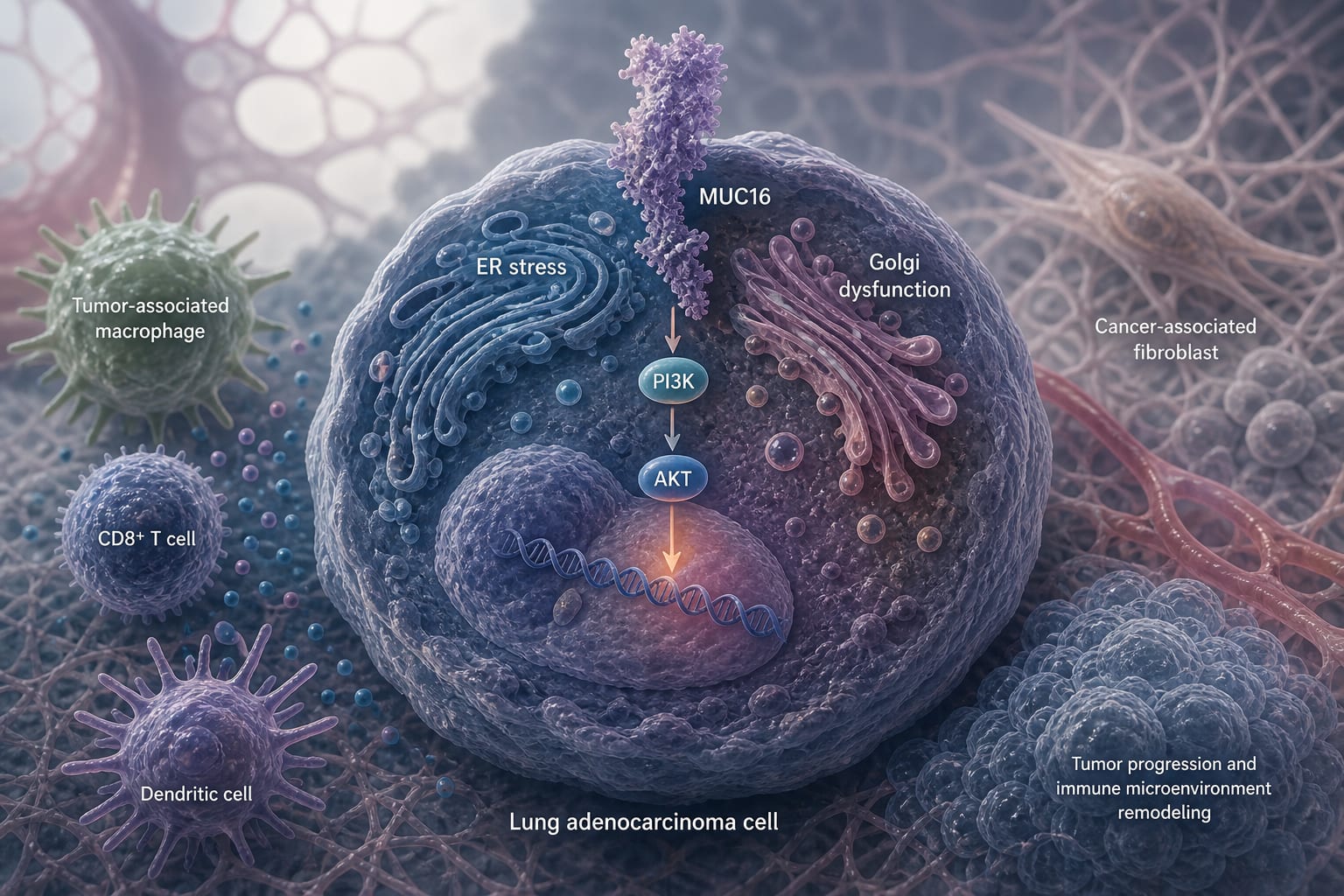
A signature associated with endoplasmic reticulum stress and Golgi apparatus dysfunction indicates immune microenvironment alterations and MUC16-mediated PI3K/AKT pathway activation in lung adenocarcinoma
Clinical Report: EGRG-Based Prognostic Signature in Lung Adenocarcinoma
Overview
A 17-gene prognostic signature related to endoplasmic reticulum stress and Golgi apparatus dysfunction was developed for lung adenocarcinoma (LUAD).
Background
Lung adenocarcinoma (LUAD) is the most common subtype of non-small cell lung cancer, presenting significant clinical challenges due to its heterogeneity and resistance to therapies. Understanding the molecular mechanisms underlying LUAD progression, particularly those involving endoplasmic reticulum stress and Golgi apparatus dysfunction, is crucial.
Data Highlights
Finding
Details
Prognostic Signature
17-gene signature developed from 133 differentially expressed genes related to EGRGs.
Validation
Prognostic utility confirmed across independent LUAD cohorts.
Risk Categories
Significant differences in tumor microenvironment characteristics and immune infiltration patterns based on risk scores.
MUC16 Expression
MUC16 was found to be upregulated in LUAD, correlating with poorer patient outcomes.
Mechanistic Insights
MUC16 may activate FAK-mediated PI3K/AKT signaling, contributing to malignant phenotypes.
Key Findings
A 17-gene prognostic signature was established based on endoplasmic reticulum stress and Golgi apparatus-related genes.
The signature was validated in independent LUAD cohorts, demonstrating prognostic utility.
Patients were categorized into risk groups with significant differences in immune microenvironment characteristics.
MUC16 was identified as a key gene, with increased expression linked to worse patient outcomes.
The EGRG-based prognostic signature may assist in risk stratification for LUAD patients. MUC16's role in LUAD progression highlights its potential as a prognostic biomarker.
Conclusion
An EGRG-based prognostic signature for LUAD has been established.