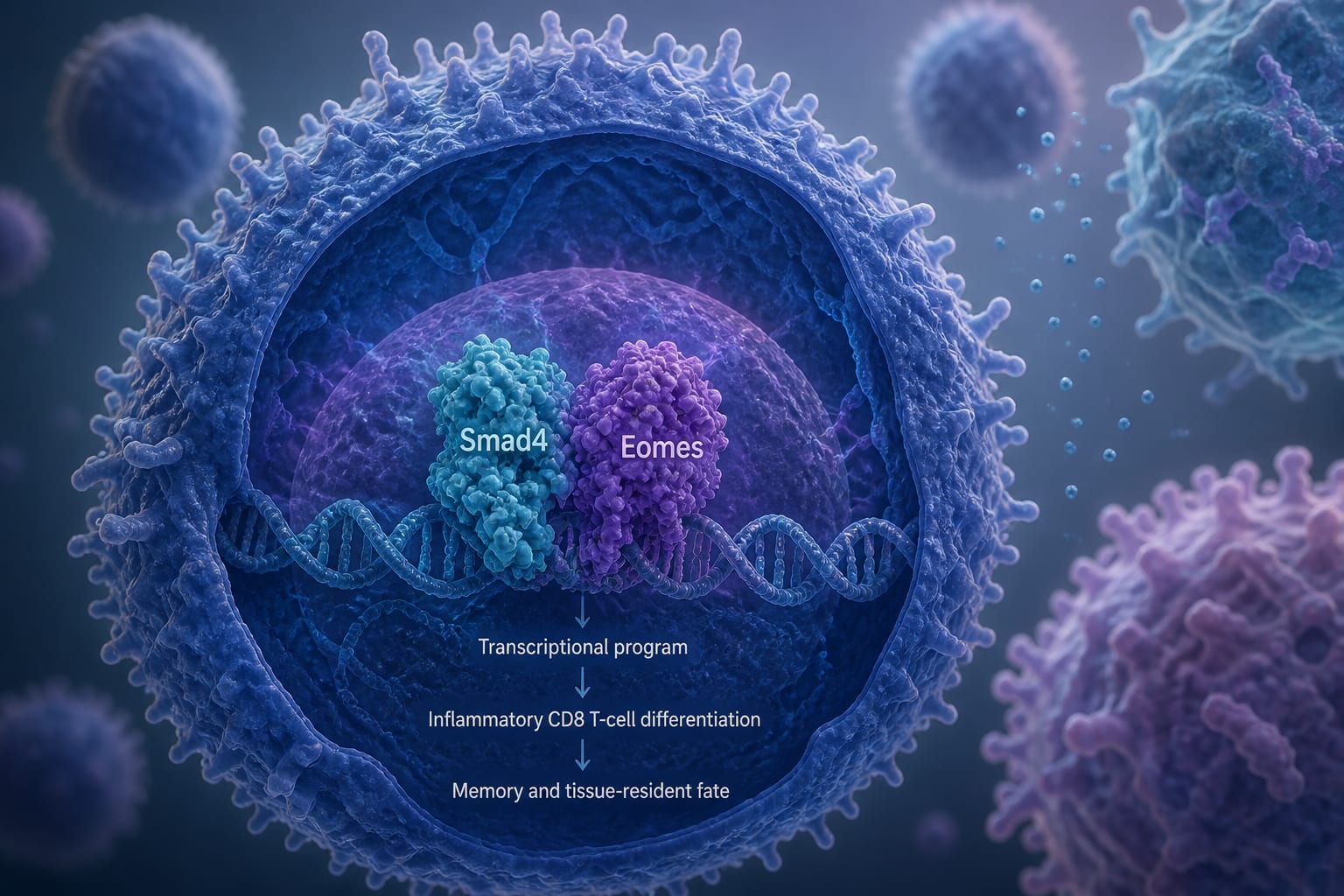
Smad4 and Eomes Interact in a Common Transcriptional Pathway
Overview
This study investigates the roles of Smad4 and Eomes in CD8 T cell differentiation, revealing their interaction in regulating gene expression crucial for T cell identity and function. The findings highlight the distinct and overlapping pathways influenced by these transcription factors, particularly in the context of tissue-resident memory T cells.
Background
Transcription factors like Smad4 and Eomes are key regulators in the differentiation of CD8 T cells, influencing T cell fate and functionality. Disruptions in their pathways can lead to impaired immune responses.
Data Highlights
No numerical data or trial data available in the source material.
Key Findings
Smad4 and Eomes regulate overlapping and unique gene expression programs in CD8 T cells.
Both transcription factors are essential for the differentiation of memory T cells, particularly tissue-resident memory (TRM) cells.
Canonical TGF-beta signaling remains active in the absence of Smad4 or Eomes, becoming inactive only when both Smad3 and Smad4 are absent.
CD8 T cells lacking both Smad3 and Smad4 show greater enrichment of TRM signature genes compared to those deficient in either factor.
Smad4 promotes differentiation of KLRG1+ effector cells while inhibiting TRM cell formation.
Clinical Implications
Understanding the interactions between Smad4 and Eomes could inform strategies to manipulate T cell differentiation.
Conclusion
The interaction between Smad4 and Eomes is critical for CD8 T cell differentiation.
An updated clinical practice guideline from the American Society for Radiation Oncology substantially expands and modernizes recommendations for the use of radiation therapy in pancreatic cancer.