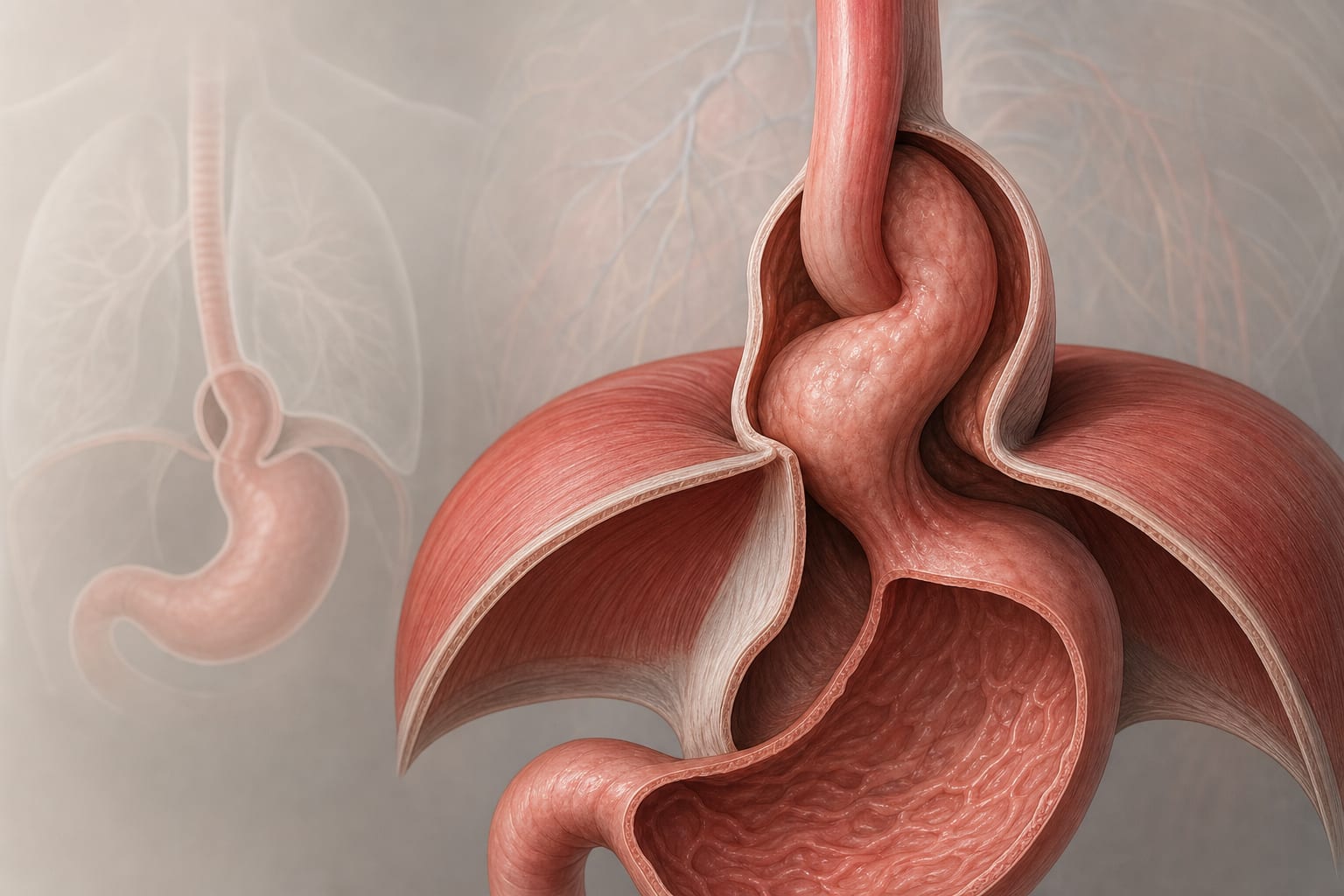
Paraesophageal hernia repair is associated with similar safety and efficacy results in octogenarians as compared to younger patients - Report - MDSpire
Clinical Report: Repair of Paraesophageal Hernias in Elderly Patients
Overview
This study evaluates the safety and effectiveness of paraesophageal hernia (PEH) repair in octogenarians compared to younger patients. Findings indicate that while octogenarians may experience higher perioperative morbidity, key outcomes such as recurrence and postoperative complications are comparable between age groups.
Background
Paraesophageal hernias are increasingly common in the aging population, with a significant number of patients over 80 years presenting with symptomatic cases. Surgical intervention has evolved, with contemporary evidence suggesting that elective repair can improve life expectancy even in elderly patients. However, concerns regarding perioperative morbidity and patient selection remain critical in managing this demographic.
Data Highlights
No numerical data available in the source material.
Postoperative outcomes, including recurrence, GERD, and dysphagia, are comparable between octogenarians and younger adults.
Elective repair of PEH in elderly patients is associated with low 30-day mortality rates.
Advancements in minimally invasive techniques have improved safety profiles for surgical interventions in older adults.
Patient selection remains crucial, as frailty and advanced age are independent predictors of perioperative morbidity.
Clinical Implications
Surgeons should consider elective PEH repair in octogenarians, as it can lead to favorable outcomes similar to younger patients. Careful assessment of patient frailty and comorbidities is essential to optimize surgical decision-making and minimize risks.
Conclusion
The findings support the safety and effectiveness of PEH repair in elderly patients, suggesting that age alone should not preclude surgical intervention when appropriately indicated.
by Kayvan Barekatain, Emily F. Simon, Joshua L. Lyons, Natalie N. Chakraborty, Christina S. Boutros, Trisha Lal, Jill Knepprath, Ayesha Siddiq, Hamza N. Chatha, Saher-Zahra S. Khan, Patrick M. Wieland, Sami O. Abul-Khoudoud, Nicolette M. Winder, Samuel J. Zolin, Jeffrey Marks
Surgery and histopathology identified retained silk ligature with chronic inflammation at the site of a rare fistula presenting 3 years following vasectomy.
Facial nerve disorders impact approximately 30 out of 100,000 adults in the U.S. annually. Common causes of damage to the facial nerve and subsequent facial paralysis include Bell’s palsy, cancerous tumors, acoustic neuromas and iatrogenic complications.